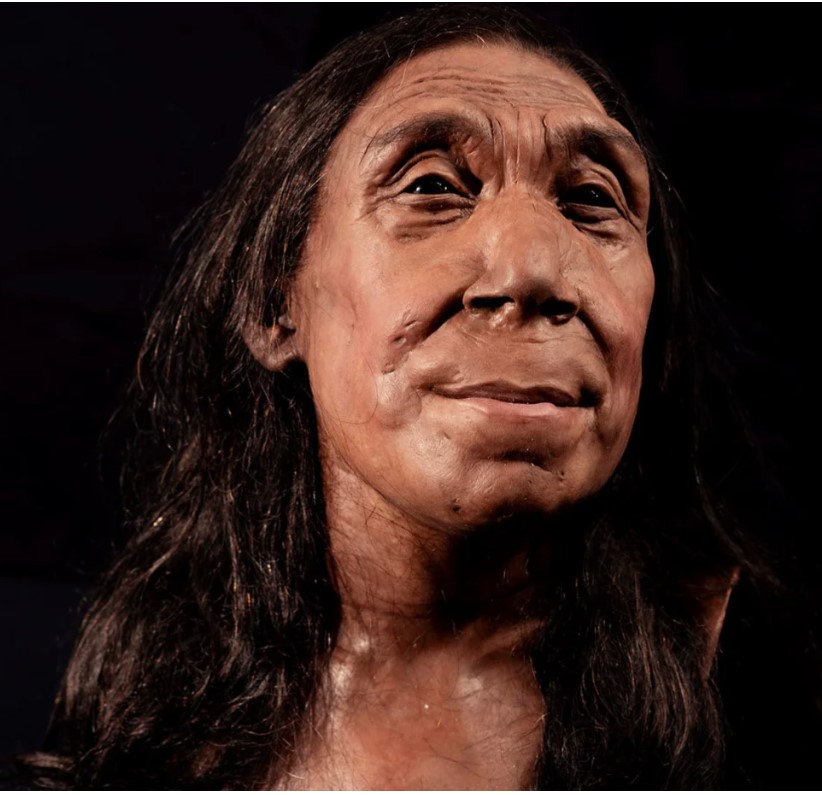
In a groundbreaking discovery, a team of researchers from the University of Cambridge has meticulously reconstructed the face of a 75,000-year-old female Neanderthal, whose flattened skull was found amidst hundreds of fragmented bone pieces at Shanidar Cave in Iraqi Kurdistan. This remarkable feat sheds new light on the lives and appearances of our evolutionary cousins.
The Discovery
The discovery of the Neanderthal skull took place during an extensive excavation in the remote regions of Iraqi Kurdistan, led by a team of experienced archaeologists and conservators from the University of Cambridge.
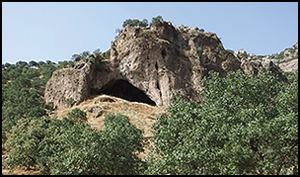
According to the statement: “The cave was made famous in 1960 when several Neanderthals were unearthed that appeared to have been buried in succession.”
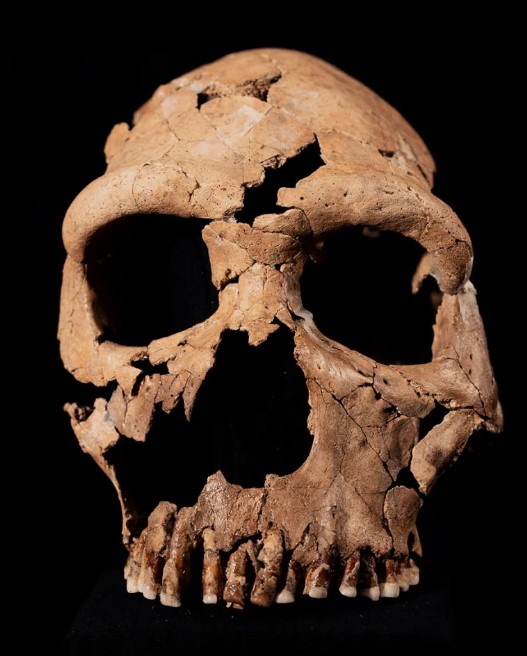
The skull was found among a vast array of fragmented bone pieces, presenting a formidable challenge to the researchers. It had been severely damaged, likely due to a rockslide or collapse, relatively shortly after the individual’s death. This occurred after the brain had decomposed but before the cranium had filled with sediment. Over the course of tens of thousands of years, the weight of the accumulated sediment compacted the skull even further. By the time archaeologists discovered the remains, the skull had been flattened to a thickness of approximately two centimeters.
The Reconstruction Process
Using cutting-edge imaging techniques and advanced 3D modeling software, the researchers carefully analyzed each bone fragment, mapping its precise position and orientation within the original skull. Through meticulous attention to detail and a deep understanding of Neanderthal anatomy, the team was able to virtually reconstruct the complete skull, layer by layer, in a painstaking process that spanned several years.
Unveiling the Face
The final result is a stunning recreation of the Neanderthal’s facial features, offering a tangible connection to our evolutionary past and a glimpse into the lives of these enigmatic hominids. The reconstructed face reveals a robust, yet distinctly human-like appearance, with a prominent brow ridge, a broad nose, and a receding chin – characteristics that were once thought to be unique to our Homo sapiens ancestors. Missing pelvic bones, teeth were analysed to indicate that the skull belonged to a female and was likely in her mid-forties at the time of her death.
“The skulls of Neanderthals and humans look very different,” said Dr Emma Pomeroy, a palaeo-anthropologist from Cambridge’s Department of Archaeology, who features in a new film showcasing the reconstruction.
“Neanderthal skulls have huge brow ridges and lack chins, with a projecting midface that results in more prominent noses. But the recreated face suggests those differences were not so stark in life.
“It’s perhaps easier to see how interbreeding occurred between our species, to the extent that almost everyone alive today still has Neanderthal DNA.”
Insights and Implications
Neanderthals are thought to have died out around 40,000 years ago, so this remarkable achievement not only provides a visual representation of a long-extinct hominid species but also offers valuable insights into their evolutionary adaptations and social behaviors. By studying the facial features and cranial structure of the Iraqi Kurdistan Neanderthal, researchers can better understand the dietary habits, environmental adaptations, and even potential cognitive abilities of this ancient population.
This discovery will undoubtedly inspire further research and exploration, ultimately enhancing our understanding of the complex and fascinating story of human evolution and the role of Neanderthals in shaping our shared past.
Sources and details here and here.
[vc_column width=”1/2″]
[vc_column width=”1/2″]