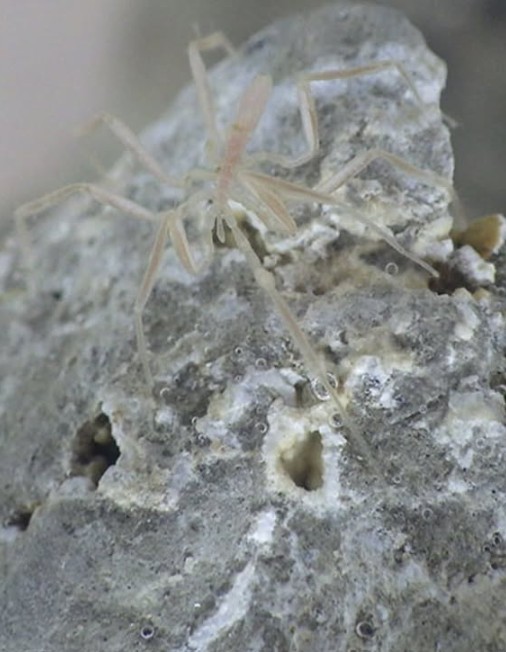
Exploring the ocean’s depths often reveals a world stranger and more fascinating than anyone expects. A discovery, earlier this year, off the coast of Southern California has scientists buzzing: three new species of sea spiders that seem to thrive in one of the planet’s most extreme environments—methane seeps. These fragile-looking yet remarkably adapted creatures offer new insights into how life can persist, and even flourish, in environments rich in methane and devoid of sunlight.
The study, led by Dr. Shana Goffredi, a marine biologist and chair of the Biology Department at Occidental College, began as part of a long-term investigation into the unique ecosystems surrounding methane seeps. These seeps are places on the ocean floor where methane gas escapes from cracks in the Earth’s crust, forming bubbling habitats that sustain specialized microbes and animals. According to Goffredi’s interview with SFGATE, the discovery of the sea spiders was a “happy accident.” The team had been focused on microbial life and the invertebrates that live in symbiosis with them when they encountered these otherworldly arthropods.

Sea spiders, or pycnogonids, are not true spiders but belong to their own group of marine arthropods. They have spindly legs, minimal body mass, and often rely on diffusion rather than lungs or gills for oxygen. Finding new species of them is always significant, but these methane-dwelling varieties appear to rewrite what scientists understand about the range of habitats sea spiders can occupy.
What makes this discovery especially exciting is the apparent connection between these creatures and the methane seep environment. Researchers suspect that the sea spiders may feed on or coexist with organisms—such as methane-oxidizing bacteria—that form the base of the food web at these depths. In such dark, high-pressure conditions, life does not rely on photosynthesis. Instead, chemical energy from methane fuels entire biological communities in a process known as chemosynthesis. The sea spiders’ presence there suggests yet another way that complex life has evolved to take advantage of these chemical power sources.

Dr. Goffredi’s research centers on the cooperative interactions between microbes and invertebrates. Her team has documented deep-sea worms, mussels, and crabs that depend on microbial symbionts for nutrition and survival. The sea spiders now join this growing list of life forms that demonstrate how partnerships between animals and microbes underpin much of the planet’s biodiversity—even in places seemingly inhospitable to life.
Beyond the thrill of cataloging new species, the find illustrates a deeper truth about modern marine research: exploration often leads to discoveries that challenge assumptions.
Source: Occidental College Instagram