The Ancient Stone Spheres Costa Rica
Costa Rica is a lush country, with amazing ecology and environment. Amongst its green landscape can be found ancient structures known as the stone spheres of Costa Rica. The 300 spheres lie on the DiquÁs Delta and on Isla del CaÁ±o. To the locals they are known as bolas de piedra (stone balls) and are said to be attributed to the now extinct Disquis culture, a pre-Columbian indigenous culture of Costa Rica that flourished from AD 700 to 1530.
These nearly-perfect round balls of stone have been a mystery for archaeologists and historians since their discovery decades ago. Although they are thought to have been placed in lines along the path to the houses of chiefs, their exact significance and use remains unknown.

The Discovery
In 1939, the United Fruit Company was clearing a jungle in the area for their banana plantations, when workmen across some of the spheres in the jungles of Costa Rica’s DiquÁs Delta. These initial discoveries were damaged by the workmen when they pushed them aside with bulldozers in their attempt to clear the jungle. They had also heard stories of hidden gold and so, they drilled holes into the spheres and even tried to blow them open with sticks of dynamite in an attempt to find them. And so, several of the spheres were destroyed even before the relevant experts to inspect them.

(What happened at Easter Island?)
The Investigation
They stone spheres were first investigated shortly thereafter by Doris Stone, who was the daughter of one of the United Fruit executives. When her analysis was published in 1943 in the journal American Antiquity, it caught the attention of Sameul Kirkland Lothrop from Harvard University’s Peobody Museum. He met Doris Stone, who took him to the DiquÁs Delta to the relevant dig sites and provided them with her personal contacts. Lothrop’s findings were published in Archaeology of the DiquÁs Delta, Costa Rica 1963.

The Site and Description
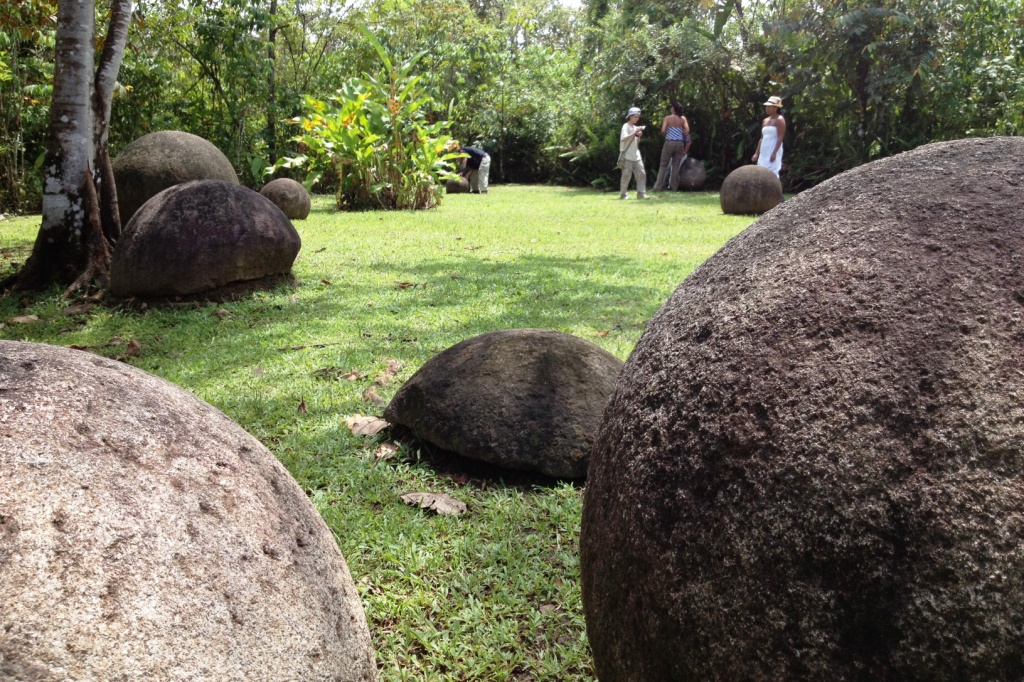
The archaeoligical site where the spheres are located is in the southern portion of Costa Rica, known as the DiquÁs Delta in the southernmost part of the Puntarenas Province. The site is in Palmar Sur, and comprises approximately ten hectares of the property that was previously owned by the United Fruit Company in the alluvial plain of the TÁ©rraba River.
These gigantic spheres range from a few centimetres to over two metres (over 6 ft) in diameter and some weigh up to fifteen tons. Most of them are sculpted from a coarse-grained equivalent of basalt known as gabbro, obtained from sites in the hills several kilometres away. There are also around twelve spheres that were made from shell-rich limestone. Another dozen are made from sandstone.
Analysis suggests that since the people who made them probably did not have metal tools, they were made from hammering natural boulders with other rocks and then were polished with sand. The degree of finishing and precision of working varies considerably but each ball is perfectly spherical and balanced. Some researchers are of the view that even though they weigh a lot, they were rolled into their final positions.

The History
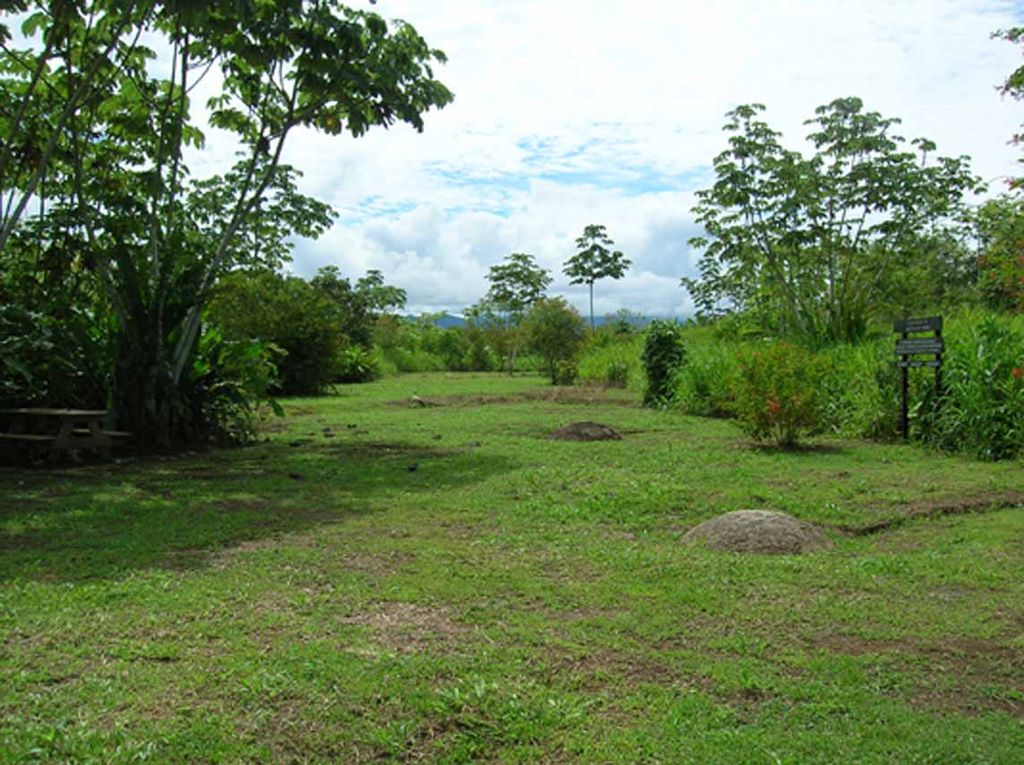
Parts of the archaeological site (Farm 6) has been dated to the Aguas Buenas Period, which lasted from 300-800 CE, as well as the ChiriquÁ Period (800-1550 CE). Originally, this site had a settlement and cemetery. Remains of monumental architecture comprising of two mounds constructed with retaining walls made of rounded river cobbles and filled with earth, can also be found. There are additional signs of sculptures and the site contains multiple locations with large stone spheres. Interestingly, one of the neighbouring towns to Farm 6 also has similar structures but with more oval-like shapes.
Estimates suggests that the stones were first created around 600 CE, with most of them dating to after 1000 AD. However, they were made before the Spanish conquest. The only way to date them is stratigraphy (study of soil layers) but since most of the stones are no longer in their original positions, this has proved to be difficult. The culture of the people who made them disappeared after the Spanish conquest, so it is not easy to identify the exact civilisation that created them. We know of the many indigenous people that once inhabited Costa Rica, including Chibchan, Boruca, and DiquÁs tribes. While they all contributed to the region’s history, we cannot be certain about their connection to the stone spheres.
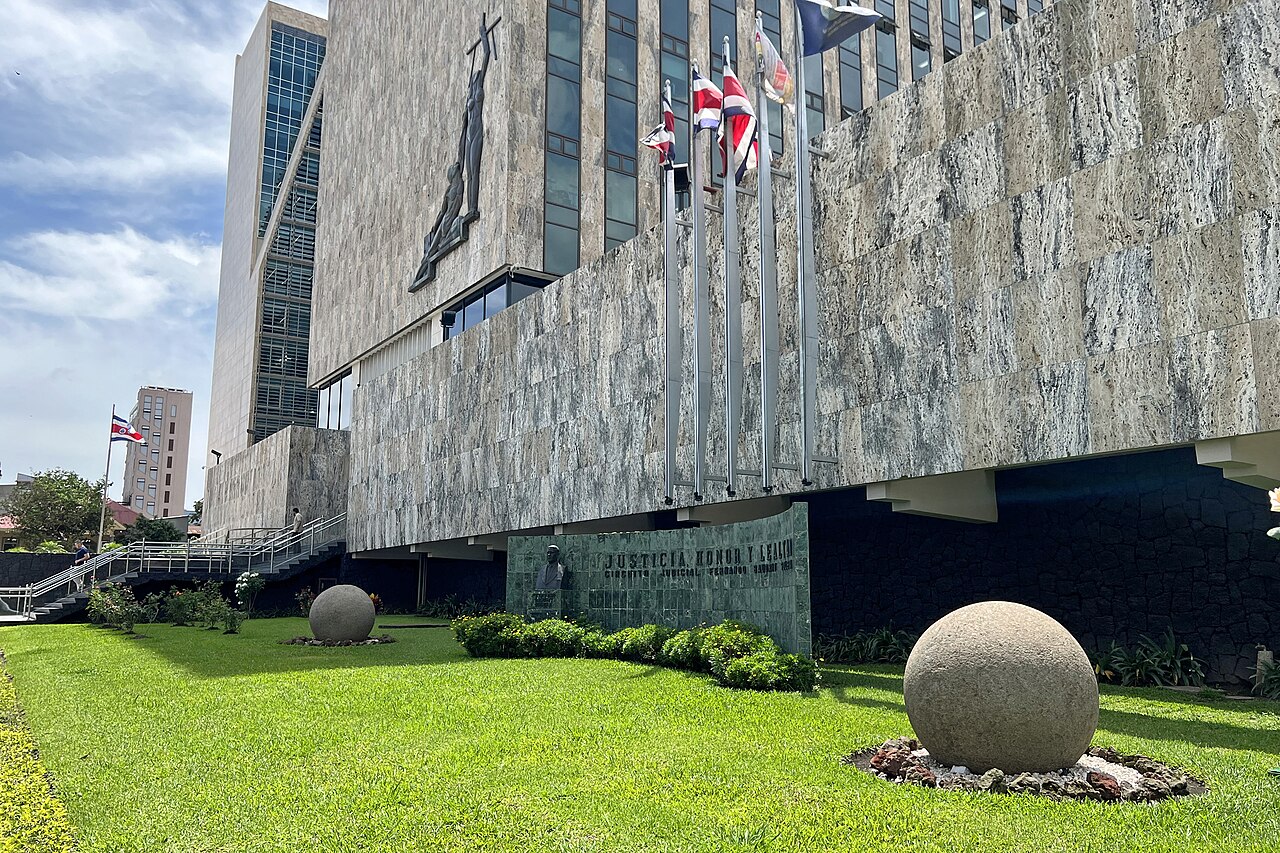
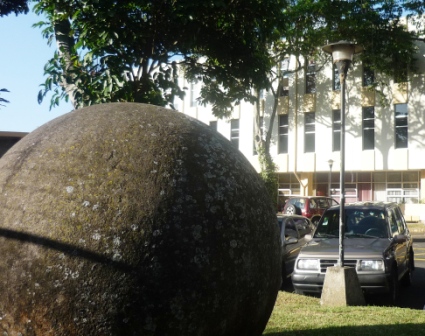
Some of the originally dynamited spheres have been reassembled and are housed at the National Museum of Costa Rica in San JosÁ©. Some were removed from their original locations and serve as landscape decorations, while many others also ended up as lawn decorations for some Tico citizens.
Symbolism
According to some hypotheses, the spheres may represent the solar system or just be inspired by various stages of the sun and the moon as viewed with the naked eye, including setting or rising suns, and half moons.
Melissa Rudin HernÁ¡ndez, a Costa Rican architect, investigated the cosmovision of indigenous cultures and according to her hypothesis, the spheres are an artistic, symbolic and spiritual creation of the universe.
They are regarded as Costa Rica’s national symbol and part of the cultural ethos of the country. A series of stamps were issued in 2006 featuring the stones as part of the country’s cultural heritage. Because of this they are often commonly seen in government buildings such as the building of the Legislative Assembly of Costa Rica.
The Precolumbian Chiefdom Settlements with the Stone Spheres of the DiquÁs was added to the UNESCO list of World Heritage Sites in June 2014.

Mythology
Several myths are associated with the spheres, one of them being that they came from the mythical island of Atlantis. Some say they were made by nature. Yet another legend states that native inhabitants had access to a potion that helped them to soften the rock.
There is also the cosmogony of the Bribri (an indigenous people in eastern Costa Rica and northern Panama), and other American ancestral groups, who refer to the stone spheres are “Tara’s cannon balls”. Tara or Tlatchque, is the god of thunder, who used a giant blowpipe to shoot the balls at the Serkes, gods of winds and hurricanes, in order to drive them out of Costa Rican lands.
Some believe that the spheres were celestial calendars used to observe and mark celestial events, while others hold the view that they played a central role in religious ceremonies.
Some also consider them repositories of ancient wisdom, perhaps concealing ancient scrolls, maps, or messages for future generations, in possible hidden chambers.
While their purpose still remains a mystery perhaps with new technology we may be able to understand their significance to the ancient cultures of the regions.
[vc_column width=”1/2″]
[vc_column width=”1/2″]