Deep in the Aegean Sea is an island groupd called the Cyclades, southeast of mainland Greece. It includes Naxos, Amorgos, Ios among others. The largest island of the Cyclades is Naxos, and the most populated is Syros. The name Cyclades means ‘encircling islands’ and refers to the archipelago forming a circle around the sacred island of Delos (one of the most important mythological, historical, and archaeological sites in Greece). Another one of the islands is Keros, small rocky, rugged, and uninhabited and located between Naxos, Amorgos and Ios.
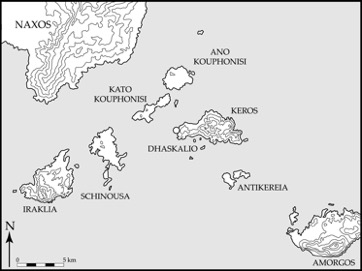
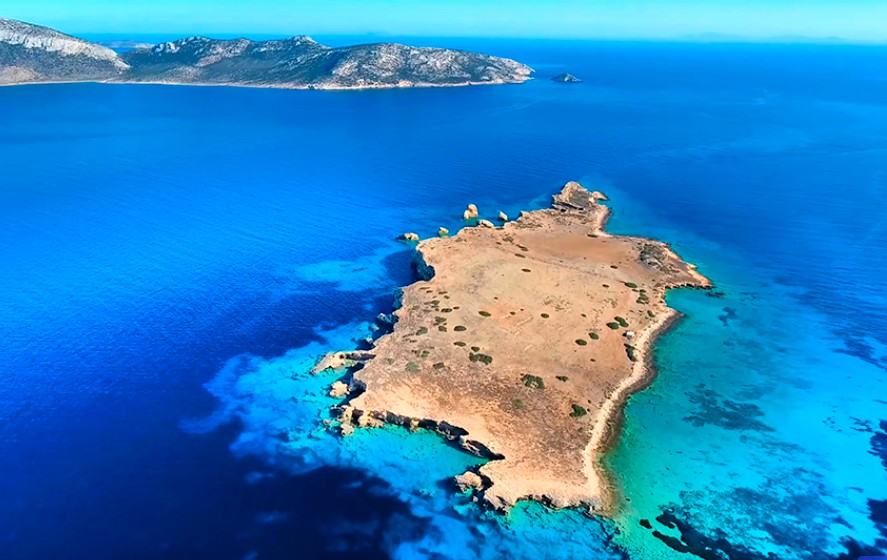
Just off the west coast of Keros is Dhaskalio, another tiny uninhabited Greek islet. Dhaskalio is approximately 150 metres in diameter, and was once a promontory of Keros but has now become an island due to sea level rise.
So, why are we talking about the Cyclades, Keros and specifically Dhaskalio?
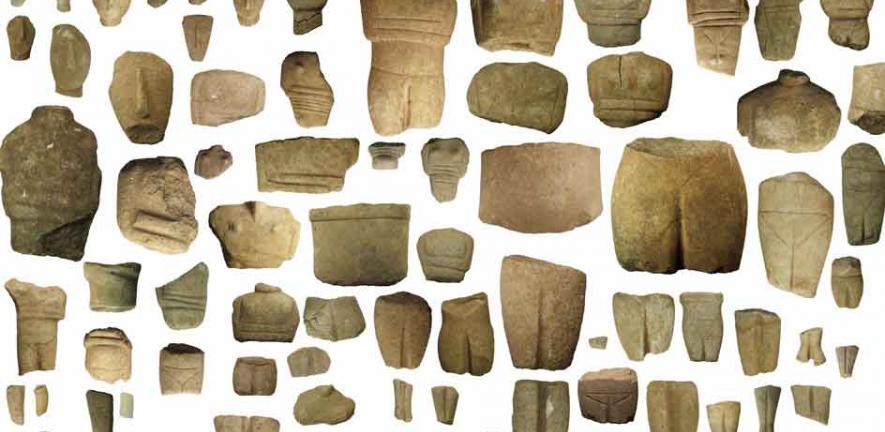
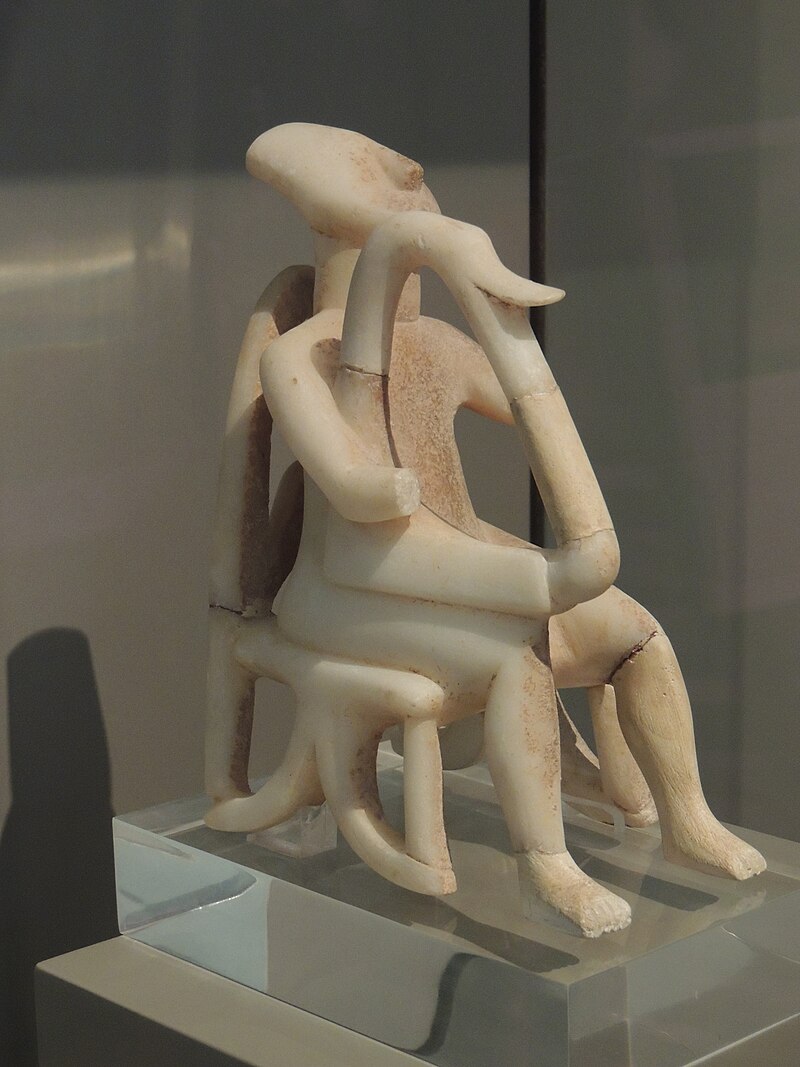
A large number of broken statues found on Keros and Dhaskalio remain one of the most fascinating aspects of the islands’ archaeological sites. Many of these figures, often fragmented, appear to have been deliberately broken or defaced, sparking theories about ritual destruction or symbolic acts. The purpose behind these shattered statues is unclear, but their widespread presence raises questions about the cultural and spiritual practices of the islanders during the Early Bronze Age. Questions that still remain unanswered.
Island of Broken Figurines
In the Early Bronze Age (between 2750BC to 2300BC) Keros was the site of the world’s earliest maritime sanctuary, a thriving centre for metal production with monumental architecture. It was an important site to the Cycladic civilization that flourished around 2500 BC.
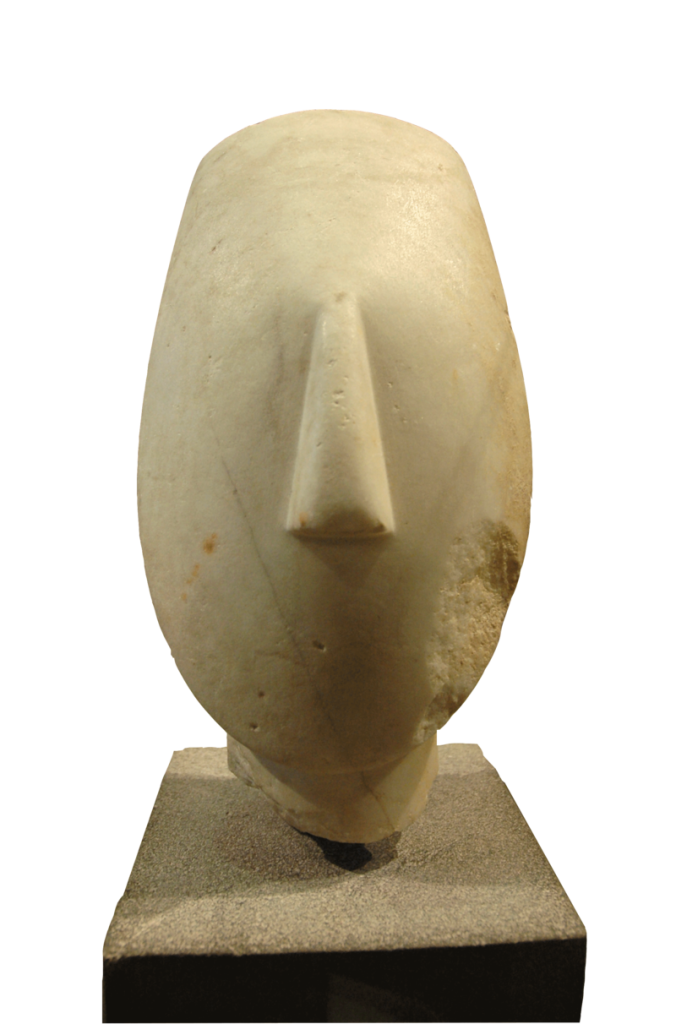
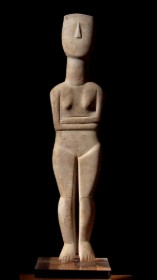
This Cycladic culture of the Late Neolithic and Early Bronze Age is most famous for its simplistic, flat sculptures crafted from the islands’ pristine white marble, and predating the rise of the great Minoan civilization in Crete during the Middle Bronze Age. These figures have been looted from tombs to fuel a flourishing antiquities market since the early 20th century.
Keros first came to prominence in the modern era in the 1960s when as a young Cambridge graduate Colin Renfrew, and, separately, archaeologist Christos Doumas visited the site. Renfrew had been attracted to the island because he had heard that it had been subject to looting. The looted area was first investigated archaeologically in 1963 by Doumas.
Furthermore, over the years, archaeological finds had been surfacing on the antiquities market, alleged to be from Keros. Among these were the broken pieces of marble female figurines, similar to ones found in prehistoric graves excavated on the Cyclades.
Colin Renfrew did find looting and destruction, as well as the broken pieces of figurines, but it was also clear that the fragments were Early Cycladic. He had come across the first evidence of a Bronze Age ritual.
“I realised that nearly all of the breakages seemed to be ancient and not the result of the looting. For some reason, all of the objects had been deliberately broken before burial.” said Professor Colin Renfrew.
Colin’s finds resulted in further excavations and since then three major international collaborative projects have been carried out on Keros, which have enhanced understanding of what was known as the Cycladic Engima, due to a lack of written records. The Cycladic Enigma meant that we did not know much about the Cycladian culture, including their beliefs, rituatls and daily life.
According to the project: “The work done has defined the site as central in the networks of the Early Bronze Age, a centre of congregation for long-lived pan-Cycladic ritual practices as well as a centre of power where the greatest architectural undertakings of the age housed centralised craft practices, set in a landscape of intensified agricultural innovations and satellite settlements.”
The Cycladian civilisation is known for its distinct art and architecture, but of singular fascination was the discovery of the famous marble figurines, many of which depict nude female forms, often with arms folded across their chests. These figurines are among the most iconic artefacts from the Cycladic Islands, yet their purpose and significance remain unclear. The researchers have inferred that the figurines may have had religious or symbolic significance related to fertility, sprituality or ancestor worship.
The excavation of a Special Deposit on Keros, undisturbed by looters, revealed that many of the materials were bundled together in small pits. More significantly, these were broken too and the breakages were old and deliberate. Not only that, there were no marble chips in the area. The scientists would have expected to see them if the breakages had been on the spot. Clearly, the fragments of the statues had been broken elsewhere. Radiocarbon dating confirmed that they had been deposited over a 500-year period from 2800 BC to 2300 BC.
“But the strangest finding of all was that hardly any of the fragments of the 500-odd figurines and 2,500 marble vessels joined together,” said Professor Renfrew. “This was a very interesting discovery. The only conclusion we could come to was that these special materials were broken on other islands and single pieces of each figurine, bowl or pot were brought by generations of Cycladic islanders to Keros.”
The Importance of Dhaskalio
Meanwhile, across the water from Keros, Dhaskalio also revealed itself as a major Bronze Age stronghold. Structures were built on terraces around a summit, with a large hall at the top. The settlement, dating to around the time of the Special Deposits, remained active until its abandonment around 2200BC.
Geological analysis showed the settlement’s walls were made of imported marble, not the local limestone. Remarkably, while the pyramids and Stonehenge were being built, Cycladic islanders were transporting building materials over long distances to Dhaskalio. The site contained strange finds, like 500 egg-shaped pebbles and stone discs. Despite evidence of olive and vine cultivation, the terrain couldn’t support the large population that the site suggested. This implied food imports. The islet itself is believed to have been a religious center with numerous shrines and votive offerings, including intentionally broken statues, as well as 1,500 imported stone disks.
One possibility is that a transient population visited the island. Dr. Michael Boyd noted that archaeological evidence suggests the site wasn’t occupied year-round, with seasonal groups coming from elsewhere. The Special Deposit on the nearby shore may have attracted people at a time when Dhaskalio and Keros were once a single landmass, separated by tectonic shifts and rising sea levels.
Anaylsis indicates that Keros was probably a major ritual centre of the Cycladic civilisation. “We believe that the breaking of the statues and other goods was a ritual and that Keros was chosen as a sanctuary to preserve the effects,” said Professor Renfrew.
According to Colin Renfrew, the objects were used repeatedly in rituals in the home islands, perhaps carried in ritual processions in much the same way that icons are paraded today in Greek villages: “They had a use-life, probably being painted and repainted from year to year. Perhaps the convention was that when a figure had reached the end of its use-life, it could not simply be thrown away or used conventionally, it needed to be desanctified in an elaborate process.”
“Strangely,” he added, “there seems to have been some obligation to bring a piece of the broken figure and deposit it on what must have been the sacred island of Keros, possibly staying a few days on Dhaskalio while the ceremony was completed.” Furthermore, since the missing pieces of the statues, bowls and pottery have never been located on other islands, there is the question of whether they were thrown into the sea during transit and have long since disintegrated.
This wouldn’t be the first time a sanctuary has been identified in the Greek islands – Delphi, Olympia and Delos, for instance – but it would be the earliest by about 2,000 years and certainly the most mysterious.