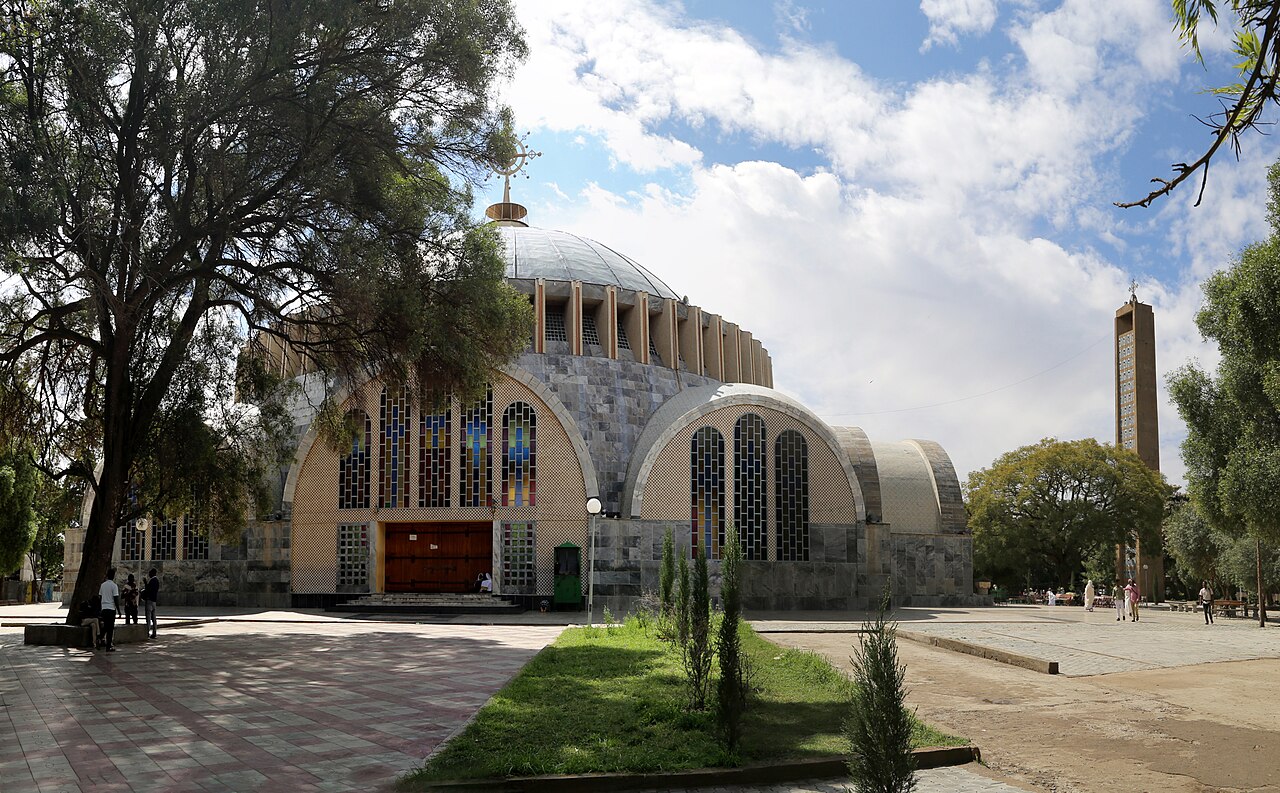
In the highland’s of northern Ethipioa’s Tigray region is a city called Aksum. A city that used to be part of the Kingdom of Aksum. We know of this kingdom from the hundreds of obelisks and stelae that cover the fields on the outskirts of this current city. We will come to them later.

Kingdom of Aksum
Let’s start with the history of this kingdom first. The Kingdom of Aksum, dominated the Horn of Africa and the Red Sea region for most of the first millennium A.D, contemporary with that other big empire: the Roman Empire. And just like Rome, the Kingdom of Aksum also began with a city. From the city of Aksum came the empire whose kings had dominion over a large area comprising parts of modern-day Ethiopia, Eritrea, Sudan, and the southern Arabian Peninsula. The rulers and people of Aksum traded with regions from Iberia to India, and perhaps even as far as China. But they were not just traders. They were also fierce warriors, highly literate, boasting of accomplished artists and engineers among their numbers. In addition to the amazing obelisks and stelae mentioned before, they also issued their own gold coins.

We don’t know much about them because what we know of Africa is from the western perspective, and that has been either concentrated on Egypt, or it has been deeply flawed, based entirely on western agendas and thinking. But delve through history and you will find them. For example, there was a 3rd century AD Persian prophet called Mani, who referred to Aksum as one of the world’s four great empires, along with the Romans, Persians, and Chinese.
Read about The Ancient Windmills of Nashtifan
History of Aksum
Because of the lack of research into this region, we do not really know much about how the Aksumites became a kingdom. The origins of the Kingdom of Aksum remain a subject of debate and are challenging to determine precisely. While the kingdom reached its peak between the fourth and sixth centuries AD, its roots can be traced back much earlier in the Horn of Africa. Archaeologists identify these early stages as the pre-Aksumite and proto-Aksumite periods, laying the foundation for the later Aksumite civilisation. What we do know is that before the establishment of Aksum, Eritrea and the Tigray plateau of northern Ethiopia was home to a kingdom known as Dʿmt (located in present-day Eritrea and the northern Tigray region of Ethiopia). It is thought that this kingdom was influenced by the Sabaens from the region around modern-day Yemen, whose presence lasted for just a few decades but influenced the later Aksumite civilization, such as in the adoption of Ancient South Arabian script, which developed into Geʽez script of Ethiopia, as well as the adoption of the Ancient Semitic religion.
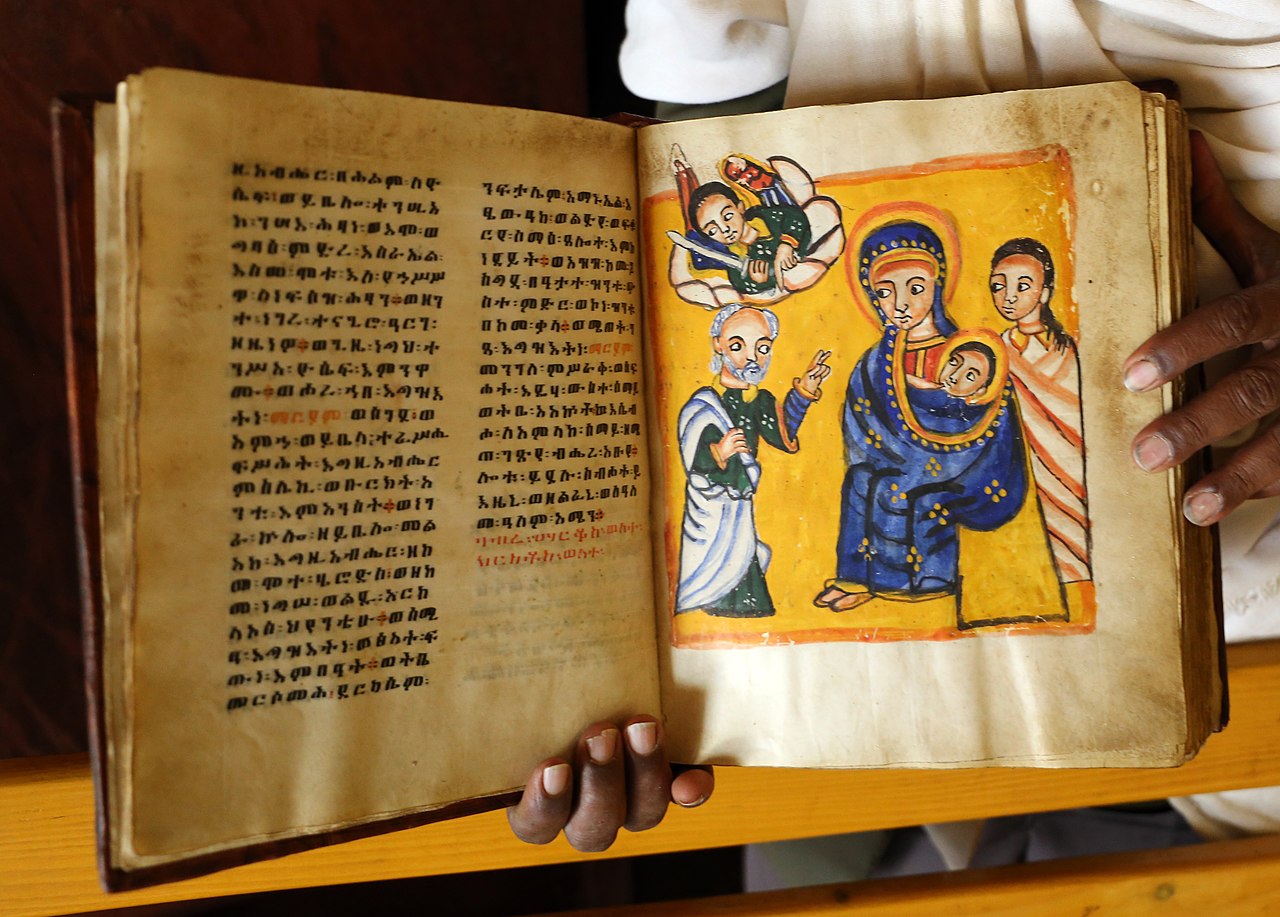

The people living in the Ethiopean highlands also traded with Egypt and Nubia at this time. So, this was not some isolated kingdom. Archaeology has shown that in the mid-first millennium BC, a community inhabited the site of Bieta Giyorgis on a hilltop northwest of Aksum. Going further back, stone Age artifacts have been also unearthed at Gobedra, two kilometers west of Aksum.
Evidence from excavations in the Stelae Park at the heart of Aksum corroborates continuous activity in the area from the outset of the common era. Two hills and two streams lie on the east and west expanses of the city of Aksum, perhaps providing the initial impetus for settling this area.

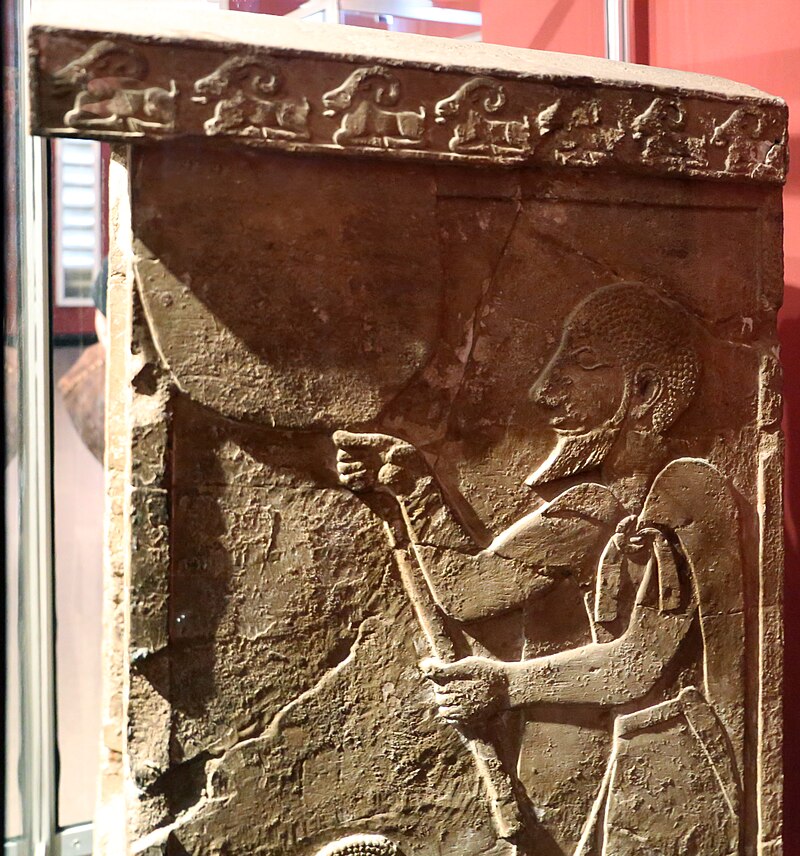
There is archeological evidence suggesting that the Aksumite polity arose between 150 BC and 150 AD. It seems that small scale district “kingdoms” with large communities and one or more elite residences existed in the early period. According to British archaeologist Stuart Munro-Hay: “Quite probably, the kingdom was a confederacy, one of which was led by a district-level king who commanded the allegiance of other petty kings within the Axumite realm. The ruler of the Axumite kingdom was thus ‘king of kings’ — a title often found in inscriptions of this period. There is no evidence that a single royal lineage has yet emerged, and it is quite possible that at the death of a king of kings, a new one would be selected from among all the kings in the confederacy, rather than through some principle of primogeniture.”
But the most prosperous period of Aksum was between the 4th and 6th centuries AD.
Aksumite culture and architecture
The main hub of the Ethiopian highlands in the first millennium BC, however, lies in Yeha, 30 miles (48.28 km) northeast of Aksum. This site contains some of the oldest and largest standing architecture in sub-Saharan Africa. There is a building, now known as the Great Temple, dedicated to the Sabaen moon good Almaqah. This amazing temple was constructed around 700 BC from rectangular blocks, some of which are 10 feet (3. 04 metres) wide. Even today, it is still more than 45 feet (13.7 metres) tall. The temple has been studied for over a hundred years but not much work has been done to understand the surounding areas, so no major urban sites were found.
The thriving city of Aksum, the Kingdom’s capital, is replete with stelae, obelisks, tombs and even ruins of ancient buildings, all providing evidence of a once thriving economic and cultural centre. The modern town of Aksum is in fact built atop this ancient capital and this has made it difficult to excavate the site and reveal more of the empire’s history.

But we do see the largest of some of the ancient monuments, toppled on its side and broken into sections. It was carved with doors and windows and probably looked like a 13 story building that once stood 100 feet (30.48 metres) tall. This Great Stela weighs more than 570 tons and was hewn from a single block of rock. The granite-like rock was likely obtained from a quarry 2.5 miles (4.02336 km) away. This amazing Stela is more than three times the height of the moai statues on Easter Island. Not only that it is 20 times heavier than the biggest sarsen stones at Stonehenge, making it one of the largest monolithic structures ever built and transported. What a feat!
In 2009, Johns Hopkins University archaeologist Michael Harrower and his team from the Southern Red Sea Archaeological Histories (SRSAH) project decided to investigate the area north of Yeha. Local residents kept telling them of a place called Beta Samati, so they decided to find it. And they found it after a 9- minute walk from Yeha, near the modern village of Edaga Tabu. Here they saw clear signs of an urban area. Scattered pottery fragments and stone remains from ancient structures could be seen strewn all over the landscape, making Beta Samati one of the most important Aksumite sites ever.

The ancient town of Beta Samati is perched atop a hill rising 80 feet above the surrounding valley, covering an impressive 50 acres—equivalent to around 40 football fields. Its well-preserved ruins, some reaching a depth of 10 feet, reveal a settlement that thrived for over 1,300 years, from the 8th century BC to the 7th century AD. Beta Samati’s history spans both the pre-Aksumite and Aksumite periods, flourishing during Aksum’s peak as a vital centre for production, trade, religion, and administration, closely connected to the Aksumite capital.
Harrower’s team uncovered a complex network of stone walls and interconnected rooms, which indicated both residential and commercial use. Notably, the walls appeared to have been constructed in a single, coordinated effort. Within these structures, they also discovered a range of artefacts, including dishes, bowls, storage vessels, grinding stones, and remains of animals and plants—evidence of food production, storage, and consumption. More unexpectedly, they found signs of metal and glass manufacturing, challenging the long-held belief that all glass found at Aksumite sites was imported from the Roman world.
Harrower and his team have also worked in the ancient port of Adulis. Both Beta Samati and Adulis have revealed what life was like 1,700 years ago, by showcasing sophisticated building techniques, the importance of Christianity on the local culture, as well as the existence of the aforementioned trade networks that were key to the kingdom’s success.
The influence of Christianity was also discovered at the base of the hill, where Beta Samati is situated. A large structure, measuring 60 feet long by 40 feet wide was found, as well as a stone block and small stone pendant, both of which contained inscriptions in Ge’ez, an ancient Ethiopian language. The writing on the pendant had the word “venerable” next to what appeared to be an image of a cross. The stone block had an incomplete inscription roughly translated as, “To this entrance, Christ be favourable to us.” This enabled the team to conclude that this was an early Christian basilica. When wheat and barley seeds from this site were radiocarbon dated, the date that emerged was around 4th century AD, meaning that this was around the time the basilica was built. This means that it was one of the oldest – perhaps even the oldest – known churches in that part of the world.
This makes sense because as per Ethiopian tradition, the Aksumites were among the first people to accept Christianity. There is a legend that King Ezana of Aksum (reign circa AD 325-360) was converted to Christianity by his childhood tutor, Saint Frumentius. Originally from Lebanon, Frumentius became the head of the Ethiopian church and its first bishop. Coins minted during Ezana’s reign provide evidence of his conversion. In the early years of his rule, Ezana’s coins featured his image alongside a small crescent and disk—symbols linked to pagan southern Arabian deities.

However, in later years, this iconography was replaced by a single cross, reflecting his embrace of Christianity. It seems that Aksum converted to Christianity in the 4th century, earlier than almost any other major kingdom, perhaps even earlier than Rome. And this was due to the regular contact and cultural exchanges the kingdom had with other civilisations through its extensive trade networks. The empire’s strategic location provided access to the interior of Africa while its position along the Red Sea facilitated connections with diverse peoples and cultures across the Arabian Peninsula, from Nubia to the Gulf of Aden and beyond. Excavations have revealed amphorae from Jordan, glass beads from the eastern Mediterranean, and Roman pottery produced in North Africa. This extensive cultural exchange led to a diverse, multilingual society, inflitrating from its main, internationally renowned port and second most important city, Adulis. Similar to Egypt’s Rosetta Stone, the fourth-century AD Ezana Stone documents King Ezana’s achievements in three languages—Greek, Ge’ez, and Sabaean. Alongside the arrival of foreign languages and artefacts came a flow of new ideas and beliefs, including Christianity. Adulis received most of Red Sea maritime traffic in the first century AD, as is evident from its mention as an important trade centre in the Periplus of the Erythraean Sea, a first-century AD travel guide to the Red Sea and Indian Ocean, as well as in the Roman author Pliny the Elder’s Natural History, written around the same time. Adulis was the place from where wealth was distributed to the rest of the empire. Although it covered around 100 acres, only 5 percent has been explored.
After the intial adoption of Christianity by King Ezana in the 4th century, it took a couple of hundred years for it to spread throughout the kingdom, reaching Adulis in the 6th century, which then became replete with churches, monks, and priests. The ruins of a 100 feet (30 metres) long and 65 feet (19.8 metres) wide complex, built atop a 10-foot-high (3.048 metres) podium were uncovered in Adulis. Its plan was typical of Christian basilicas and it was dated to be from the 6th century AD. The inside of the structure was once full of pillars and columns, as well as ornate stone window slabs, chancel screens and decorated walls. The marble and much of its other decoration were imported from the Mediterranean and from as far afield as the Pyrenees Mountains 3,000 miles (4,828.032 km) away. And excavations have revealed other imported goods, such as amphorae from Syria, a statue from India, in addition to Chinese ceramics. Adulis was clearly an important port at this time.
Decline of the kingdom
It is thought that the Kingdom of Aksum faced decline due to various factors, not least: climate change. Adulis’ coastline receded away into the Red Sea, away from the main city. That once great port lost its ability to serve as an international hub and its economic importance diminished. Plus, repeated Persian conquests, and the rise of Islam in the Arabian peninsula in the 7th century AD would also have had an impact. Historians suggest that by the 8th century AD, Muslim settlers had established control over the Dahlak Archipelago—a strategically important group of islands off the coast of Adulis. This shift in power may have led to the Aksumites gradually losing their dominance over the Red Sea trade networks, which had been the foundation of their wealth and expansion.
Ancient civilisations from Africa have always remained on the sidelines, even though the region is full of archaeological treasures. Sudan and Ethiopia are a testament to this. The little research that has taken place in the region that the Kingdom of Aksum once encompassed, has shown as much. Unfortunately, the area has been under violent conflict in recent years, not only dangerously impacting the lives of people but also halting any research that could have taken place there.
Eventually though peace may come to the people of Aksum once again and we will be able to find out more about their ancient, and glorious past.