What did Spinster mean?

A woman standing with a spindle in her left hand. She is wearing a purple dress and a white shawl
William Adolphe Bouguereau, The Spinner

Did you know?

The word “spinster” wasn’t always an insult.
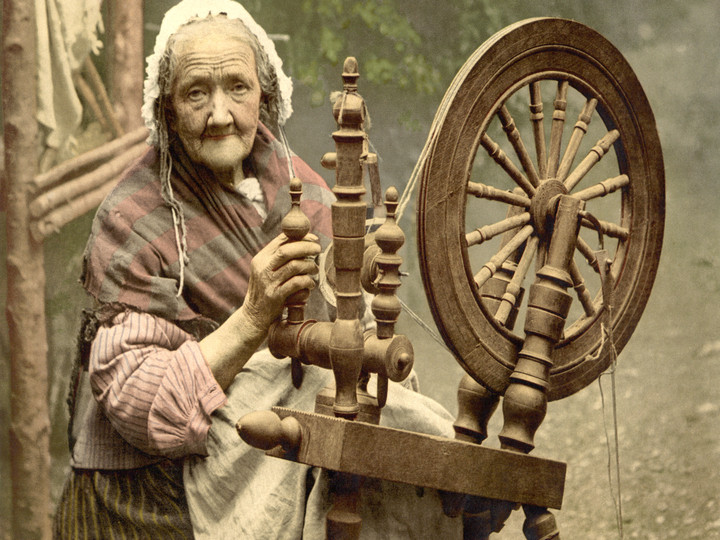
An old woman spinning at her spinning wheel
Spinsters were originally women who had spinning as a profession

In the 1300s, a spinster was simply a woman who spun thread or yarn — a common occupation that could be done from home, no expensive looms needed.

In legal documents, people were often identified by their job — just like Smith, Baker, or Tanner, and women who spun yarn were called Spinster.

But as time went on, things changed. Married women had better access to materials and trade (thanks to their husbands), while unmarried women were left with lower-paid work like spinning.

By the 1600s, spinster became shorthand for an unmarried woman in legal papers.

A woman spinning at her spinning wheel. Black and white photo. Another woman stands away from her.
Spinners were called spinsters

And by the 1700s? The word took on a new meaning — blending into the more loaded label: “old maid.”

Become a Patron!

Saima Baig

I am a Chartered Environmentalist from the Royal Society for the Environment, UK and co-owner of DoLocal Digital Marketing Agency Ltd, with a Master of Environmental Management from Yale University, an MBA in Finance, and a Bachelor of Science in Physics and Mathematics. I am passionate about science, history and environment and love to create content on these topics.

Connect

Support Us On Patreon!

Digital Magazine 360 on History
Newsletter
Please enable JavaScript in your browser to complete this form.

Subscribe to our newsletter and stay updated..

Provide your email address to subscribe. For e.g abc@xyz.com
You may unsubscribe at any time using the link in our newsletter.

Subscribe to Podcast