
Podcast Episode 108 l Do stupendously large black holes exist?
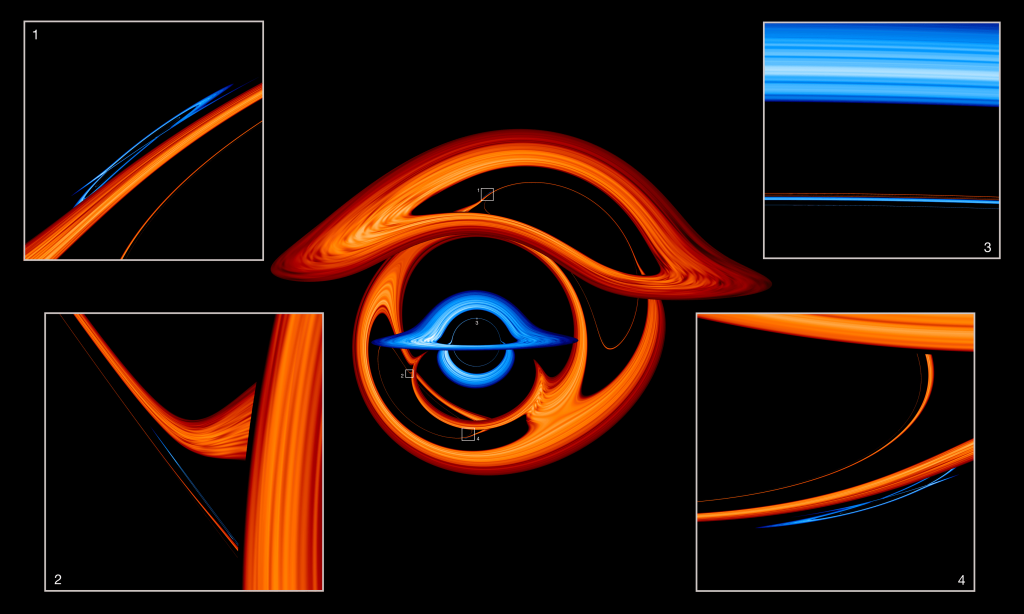
Stupendously large black holes (SLABs) are theoretical cosmic giants, potentially reaching trillions of solar masses with radii about a light-year wide. Though unobserved, they could exist if black holes grew at extraordinary rates, possibly lurking in the centres of distant galaxies.
Stupendously Large Black Holes

Stupendously large black holes (SLABs) are hypothetical cosmic giants thought to exceed trillions of solar masses, with radii stretching roughly a light-year across. While none have been observed, they could form if black holes consumed material at unusually high rates, potentially hiding at the centres of some galaxies.
Proof of black hole ‘plunging regions’
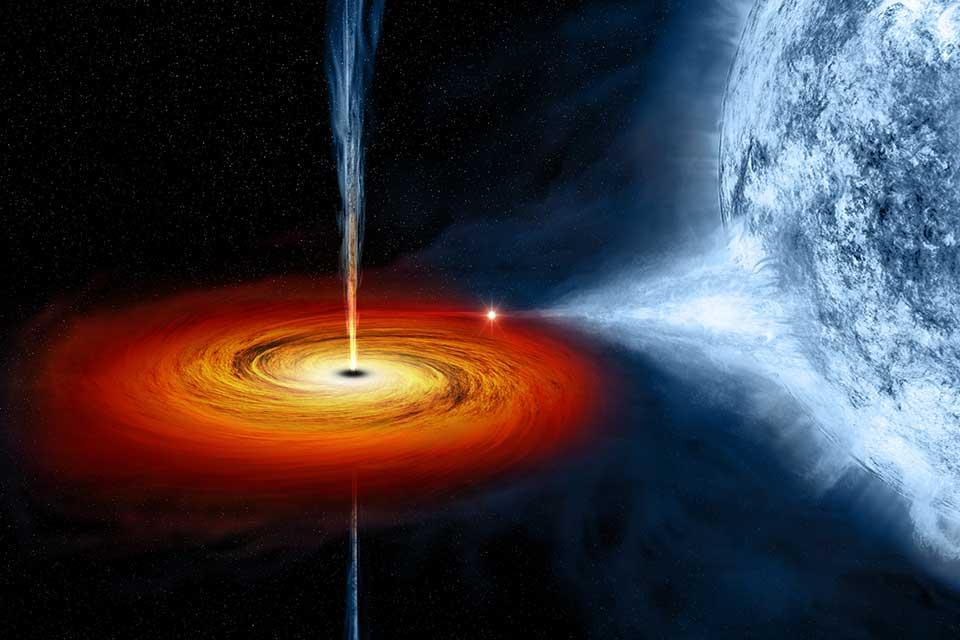
Proof of black hole ‘plunging regions’ has been found by scientists using X-ray data proving Albert Einstein right once again.
Black hole systems in the Milky Way and the Large Magellanic Cloud
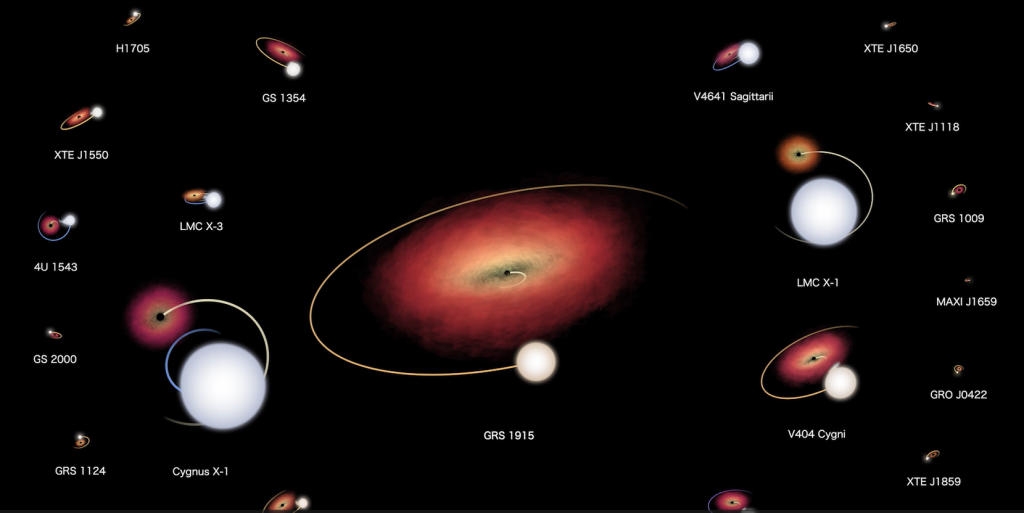
22 Black hole systems in the Milky Way and the Large Magellanic Cloud
NASA’s Chandra Discovers Giant Black Holes on Collision Course
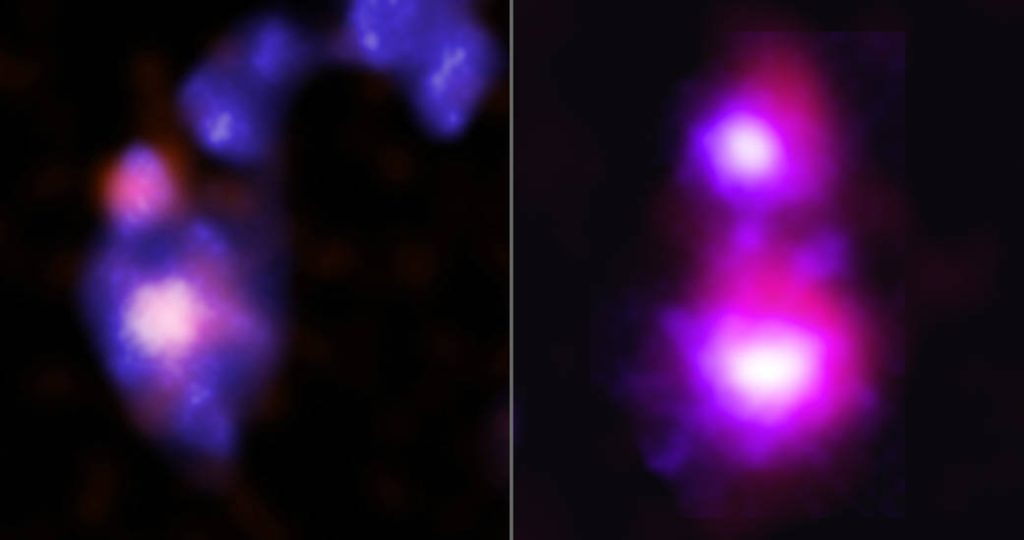
A new study using NASA’s Chandra X-ray Observatory has tracked two pairs of supermassive black holes in dwarf galaxies on collision courses, as discussed in the latest press release. This is the first evidence for such an impending encounter, providing scientists with important information about the growth of black holes in the early Universe. By […]
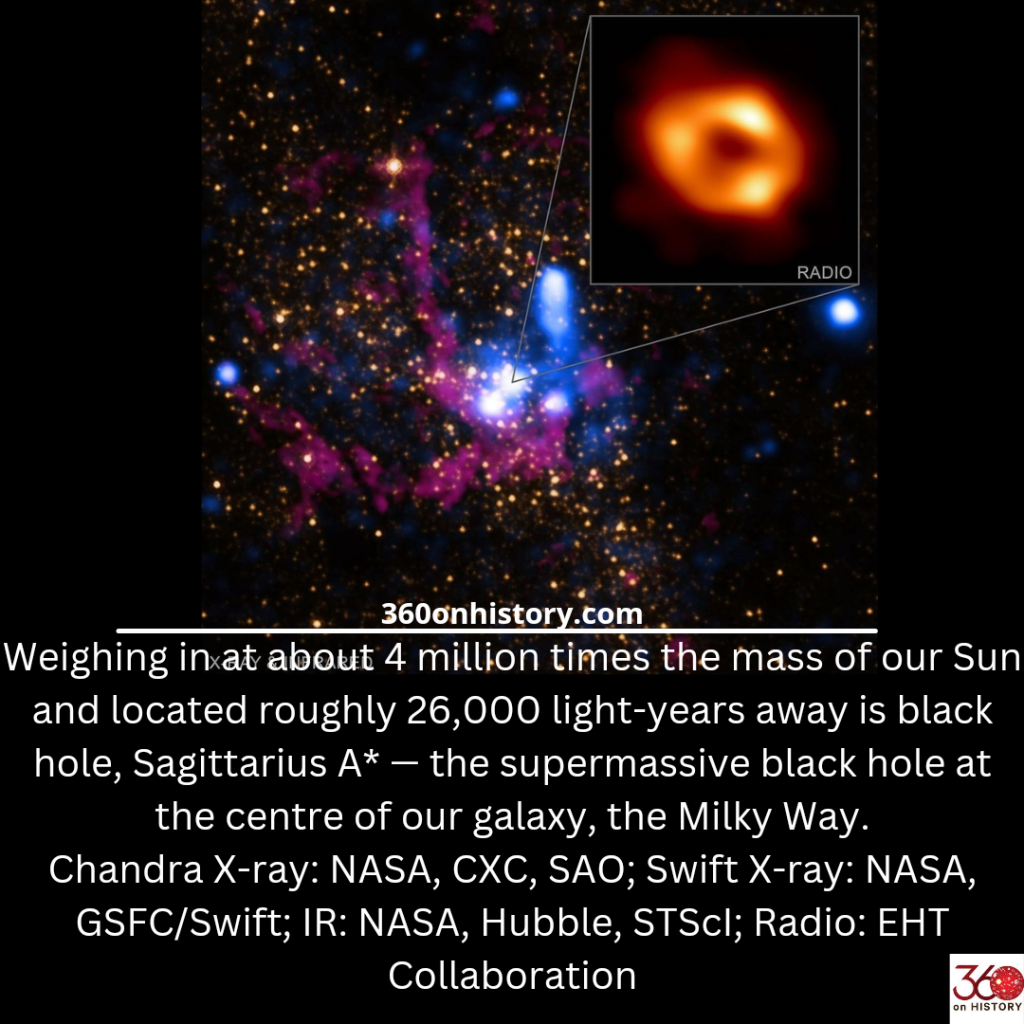
Sagittarius A* – The blackhole at the centre of our galaxy
There are 14 Feasting Black Holes Caught in this Galactic Spiderweb
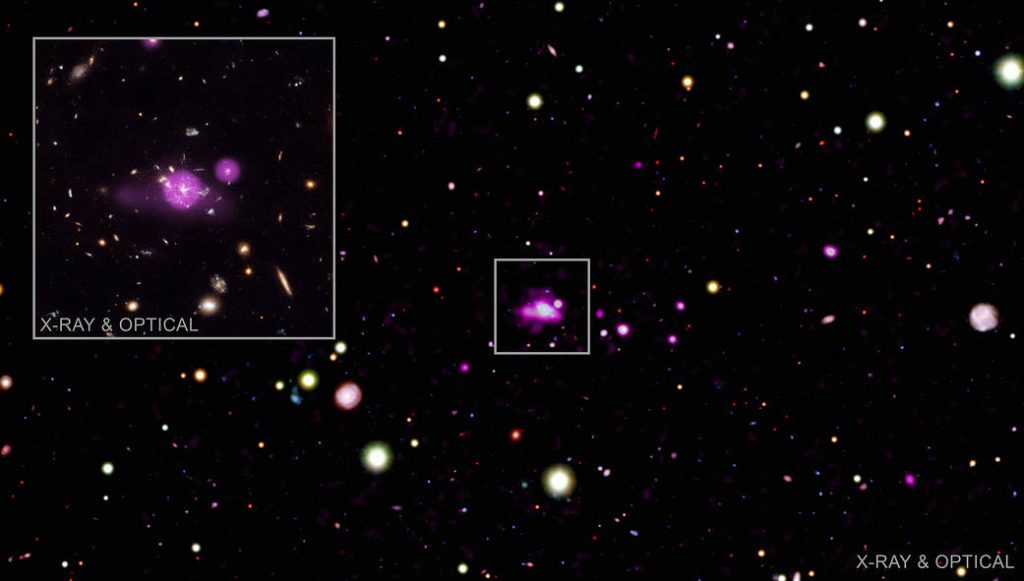
There are 14 Feasting Black Holes Caught in this Galactic Spiderweb protocluster, captured by the Chandra Space Observatory.
New Images of a Famous Black Hole l Event Horizon Telescope

The Event Horizon Telescope Collaboration has taken unprecedented new Images of a famous Black Hole at the centre of galaxy M87 using data from 19 ground and space observatories and in different wavelengths.
This is a Map of 25,000 Supermassive Black Holes

WOW! This view of the nightsky does not depict stars, these are supermassive black holes. An international team of astronomers has published a map of the sky showing over 25,000 supermassive black holes, using 52 stations with LOFAR antennas spread across nine European countries. It is the most detailed celestial map in the field of low radio frequencies.
Podcast Episode 29 l Hubble Discovers A Concentration of Small Black holes Inside Globular Cluster
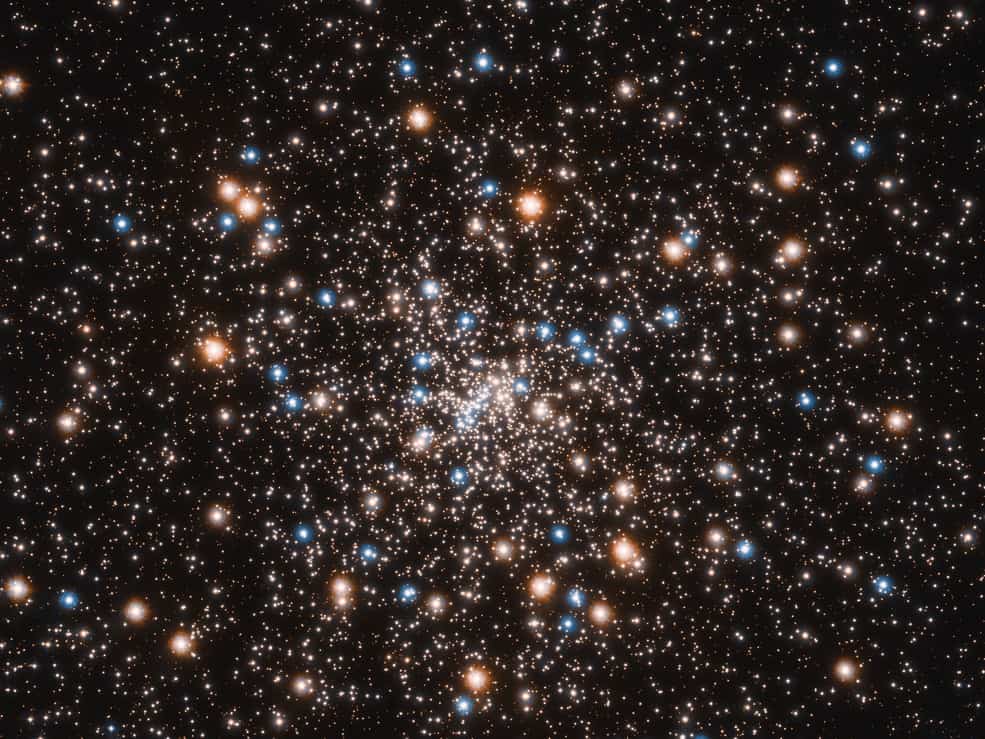
The Hubble Space Telescope – a project of international cooperation between NASA and ESA (European Space Agency) – is a gift that keeps on giving. Astronomers were using it to find an intermediate-mass black hole at the centre of globular cluster NGC 6397 but instead they found a concentration of small stellar-mass black holes.