Genomes of seven early Europeans show they belonged to a small, isolated group that had recently mixed with Neandertals but left no present-day descendants
Few genomes have been sequenced from early modern humans, who first arrived in Europe when the region was already inhabited by Neandertals. An international team led by researchers at the Max Planck Institute for Evolutionary Anthropology has now sequenced the oldest modern human genomes to date. The genomes were recovered from seven individuals who lived between 42,000 and 49,000 years ago in Ranis, Germany and ZlatÁ½ kŠ¯Šˆ, Czechia. These genomes belonged to individuals who were part of a small, closely related human group that first split off from the population that left Africa around 50,000 years ago and later settled the rest of the world. Although they separated early, the Neandertal DNA in their genomes traces back to an admixture event common to all people outside Africa, that the researchers date to around 45,000-49,000 years ago, much later than previously thought.
After modern humans left Africa, they met and interbred with Neandertals, resulting in around two to three percent Neandertal DNA that can be found in the genomes of all people outside Africa today. However, little is known about the genetics of these first pioneers in Europe and the timing of the Neandertal admixture with non-Africans.
A key site in Europe is ZlatÁ½ kŠ¯Šˆ in Czechia, where a complete skull from a single individual who lived around 45,000 years ago was discovered and previously genetically analyzed. However, due to the lack of archaeological context, it was not possible to link this individual to any archaeologically defined group. A nearby site, the IlsenhÁ¶hle in Ranis in Germany, about 230 km from ZlatÁ½ kŠ¯Šˆ, is known for a specific type of archaeology, the Lincombian-Ranisian-Jerzmanowician (LRJ), which dates to around 45,000 years ago. It has long been debated whether the LRJ culture was produced by Neandertals or early modern humans. Although mostly small fragments of bones are preserved in Ranis, a previous study was able to analyze mitochondrial DNA from thirteen of these remains and found that they belonged to modern humans and not Neandertals. However, since the mitochondrial sequence only constitutes a miniscule part of the genetic information, the relationships to other modern humans remained a mystery.
Linking ZlatÁ½ kŠ¯Šˆ and Ranis
© Tom BjÁ¶rklund for Max Planck Institute for Evolutionary Anthropology
A new study published in Nature analyzed the nuclear genomes of the thirteen specimens from Ranis and found that they represented at least six individuals. The size of the bones indicated that two of these individuals were infants and, genetically, three were males and three were females. Interestingly, among these individuals were a mother and daughter, as well as other, more distant, biological relatives. The team also sequenced more DNA from the female skull found at ZlatÁ½ kŠ¯Šˆ, producing a high-quality genome for this individual. “To our surprise, we discovered a fifth- or sixth-degree genetic relationship between ZlatÁ½ kŠ¯Šˆ and two individuals from Ranis.” says Arev SÁ¼mer, lead author of the study, “This means that ZlatÁ½ kŠ¯Šˆ was genetically part of the extended family of Ranis and likely also made LRJ-type tools”.
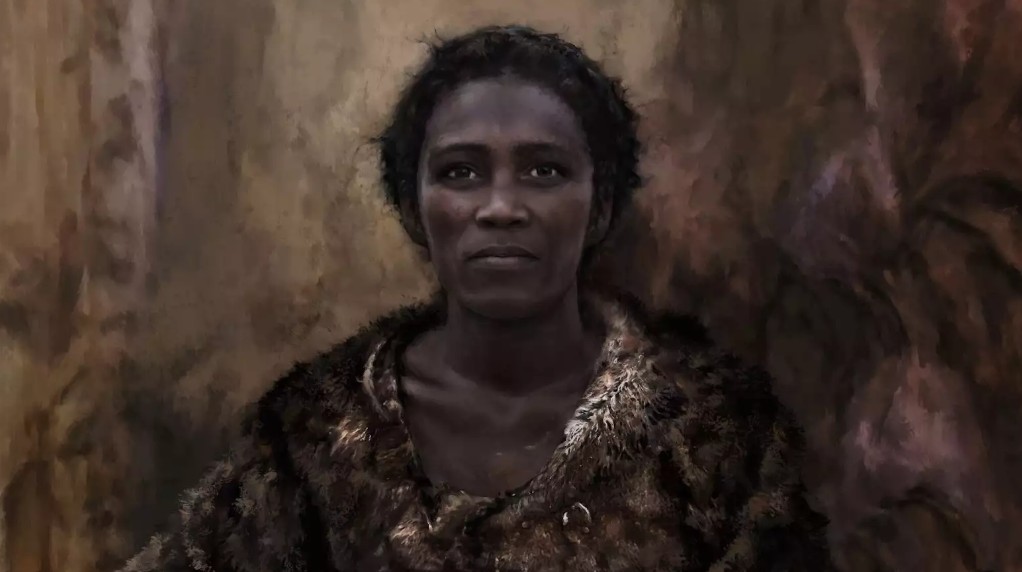
Among the six individuals from Ranis, one bone was particularly well preserved, in fact it is the best preserved modern human bone from the Pleistocene for DNA retrieval. This allowed the team to obtain a high-quality genome from this male individual, referred to as Ranis13. Together, the Ranis13 and ZlatÁ½ kŠ¯Šˆ genomes represent the oldest high-quality modern human genomes sequenced to date. When analyzing genetic variants related to phenotypic traits, they found that Ranis and ZlatÁ½ kŠ¯Šˆ individuals carried variants associated with dark skin and hair color as well as brown eyes, reflecting the recent African origin of this early European population.
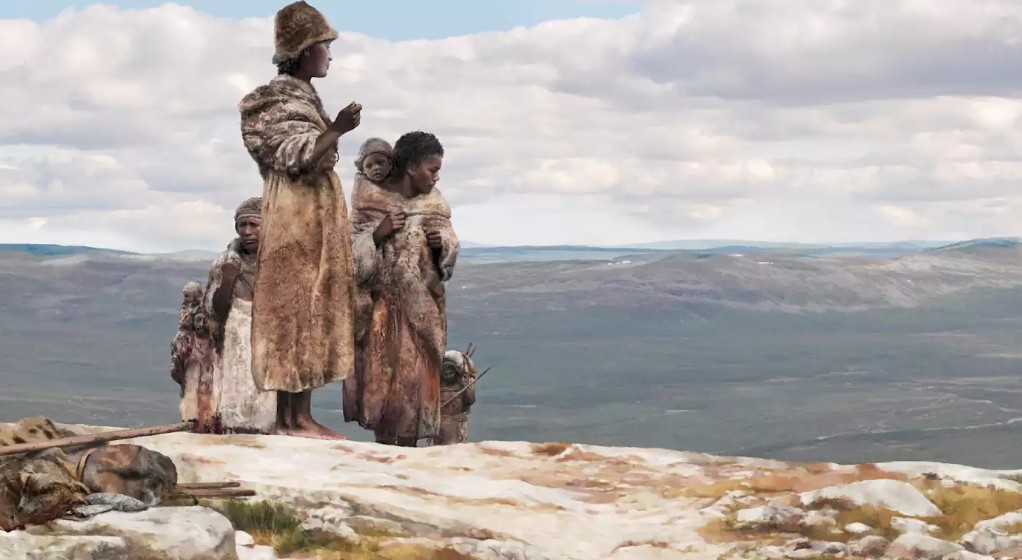
By analyzing the segments inherited from the same ancestor in the Ranis and ZlatÁ½ kŠ¯Šˆ genomes, the researchers estimate that their population consisted of at most a few hundred individuals who may have been spread out over a larger territory. The authors found no evidence that this small early modern human population contributed to later Europeans or any other world-wide population.
A narrower timeframe for the shared Neandertal admixture
Members of the ZlatÁ½ kŠ¯Šˆ/Ranis population coexisted with Neandertals in Europe, raising the possibility that they may have had Neandertals among their recent ancestors after they migrated to Europe. Previous studies on modern humans from over 40,000 years ago, had found evidence of such recent admixture events between modern humans and Neandertals. However, no such evidence for recent Neandertal admixture was detected in the genomes of the ZlatÁ½ kŠ¯Šˆ/Ranis individuals. “The fact that modern human groups, which may have arrived in Europe later, carry such Neandertal ancestry while Ranis and ZlatÁ½ kŠ¯Šˆ do not could mean that the older ZlatÁ½ kŠ¯Šˆ/Ranis lineage may have entered Europe by a different route or did not overlap as extensively with the regions where Neandertals lived” speculates Kay PrÁ¼fer, who co-supervised the study.
The ZlatÁ½ kŠ¯Šˆ/Ranis population represents the earliest known divergence from the group of modern humans that migrated out of Africa and dispersed later across Eurasia. Despite this early separation, the Neandertal ancestry in ZlatÁ½ kŠ¯Šˆ and Ranis originated from the same ancient admixture event that can be detected in all people outside Africa today. By analyzing the length of the segments contributed from Neandertals in the high-coverage Ranis13 genome and using direct radiocarbon dates on this individual, the researchers dated this shared Neandertal admixture to between 45,000 and 49,000 years ago. Since all present-day non-African populations share this Neandertal ancestry with ZlatÁ½ kŠ¯Šˆ and Ranis, this means that around 45,000 to 49,000 years ago, a coherent ancestral non-African population must still have existed.
“These results provide us with a deeper understanding of the earliest pioneers that settled in Europe,” says Johannes Krause, senior author of the study. “They also indicate that any modern human remains found outside Africa that are older than 50,000 years could not have been part of the common non-African population that interbred with Neanderthals and is now found across much of the world.”
This article was first published here.