Welcome to 360onhistory, I’m Saima Baig, and today we’re taking a journey through the medieval heart of Kraków, one of Europe’s most historically rich cities. Whether you’re a history buff or just someone interested in discovering a new destination, Kraków’s Old Town is a treasure trove of stories waiting to be uncovered. So, sit back and let’s step into the past.
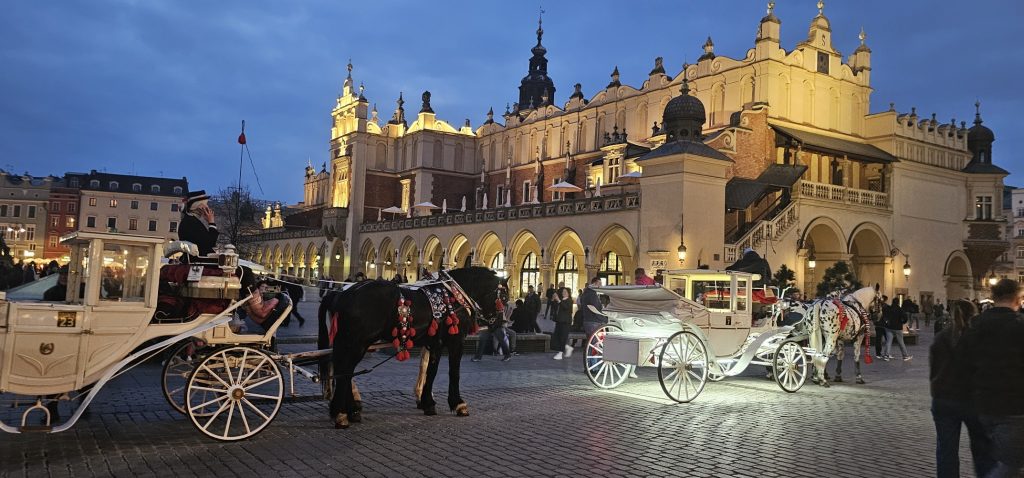
Kraków is a city steeped in history. It was once the royal capital of Poland and, in many ways, it’s still a living, breathing testament to the Middle Ages. The Old Town, with its cobblestone streets, towering spires, and ancient buildings, remains a glorious snapshot of the past. The heart of the city is the Main Market Square, or Rynek GŠ‚ówny, which is not only the largest medieval town square in Europe but also the pulse of the city. Surrounded by medieval townhouses, churches, and landmarks, it’s the perfect starting point for a visit to Krakow.
One of the most iconic structures here is the Cloth Hall or Sukiennice, a market hall dating back to the 14th century. Originally a place for trading textiles, it now houses shops selling local crafts, souvenirs, and a sense of the trade that once filled Kraków’s streets. Walk inside, and you’ll still get a taste of that medieval commercial hustle.
But Kraków’s charm isn’t just in its architecture—it’s in its story. And no story of medieval Kraków would be complete without mentioning Wawel Hill. This imposing limestone hill is where the grand Wawel Castle and Wawel Cathedral stand. The castle has served as the residence of Polish kings for centuries, and the cathedral is a site of immense historical and religious significance. Here, Polish kings were crowned, and many of them were buried in the crypts beneath the cathedral. But perhaps one of the most famous stories tied to this hill is that of the Wawel Dragon, a legendary creature that once terrorized the city. While it’s no longer around, you can still find its statue near the castle, breathing fire and standing as a reminder of Kraków’s mythical past.
As we move through the streets of the Old Town, we see one of its most celebrated landmarks—the St. Mary’s Basilica. Standing tall with its twin towers, this Gothic church is known not just for its architecture but also for the Hejnal Mariacki, the trumpet signal played every hour from its tallest tower. The tune is cut off mid-way as a nod to a brave trumpeter who was shot while sounding the alarm about an invading Mongol army in the 13th century. This act of heroism is immortalised in Kraków’s daily ritual, reminding people of the city’s turbulent medieval past.
Another hidden gem in the Old Town is FloriaŠ„ska Street, one of the main arteries of the medieval city, leading up to the FloriaŠ„ska Gate, part of the original city fortifications. The gate once served as one of the main entrances to Kraków, and as you pass under it today, you can’t help but feel all the centuries that have passed since the first merchants and travellers walked beneath it. I could just stand there and imagine the traders passing through.
Situated on the Vistula River in Lesser Poland Voivodeship, Kraków was the official capital of Poland until 1596, it began as a hamlet on Wawel Hill and was a busy trading centre of Central Europe in 985. In 1038, it became the seat of Polish monarchs from the Piast dynasty.
The city has a population of 804,237 (2023), with approximately 8 million additional people living within a 100 km (62 mi) radius. , and has traditionally been one of the leading centres of Polish academic, cultural, and artistic life. Cited as one of Europe’s most beautiful cities, its Old Town was declared a UNESCO World Heritage Site in 1978, one of the world’s first sites granted the status.
Kraków’s medieval defensive walls were once a mighty barrier, with 47 towers, most of which are gone now. However, you can still explore the remnants of the Barbican, a fortified outpost that protected the city from invaders. This iconic structure, with its circular shape and Gothic arches, stands as a formidable reminder of Kraków’s strategic importance in the medieval era.
Let’s not forget Kazimierz, the old Jewish district, which was once an independent town before it became part of Kraków. While this area is rich in Jewish history and culture, it also holds medieval secrets. The Old Synagogue, one of the oldest in Europe, stands as a testament to the Jewish community’s long history in the city, dating back to the 15th century. Walking through Kazimierz, you can feel the layers of history, from its medieval roots to the vibrant, multicultural atmosphere of today.
As you wander through the Old Town of Kraków, it’s impossible not to feel the weight of its past. Every street, every stone, every building has a story to tell. From the bustling market square to the quiet alleys, Kraków’s medieval history is alive in every corner, waiting for you to discover it. Which you can do via its many museums. For example:
The Rynek Underground Museum is an intriguing archaeological site beneath Kraków’s Main Market Square, offering a fascinating glimpse into the city’s medieval past. It showcases a variety of artefacts from the 13th to 18th centuries, including tools, pottery, and even remnants of the city’s original wooden buildings. The museum presents an immersive experience, using modern technology to bring the medieval world of Kraków to life.
The Wawel Castle is one of Poland’s most iconic landmarks and a must-see for any visitor to the city. Situated on Wawel Hill, this royal residence has been home to Polish kings for centuries and boasts a stunning blend of Gothic, Renaissance, and Baroque architecture. The castle houses a rich collection of art, royal treasures, and the Wawel Dragon’s legendary cave.
The Kraków National Museum, one of Poland’s largest museums, is a cultural treasure trove located across several buildings. It features collections ranging from ancient art to contemporary works, but its most famous exhibit is the The Lady with an Ermine by Leonardo da Vinci.
Oh and one has to try the famous Polish dumpling the pierogi and the obwarzanek, a braided ring-shaped bread that is boiled and sprinkled with salt and sesame or poppy seeds before being baked. It is sold by hawkers all over the city.
Thanks for tuning in to 360onhistory. I hope you enjoyed this journey through Kraków’s medieval heart as much as I did. Stay curious, and keep exploring the past with me, Saima Baig. Until next time, please do check out the website 360onhistory.com, our YouTube Channel for videos on Krakow and join us on the social media.
Please subscribe to the You Tube Channel for more on science, history and nature and please do check out the website and follow on social media: Twitter // Instagram // Facebook // Reddit // Threads
Podcast: Play in new window | Download