12 Nov 2026 — The Euclid space telescope has found 15000 potential examples of an incredibly rare phenomenon known as a strong gravitational lensing.
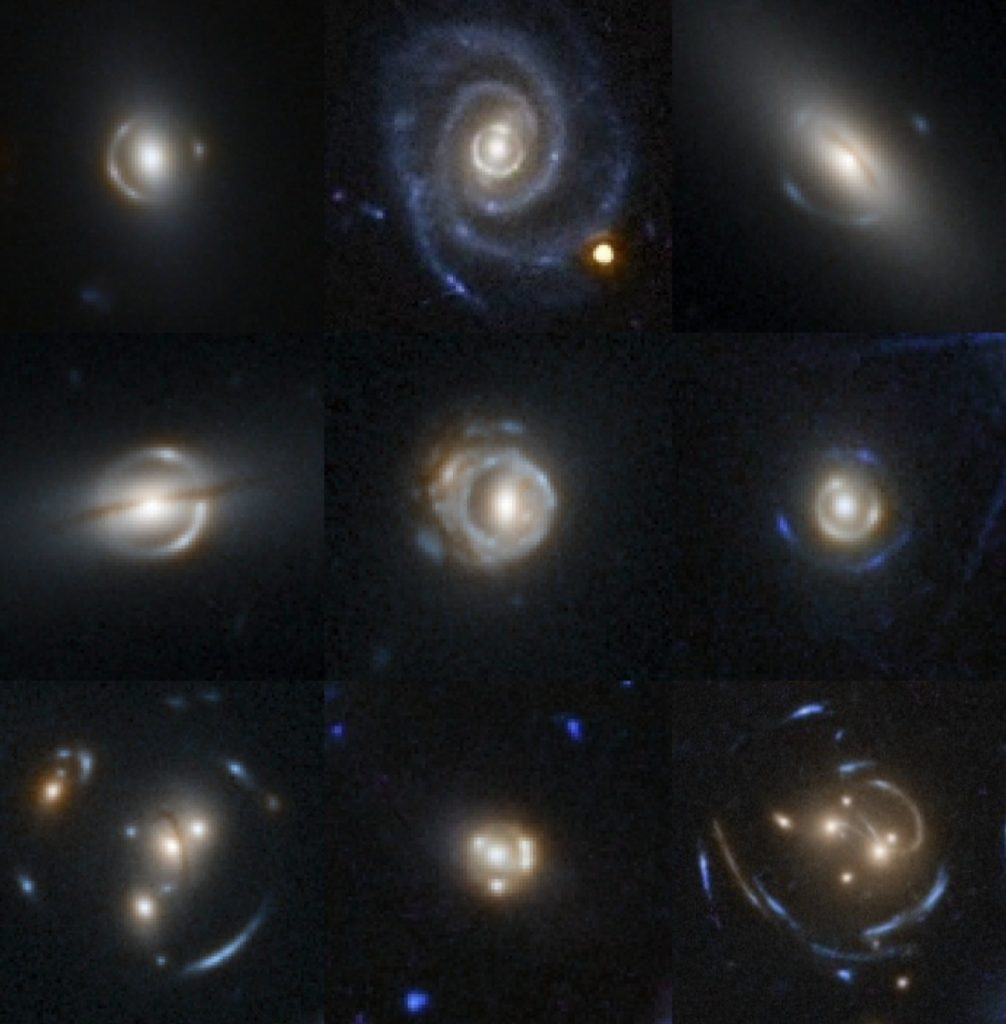
The European Space Agency’s Euclid Space Telescope has identified over 15,000 strong gravitational lensing candidates, creating the largest-ever catalog of these rare cosmic magnifying glasses.
How Gravitational Lensing Works
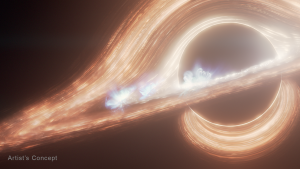
Warping Spacetime: As predicted by Einstein’s theory of general relativity, massive objects like galaxies or galaxy clusters bend the fabric of space-time.
Bending Light: When light from a distant background galaxy passes near a massive foreground object, its path curves.

Arcs, Rings, and Magnification: This creates stretched arcs, multiple images, or complete rings (Einstein rings), while magnifying light from galaxies that would otherwise be too faint to see.
What Euclid Achieves with Lensing
Strong Lensing: Focuses on dramatic distortions to “weigh” individual galaxies, map invisible dark matter halos, and test the expansion rate of the universe.

Weak Lensing: Measures the subtle, minute distortions of millions of background galaxies across a wide field of view to chart how dark energy drives cosmic acceleration.
Machine Learning & Citizen Science: Finds thousands of candidates by combining automated computer vision with volunteer classifications through the Space Warps project on Zooniverse.
Source and image credit: NASA ESA and L. Calcada