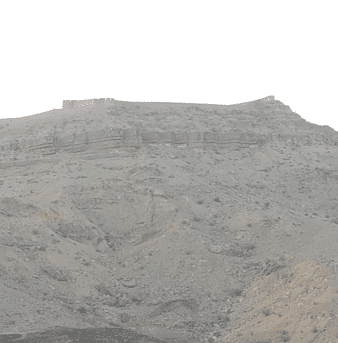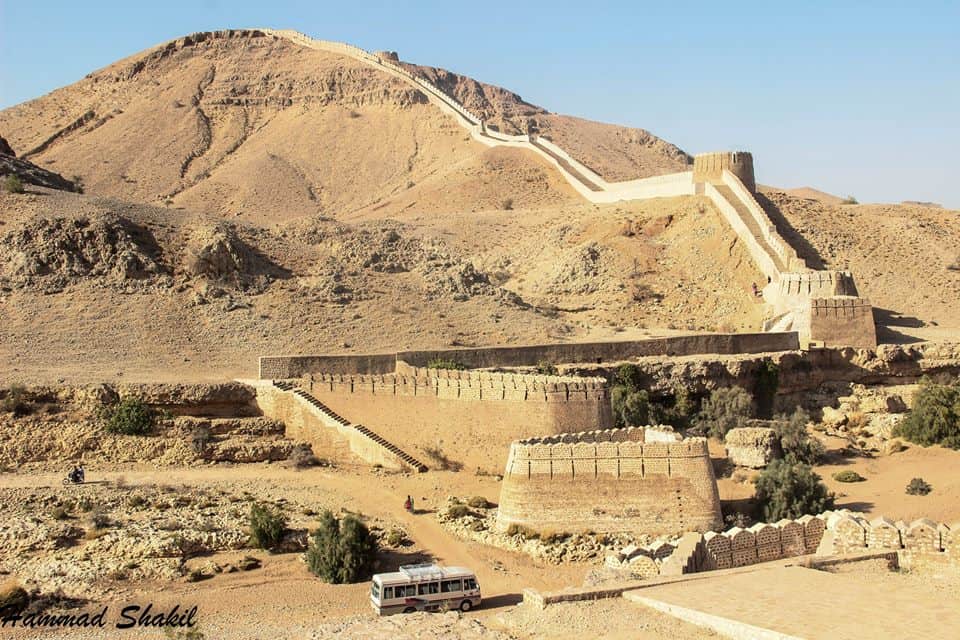
The largest fort in the world by area is widely considered to be the Ranikot Fort, located in Sindh, Pakistan. It is sometimes referred to as “The Great Wall of Sindh” and is recognized as one of the largest forts globally, with a circumference of approximately 32 kilometers (20 miles).
Out amongst the Kirthar Mountains, Sindh, Pakistan, on the eastern side of Kirthar National Park, in the middle of nowhere, lies Rannikot. Also known as the Great Wall of Sindh and the largest fort in the world, Rannikot is actually a 32km (some estimate 35 and even 45km) wall encircling the Kirthar Mountains and occupying an area of 65 sq.km. Within the outer walls are other forts: Miri Kot and Sher Garh; Shahper Gate and Mohan Gate. Beyond Mohan Gate can be seen an arid valley and the signs of an ancient road, part of the Barbican Arachosia, which connected Bhambore to Kandahar; a road used by many a conqueror and traveler of yore.
After traveling 90 km north of Hyderabad on the Indus Highway, you turn left onto a dusty road, till you reach the edge of the national park, the second largest in the country. Drive down further, meandering through rocky mountains and arid terrain, and you suddenly get your first glimpse of the wall, snaking its way across the hilltops.
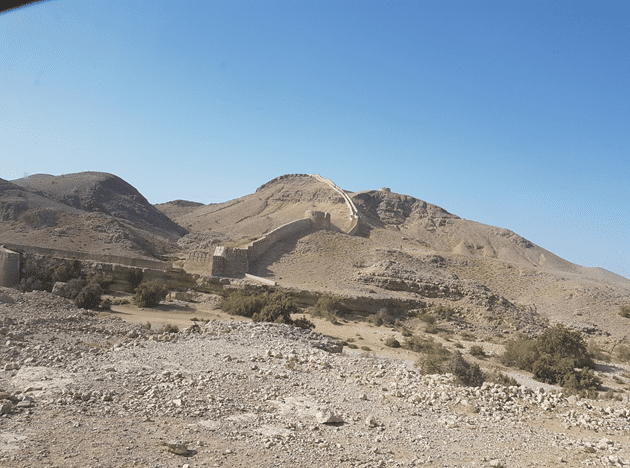
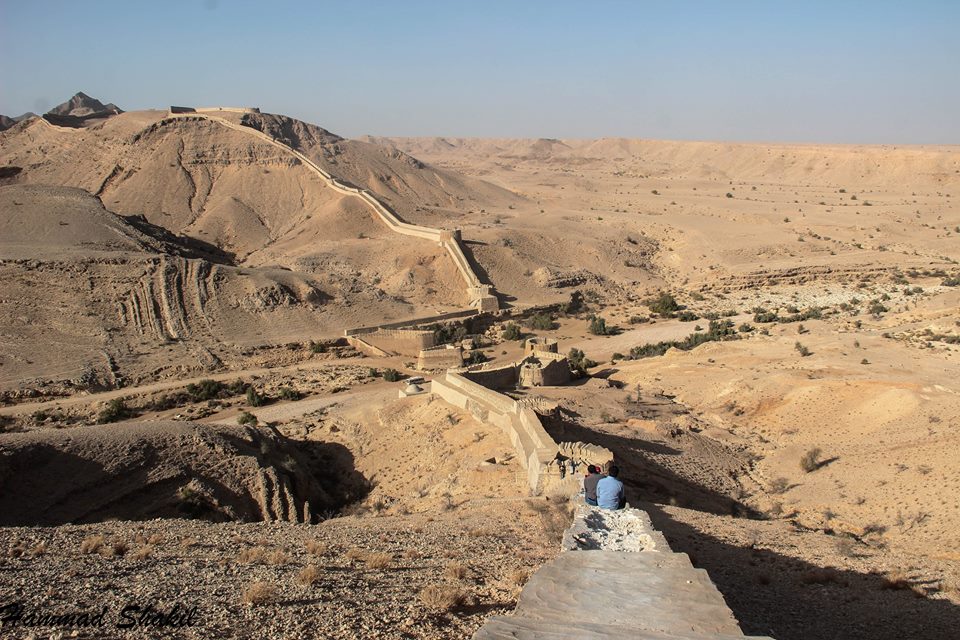
You enter the fort through its eastern Sann Gate. One can clearly see that at some point there must have been a bridge there, spanning a now dry river and connecting the battlements on either side. According to Salman Rashid—writer and traveler—this was the Ranni River, which, at that time (perhaps until 2000 years ago), was a perennial stream that would turn into a torrential river with the arrival of seasonal rains. It is then that the bridge must have been constructed, indicating its ancient origin.
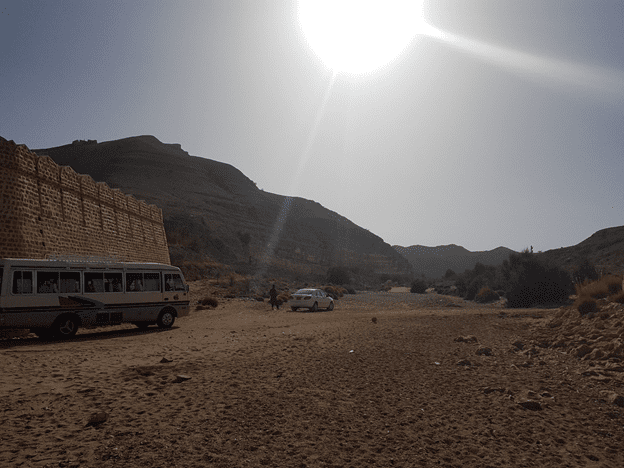
It is said that parts of the gate (and other areas such as Miri) were renovated by the influential Talpur tribe in the 19th century and one can see the difference in the masonry of the ancient structure and the newer one.
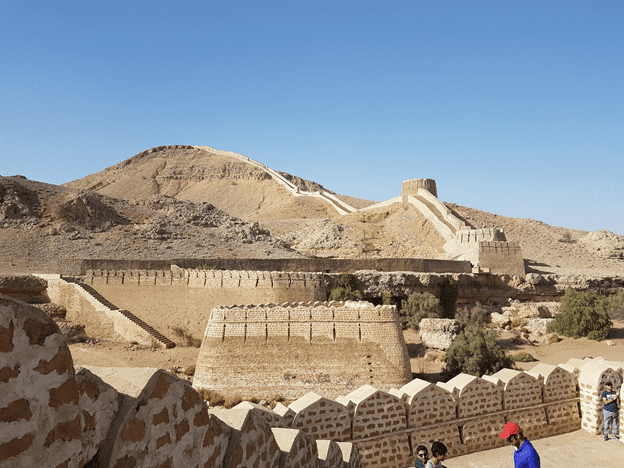
However, the Talpurs did not build the entire wall. Although its origins are shrouded in mystery, historians think that the fort was first converted from a garrison to a larger fort, sometime during the Scythian, or the Parthian, or tha Kushan empires. Perhaps one of these empires started the wall and then the rest added to it, or repeatedly restored it, to defend themselves from other powers.
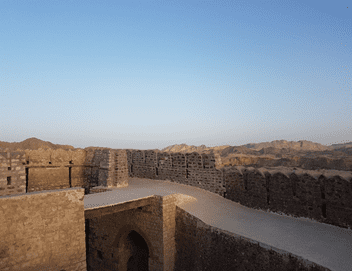
The solid semi-circular bastions are connected to each other by the inclining wall itself and provide a 360 degree view of the surrounding mountains. It is silent and desolate and one wonders what exactly were the builders defending. The wall covers three sides of the whole area, while the remaining northern side is protected by high mountains.
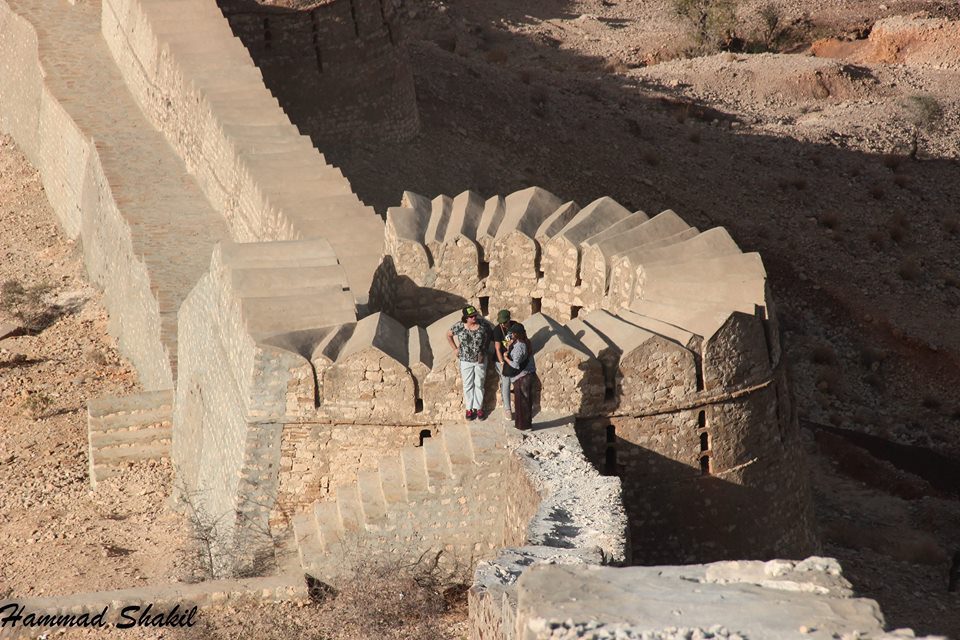
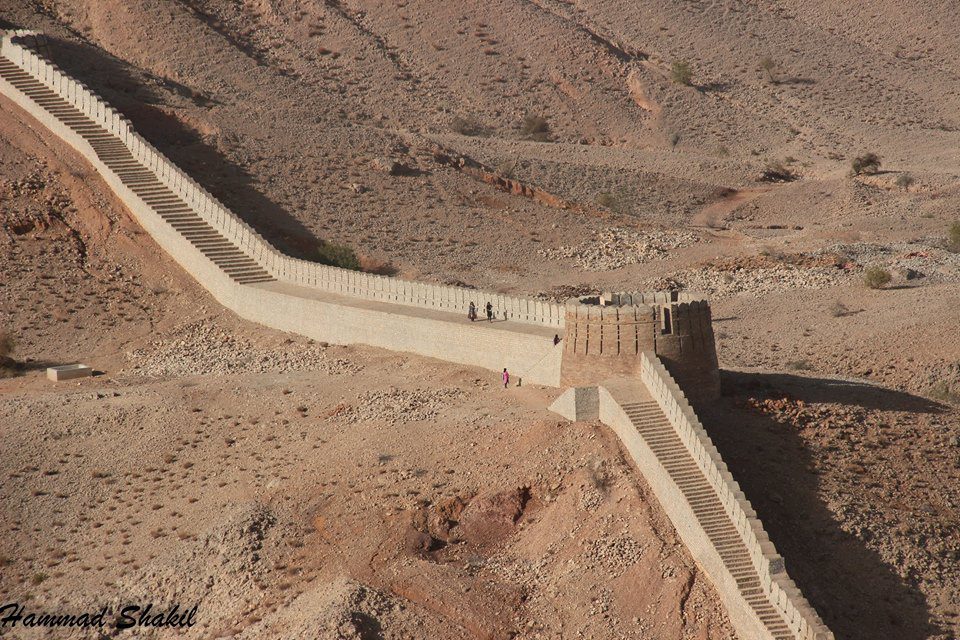
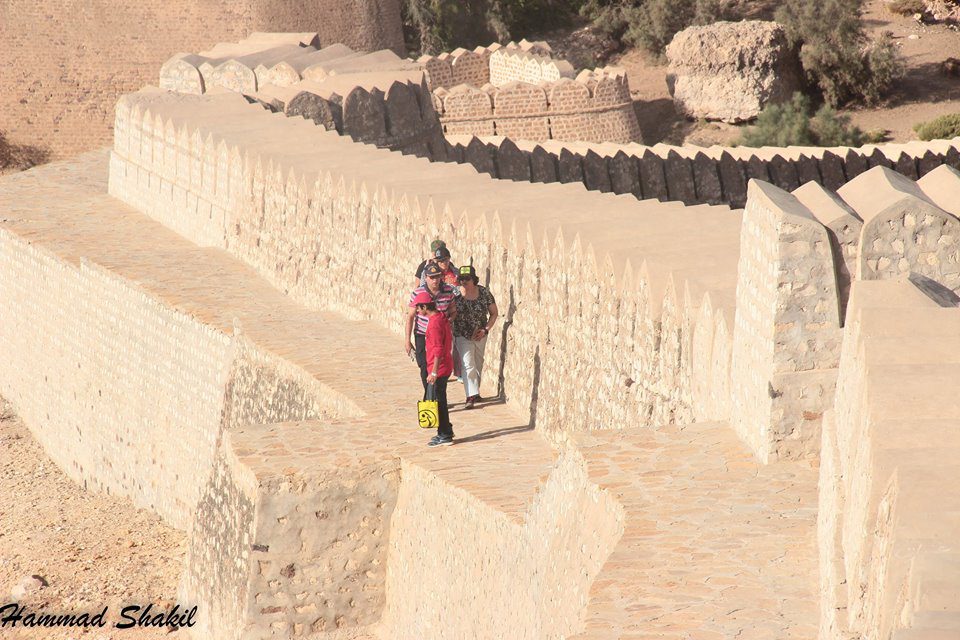
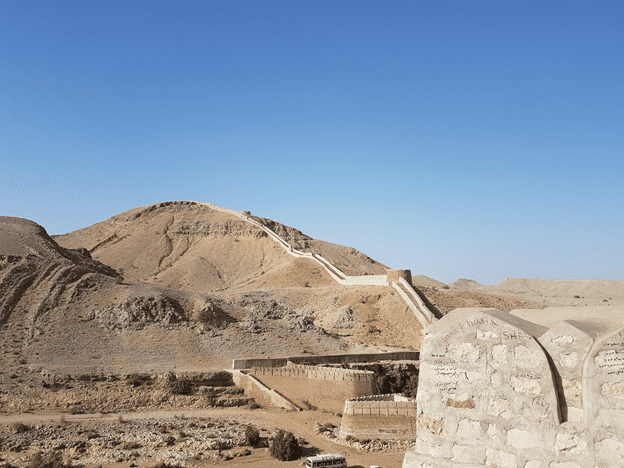
One can climb up from either side of Sann Gate to reach the bastions. The wall is falling apart in some areas, where there is only a precarious platform that can take you to the next bastion.

The smaller Miri Fort is about 3 km away from Sann Gate, sitting on a mound and encompassed by the outer walls. It is part of the Rannikot complex.
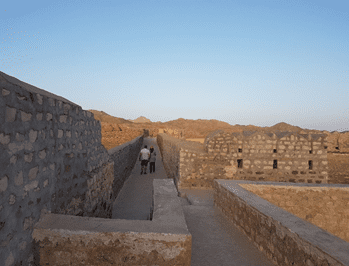
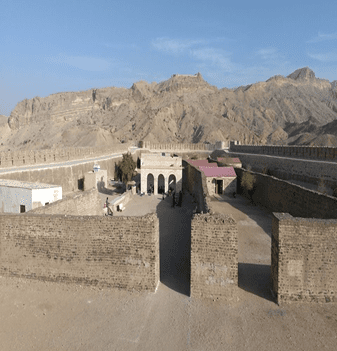
From Miri, if one looks up in the distance, is Shehr Garh.Shehr Garh is one of the key structures located within the vast Ranikot Fort complex in Sindh, Pakistan. It is a smaller fortified area situated inside Ranikot and also holds significant historical and architectural importance. It is positioned on elevated ground within the northeastern part of the Ranikot Fort complex, offering a commanding view of the surrounding landscape, making it a natural defensive point. Shehr Garh is believed to have been a fortified citadel or a royal residence for the ruling elite or military commanders. It may have served as a final defensive stronghold within the fort in case the outer walls were breached. Today, Shehr Garh is in ruins but remains an intriguing site for historians, archaeologists, and tourists exploring the Ranikot Fort. Efforts have been made to preserve and promote the site, but more conservation is needed to protect its historical legacy.