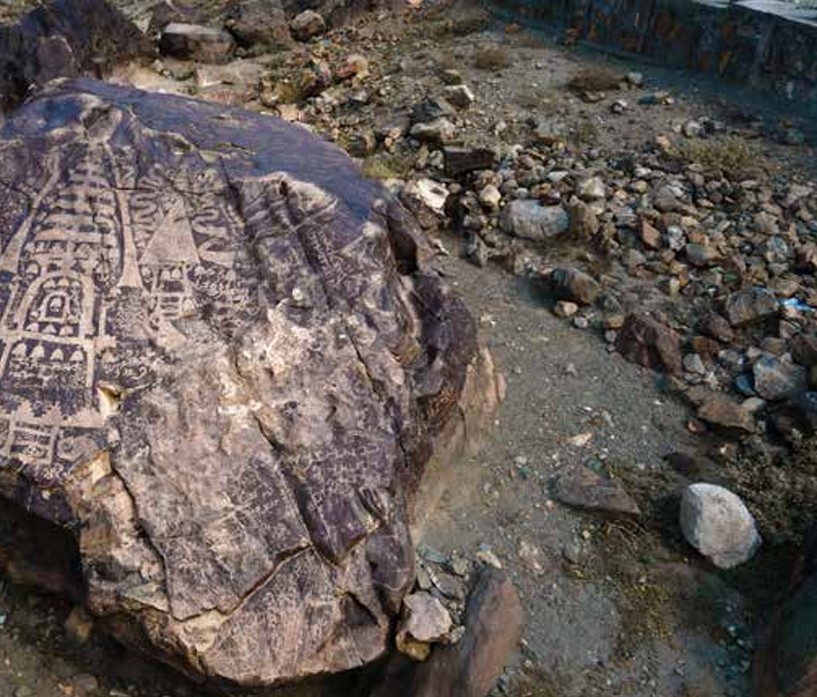
Petroglyphs are fascinating things. These images, created by carving, or scratching into rock surfaces, often to reveal lighter layers beneath a darker surface, have been a part of our varied landscapes for millennia. I guess humans have always had a desire to leave their mark on Earth, and petroglyphs are one of the most striking ways they’ve done so. They can be found all over the world and one such place is Shaital in Pakistan.
Shaital is part of the Karakoram Highway in northern Pakistan, an important transit station with immense archaeological significance. This area was a bustling transit station and historically it acted as a junction of old routes and byways connecting Swat Valley, Gilgit, Chilas, and Chitral areas of northern Pakistan. It was once a part of the ancient Silk Road from China to Europe.
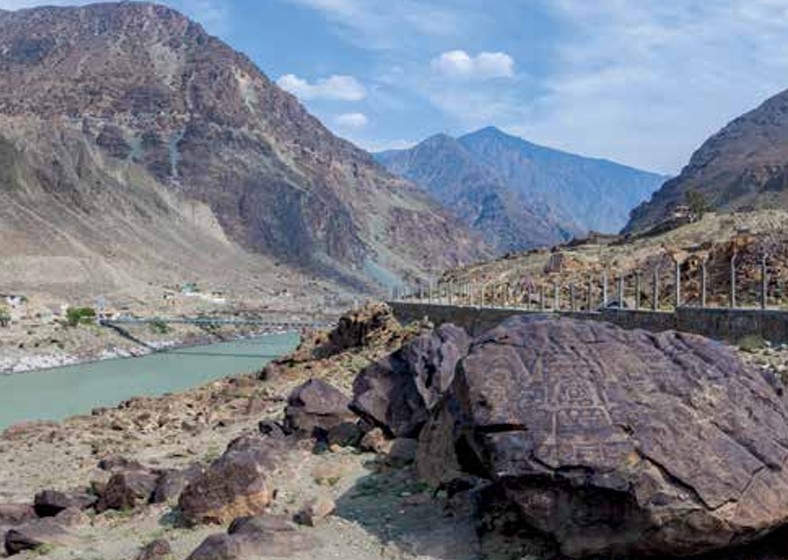
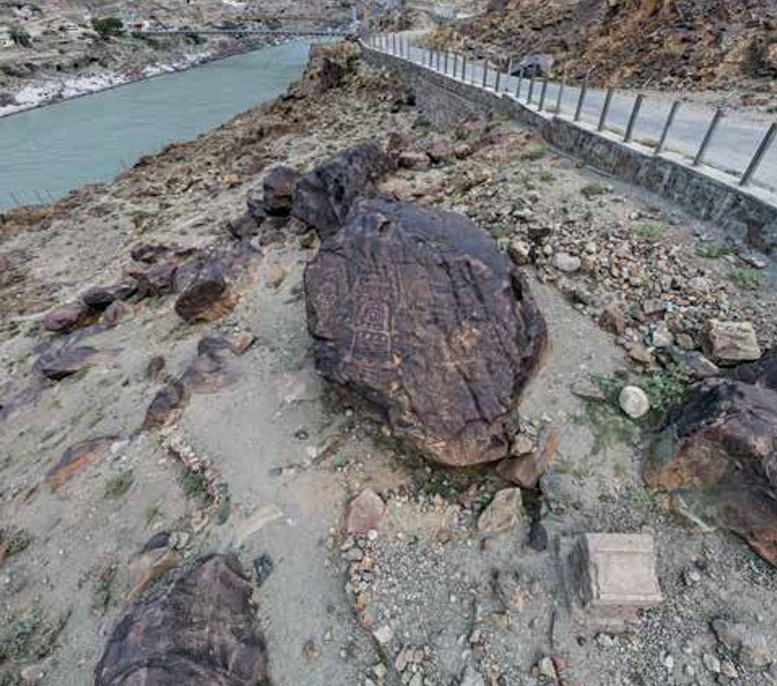
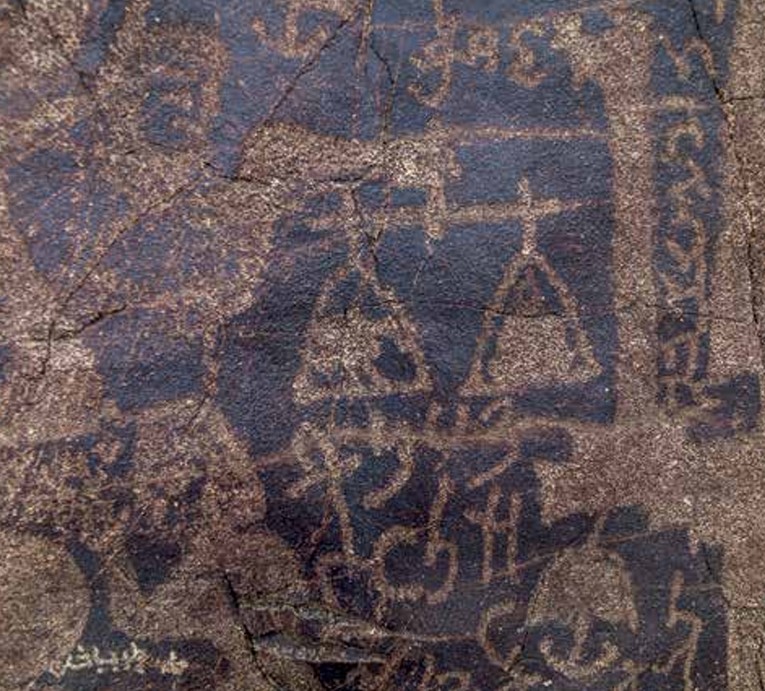
Because of its importance as a historical cross roads, this region, especially Shaital, was visited by many travellers over the centuries, including Buddhist missionaries, Sogdian merchants and pilgrims. Many of them left behind graffiti and inscriptions on Shaital’s rocky terrain. More than 100 inscriptions and 700 petroglyphs have been found just at the Shaital bridge on the Indus River. The rock art sites were often located along pathways following river and stream beds, making them visible to travellers and being observed by people for centuries.
-
Types:
Petroglyphs (carvings) and inscriptions (graffiti) are present, with an estimated 50,000+ rock carvings and 5,000 inscriptions.
-
Content:
The carvings depict various themes, including hunting scenes, animals, triangular human figures, and Buddhist imagery.
-
Scripts:
Ancient scripts like Kharosthi, Brahmi, Sogdian, Chinese, Tibetan, Proto-Sharada, and even Hebrew have been found, with Brahmi being the most common.
-
Significance:The rock art provides insights into the history, religion, and social structures of the region, including the influences of different ethnic groups like the Saka and Scythians.
Read about The Great Windmills of Nashtifan Iran That Still Function
Inscriptions of Note
From the thrid to the seventh centuries Iranian merchants left behind over 550 inscriptions in the Sogdian language, and nine in the now extinct Bactrian language. Two inscriptions each have also been found in the Middle Persian and Parthian languages. Many of these are short, comprising of the names of the travellers and their family members. Some have dates, perhaps indicating the time of arrival of the travellers.
Nanaivandak, a famous merchant from Samarkand who is a subject in Susan Whitfield’s book Life Along the Silk Road, wrote the longest such inscription reading:
Nanai-vandak, the (son of) Narisaf, came on (here) the tenth and have requested the favor from the soul of the holy place Kart (that) I reach Kharvandan very fast and see (my) dear brother in good (health).
These Iranian inscriptions provide insights into Sogdian culture and Zoroastrian gods. Though these inscriptions do not establish an exact date or period, it is believed that most of them belong to the Sasanian period (224-651 AD).
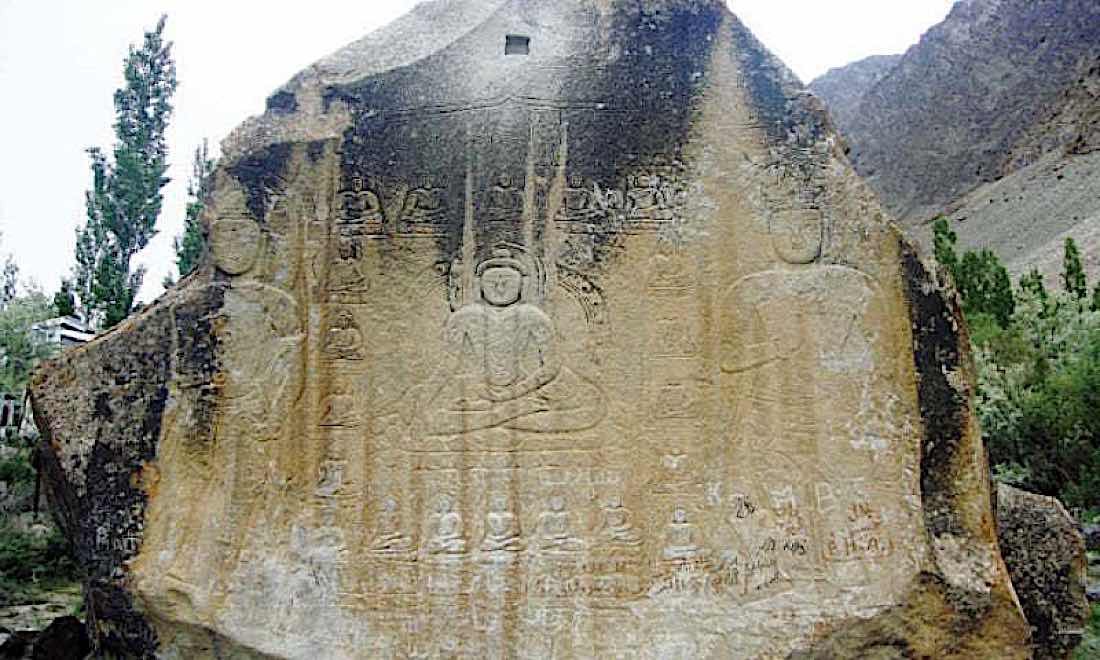
In addition to the Iranian inscriptions there are also scripts and graffiti in ancient Brahmi and Kharosthi languages revealing that the place also served as a Buddhist place of reverence. Buddhist travellers venerated these inscriptions and artwork, particularly a large triptych with drawings of a stupa and Sibi Jataka (tales detailing episodes of the various incarnations of Buddha). Inscriptions in other languages include Chinese, Tibetan and even ancient Hebrew.
One inscription in Brahmi reads: “Martavyam Smartavyam”, meaning “(Always) remember that (one day) you must die”. This saying is similar to “Memento mori” a Latin phrase meaning “remember you must.”
According to the Directorate of Archaeology and Museums, Pakistan: “Most of these carvings were made with neat chisels, while some of these have been carved out with hammer tools like the figure of Buddha and stupa on the same boulder.”
Observations
Karl Eugen, a Hungarian traveller, observed a Buddhist carving in Baltistan in 1884. Then in 1907, Sir Aurel Stein reported some of the rock carvings, followed by Karl Jettmas (who saw them when the Krakoram Highway was inaugurated in 1978), and Dr Ahmad Hasan Dani. Together, they discovered more than 50,000 rock carvings and some 5000 inscriptions in Kohistan, Gilgit and Chitral, adorning cliffs and boulders along the Indus River, and created over many centuries.
Timeline
The earliest rock carving in the region is estimated to be from the ninth millennium BCE. This is the time of the late stone age! The oldest layers of petroglyphs are found in areas that may have served as hunting stations, often near river crossings. Think of all the people passing through and looking at them and even leaving their own mark since the stone age.
Moving on to the Bronze Age (3300 BCE to 1300 BCE), we see around 50 carvings of giant figures. Agriculture was adopted in the region in the third millennium BCE and this is when we see carvings of horses for the first time, as well as some other mythical animals. The Iranian inscriptions and drawings started from the sixth millennium BCE, probably with the expansion of the Achaemenid Empire. Buddhism emerged in the area in the first century and reached its peak between in fifth and the eights centuries. This is when the Buddhist inscriptions and carvings emerge. These include the Buddha himself, surrounded by other figures, as well as carvings of stupas.
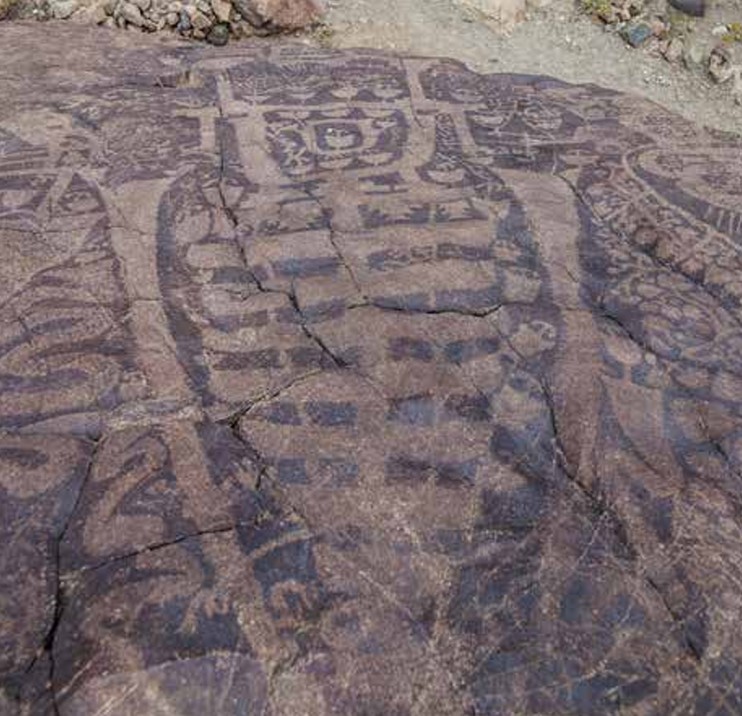
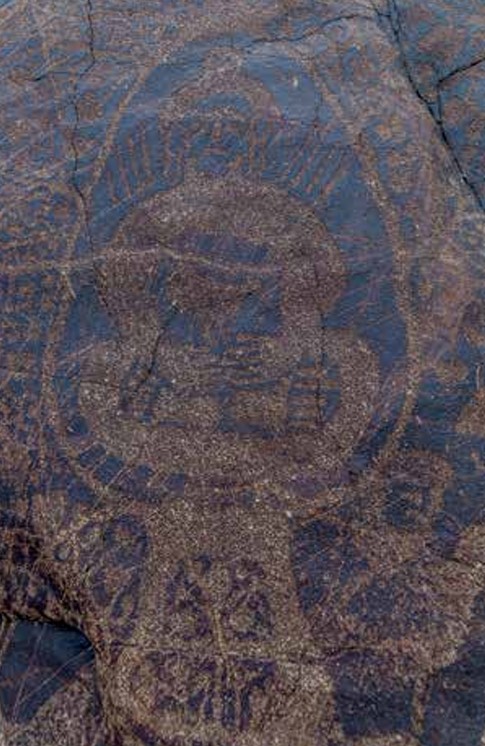
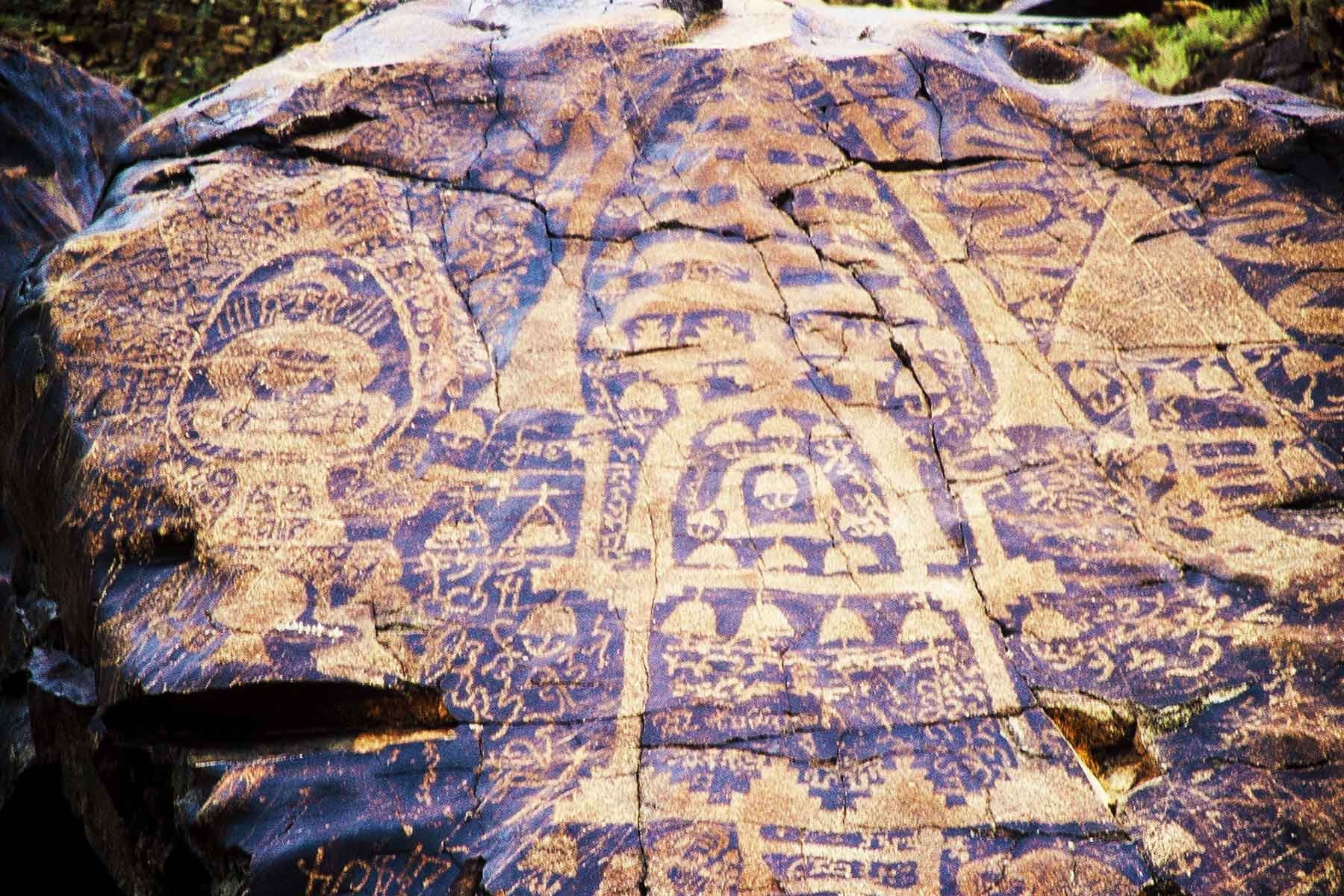
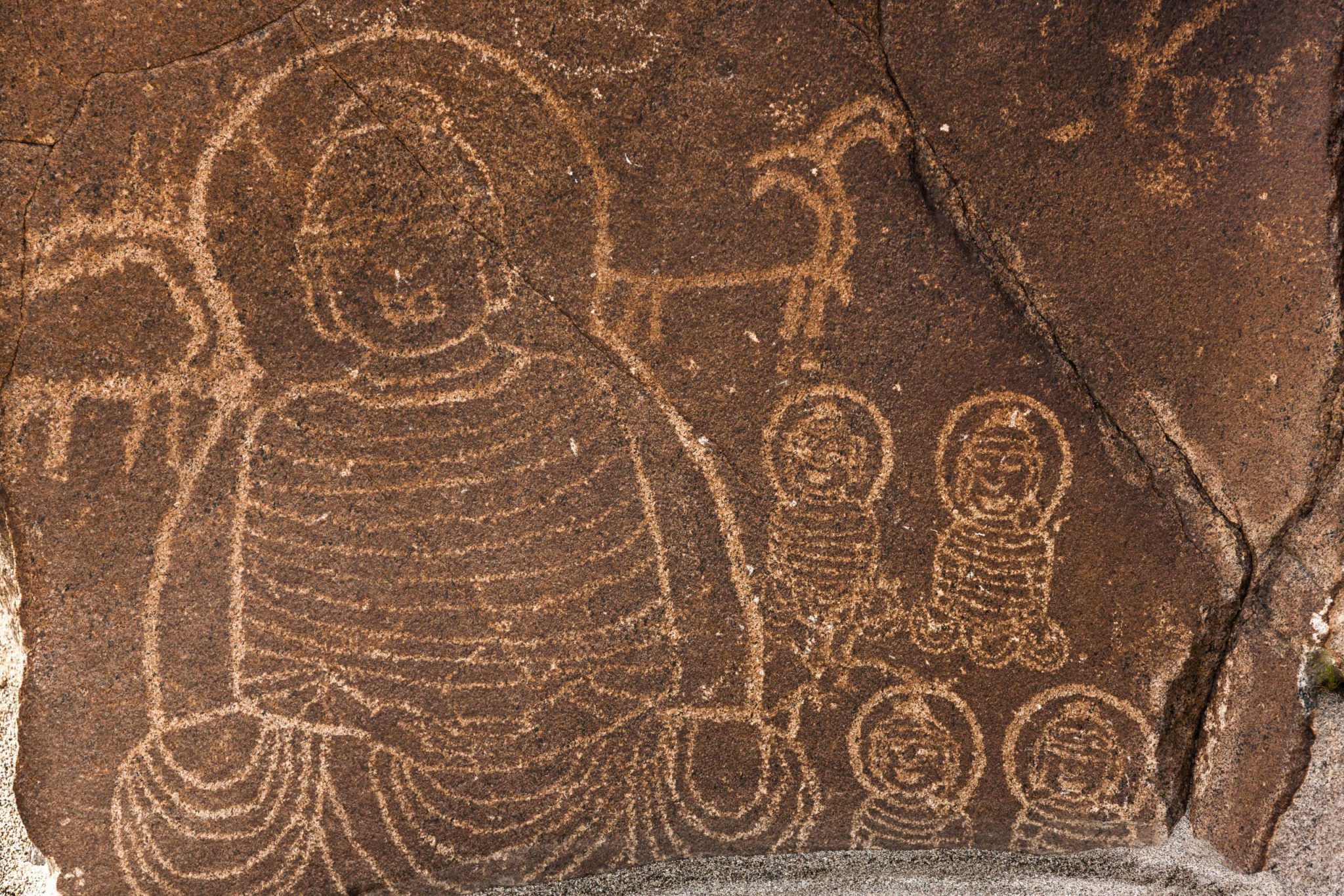
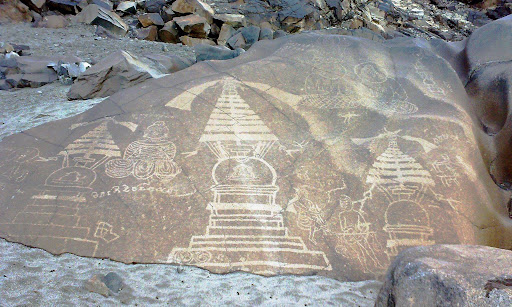
The whole site seems like a dream for those interested in ancient rock art. The carvings reflect the influences of various cultures and religious beliefs, including Buddhism, according to Heidelberger Akademie der Wissenschaften.
Unfortunately, a large number of the petroglyphs and inscriptions have been lost to us due to being inundated by the preliminary stages of the construction of Basha Dam.
However, the Shaital rock art has now been declared a Protected Antiquity under the Khyber Pakhtunkhwa Antiquity Act of 2016. This means that anyone who damages, alters, or defaces the carvings faces legal consequences, including fines or imprisonment.
Sources: The Ancient Connection and Directorate of Archaeology and Museums Pakistan