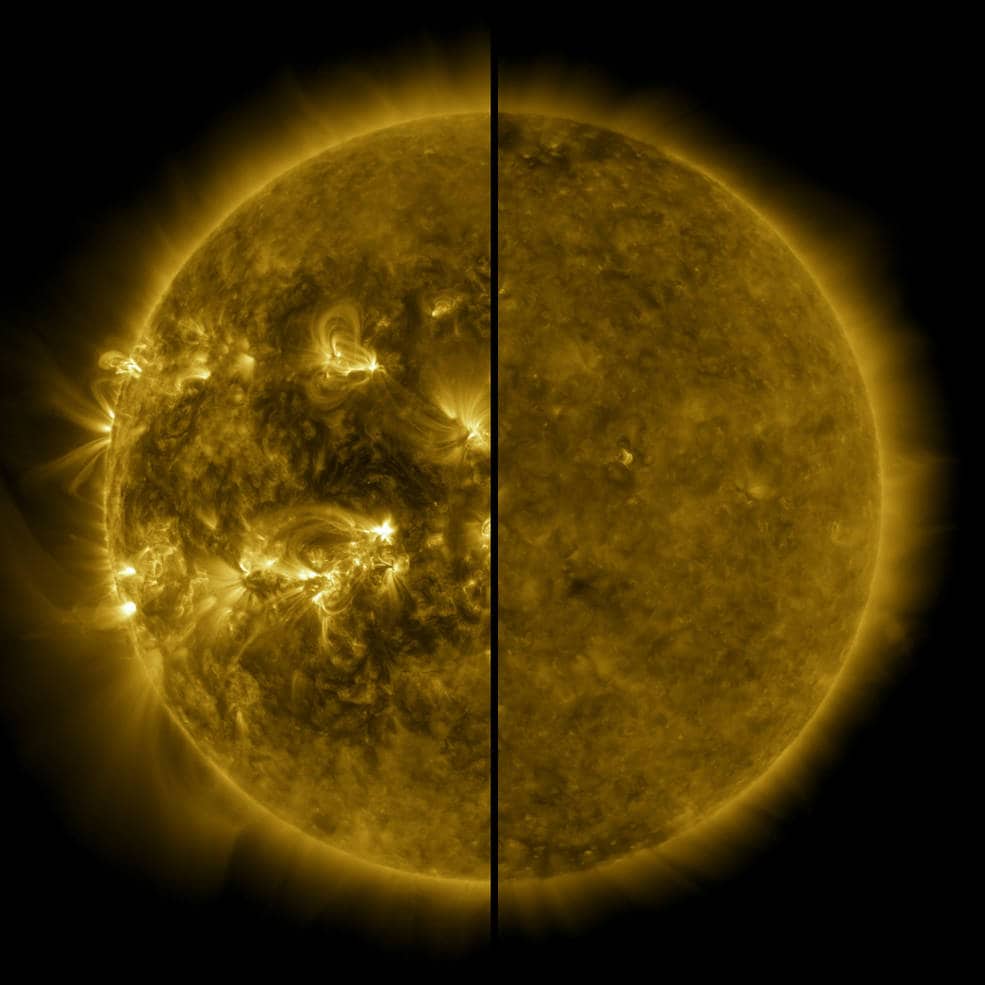
Our home star – the Sun – goes through an 11 year cycle, moving regularly from a quiet period (solar minimum) to an active one (solar maximum) and then back to quiet. An international group of experts, including those from NASA and NOAA, announced that a solar minimum occurred in December 2019, marking the start of a new solar cycle.
The dark blotches on the Sun, called sunspots, are associated with solar activity and scientists use these to track solar cycle progress. Sunspots are often origins of explosions such as solar flares or coronal mass ejections (CMEs), which can spew light, energy, and solar material into space. Now that solar minimum has passed, scientists expect the Sun’s activity to ramp up toward the next predicted maximum in July 2025.
According to NASA there will be an increase in space weather that could have effects for technology on Earth, as well as astronauts in space. Solar Cycle 25 is expected to be a below-average cycle, but that does not mean it is without risk and understanding the cycles of the Sun is one part of being prepared for any untoward incidents.