Part 1 – Ancient Seven Wonders of the World
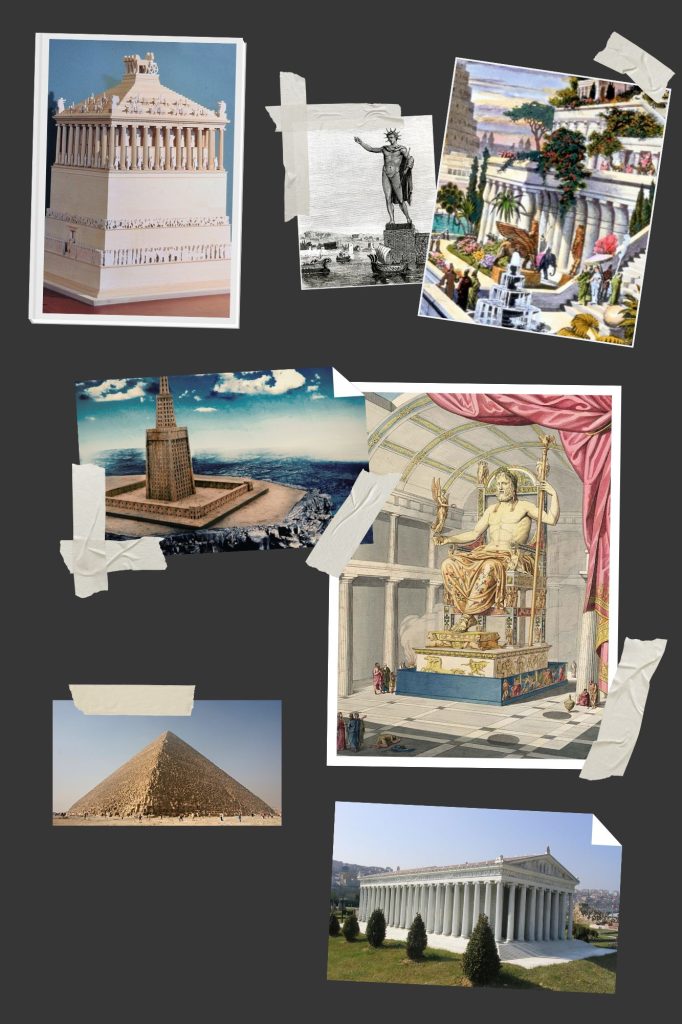
The Seven Wonders of the World is a famous list of extraordinary constructions that have captivated our imagination for millennia and represent the pinnacle of ancient architectural and engineering achievements.
What many people may not know is that there was an original list of seven ancient wonders of the world from antiquity. Originally compiled in the 2nd century BCE, this classical list included awe-inspiring structures from the Mediterranean and Middle Eastern regions, such as the Great Pyramid of Giza and the Hanging Gardens of Babylon.
However, most of these ancient wonders no longer exist, having been destroyed over the years, so a new list was created in 2007 through a global voting campaign. This modern compilation, known as the New Seven Wonders of the World, showcases remarkable human-made marvels from various cultures and time periods, including the Great Wall of China, Petra in Jordan, and the Taj Mahal in India. These extraordinary sites continue to inspire wonder and serve as testaments to human ingenuity, artistic vision, and cultural significance across the globe.
We will talk about both lists but first, the Seven Wonders of the Ancient World, which were notable structures from classical antiquity. The first known list is from the 2nd – 1st century BCE and could be found in countries like Greece, Turkey, Egypt and Iraq.
The original list was compiled by Hellenic travellers and poets, and it highlighted the architectural and artistic achievements of ancient civilizations, primarily around the Mediterranean and Near East. The traditional list includes:
Great Pyramid of Giza (Egypt)
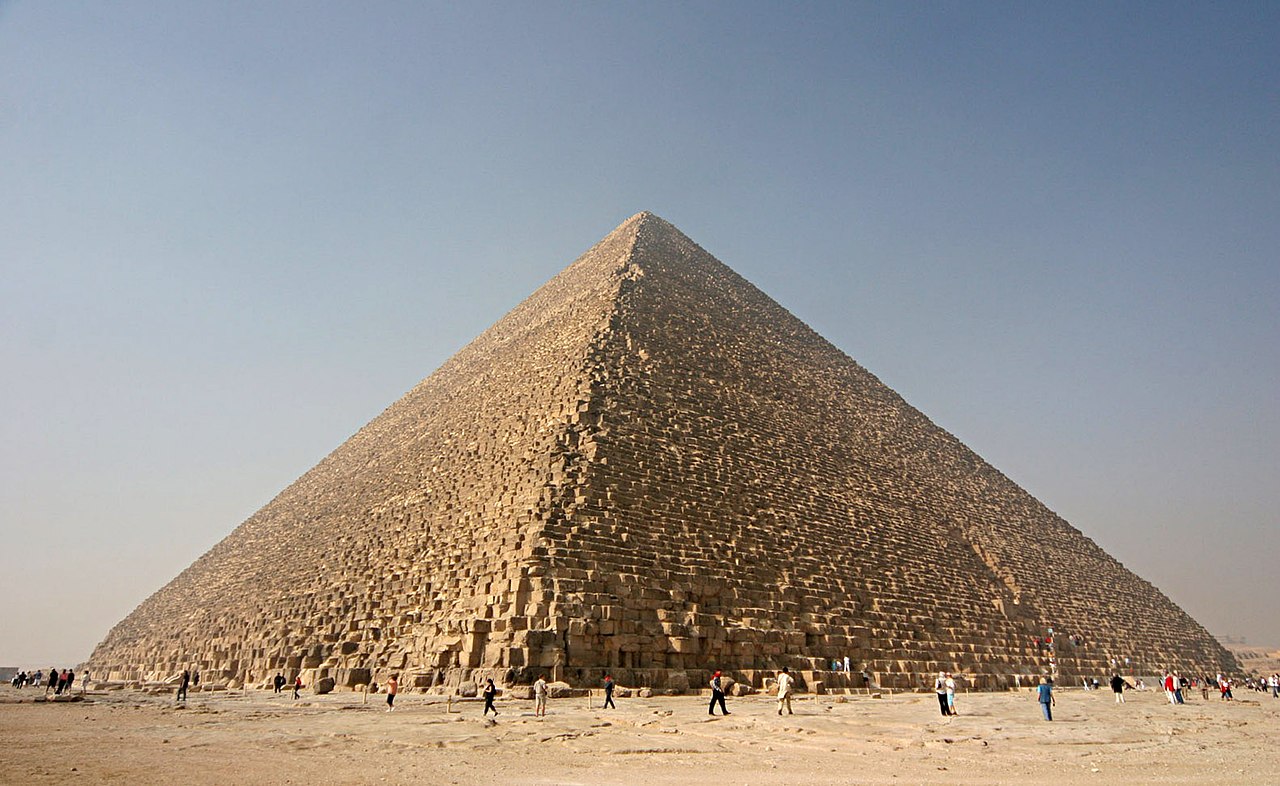
The Great Pyramid of Giza is the only surviving ancient wonder. Built around 2560 BC as a tomb for Pharaoh Khufu, and originally standing at about 147 meters (482 feet) tall, it was the tallest man-made structure for nearly 4,000 years.
The pyramid was constructed and served as the tomb of pharaoh Khufu, who ruled during the Fourth Dynasty of the Old Kingdom. Built c. 2600 BC, over a period of about 27 years, it is is the oldest of the Seven Wonders of the Ancient World, and the only wonder that has remained largely intact. Now the most famous monument of the Giza pyramid complex, it is part of the UNESCO World Heritage Site “Memphis and its Necropolis”. The Great Pyramid is situated at the northeastern end of the line of the three main pyramids at Giza.
And no, slaves did not make it, in fact there was a whole set up of builders who were paid and even fed to work on the pyramids during times when farming was not possible due to the flooding of the Nile River.
(Read: The Cholistan Desert And Ancient Civilisations)
Hanging Gardens of Babylon (Iraq)
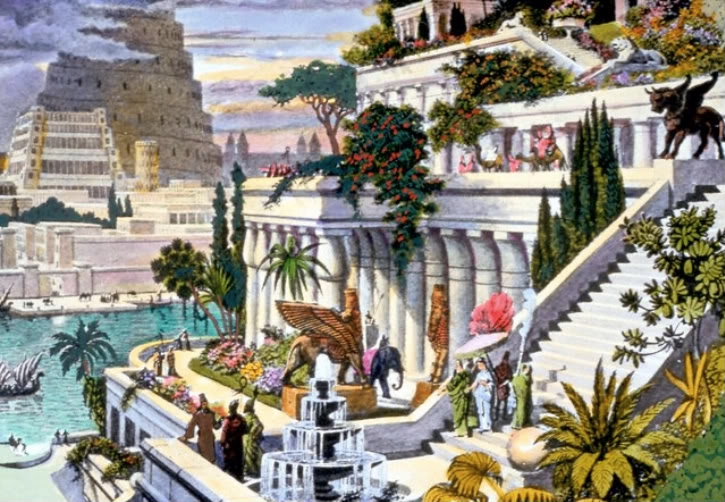
Described as an extraordinary series of tiered gardens, the existence of the Hanging Gardens of Babylon is debated among historians, with no definitive archaeological evidence confirming their location or construction.
However, they were described as a remarkable feat of engineering with an ascending series of tiered gardens containing a wide variety of trees, shrubs, and vines, resembling a large green mountain constructed of mud bricks. It was said to have been built in the ancient city of Babylon, near present-day Hillah, Babil province, in Iraq.
Statue of Zeus at Olympia (Greece)
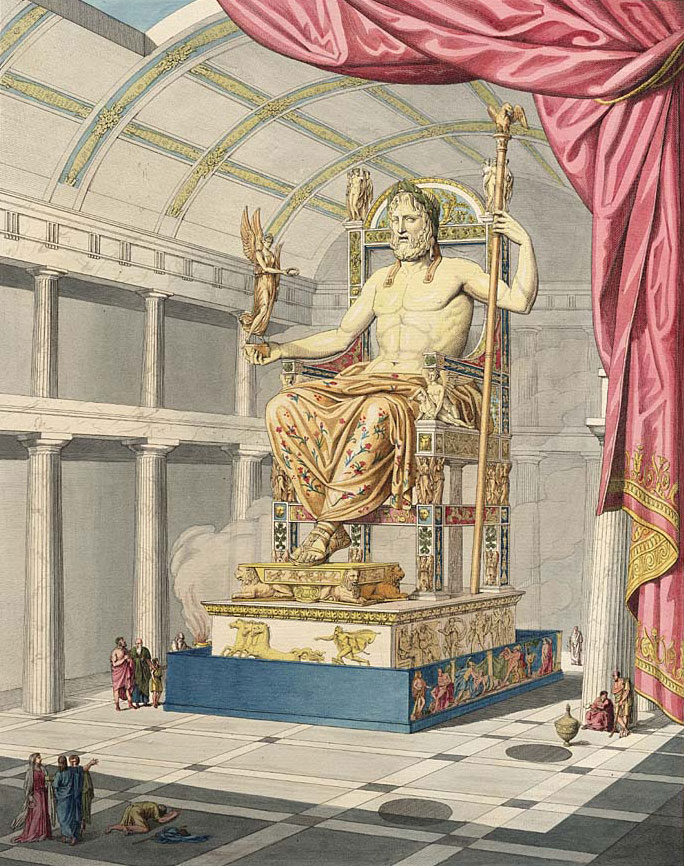
This was a massive statue created by the sculptor Phidias around 435 BC, depicting the god Zeus seated on a throne, adorned with gold and ivory. The giant seated figure was about 12.4 m (41 ft) tall, and was erected in the Temple of Zeus. Zeus was the sky and thunder god in ancient Greek religion, who rules as king of the gods of Mount Olympus.
Temple of Artemis at Ephesus (Turkey)
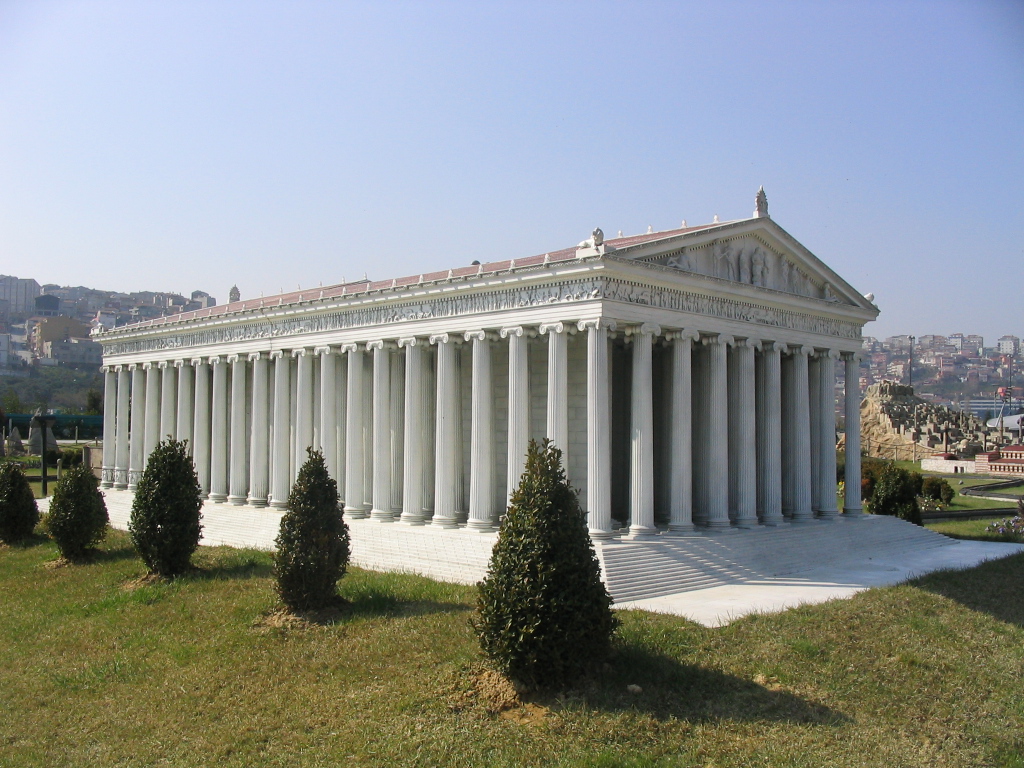
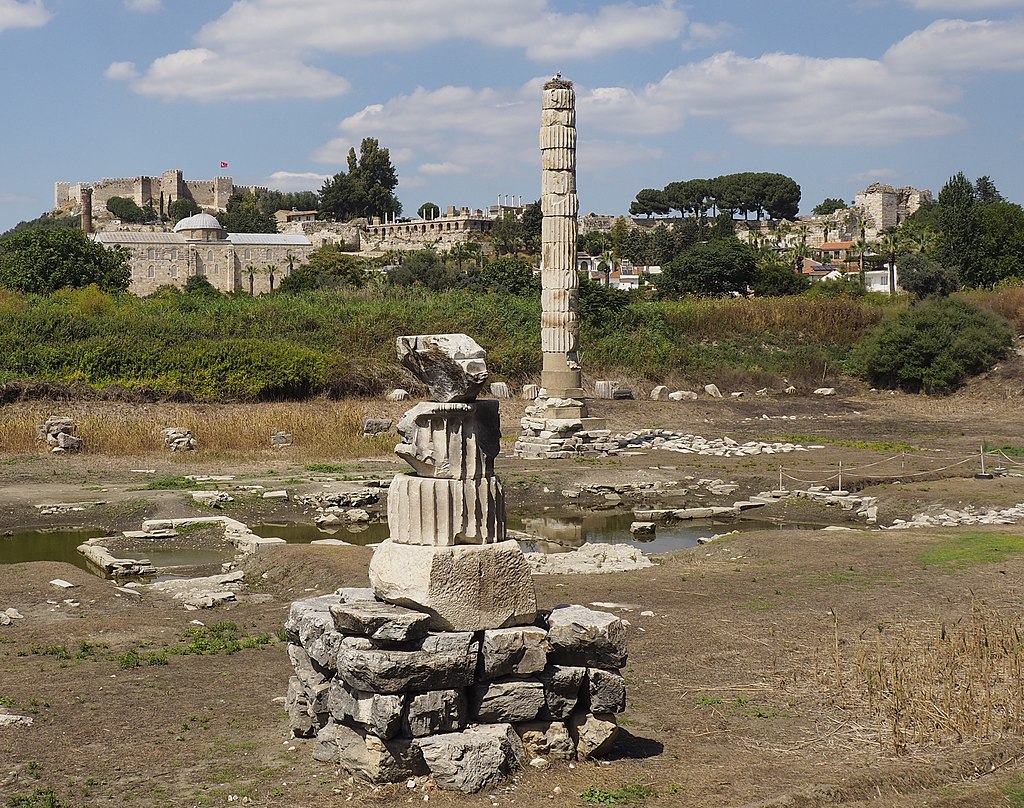
A grand temple dedicated to the goddess Artemis (also known as Diana by the Romans), known for its magnificent architecture and artworks, completed around 550 BC but destroyed in 262 AD. It was located in Ephesus in present-day Turkey. Only foundations and fragments of the last temple remain at the site.
Mausoleum at Halicarnassus (Turkey)
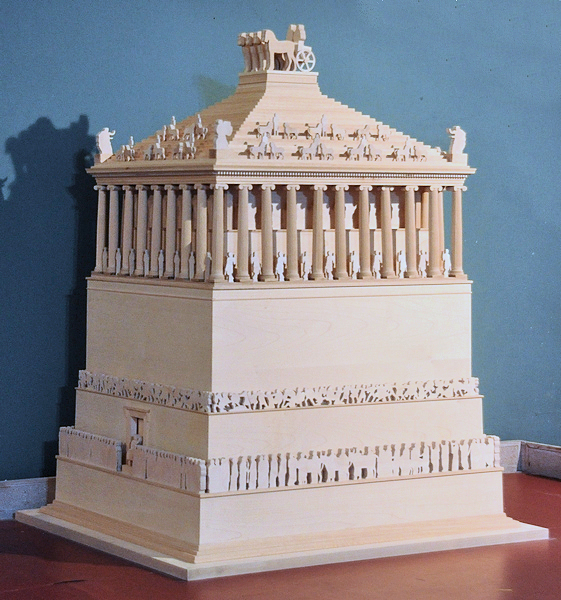
The Mausoleum at Halicarnassus or Tomb of Mausolus was built around 350 BC in Halicarnassus (present day Bodrum) in Turkey. It was renowned for its architectural beauty and stood approximately 45 meters (148 feet) tall. The construction was commissioned for Mausolus, an Anatolian from Caria and a satrap (a provincial governor in the ancient Persian empire) in the Achaemenid Persian Empire, and his sister-wife Artemisia II of Caria. The Mausoleum’s four sides were adorned with sculptural reliefs, each created by one of four Greek sculptors. The word mausoleum has now come to be used generically for an above-ground tomb.
Colossus of Rhodes (Greece)
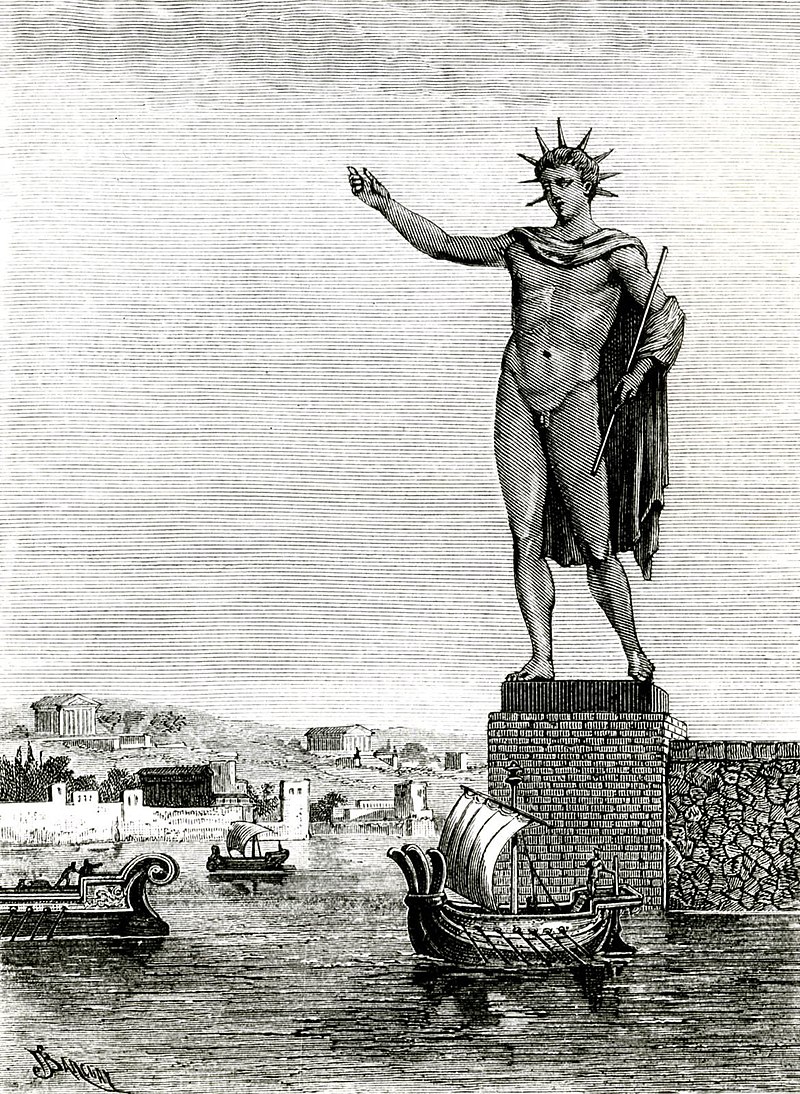
A giant statue of the sun god Helios was erected around 280 BC to celebrate Rhodes’ victory over Cyprus. It stood about 33 meters (108 feet) high but was destroyed by an earthquake in 226 BC, although parts of it were preserved.
Lighthouse of Alexandria (Pharos of Alexandria) (Egypt)
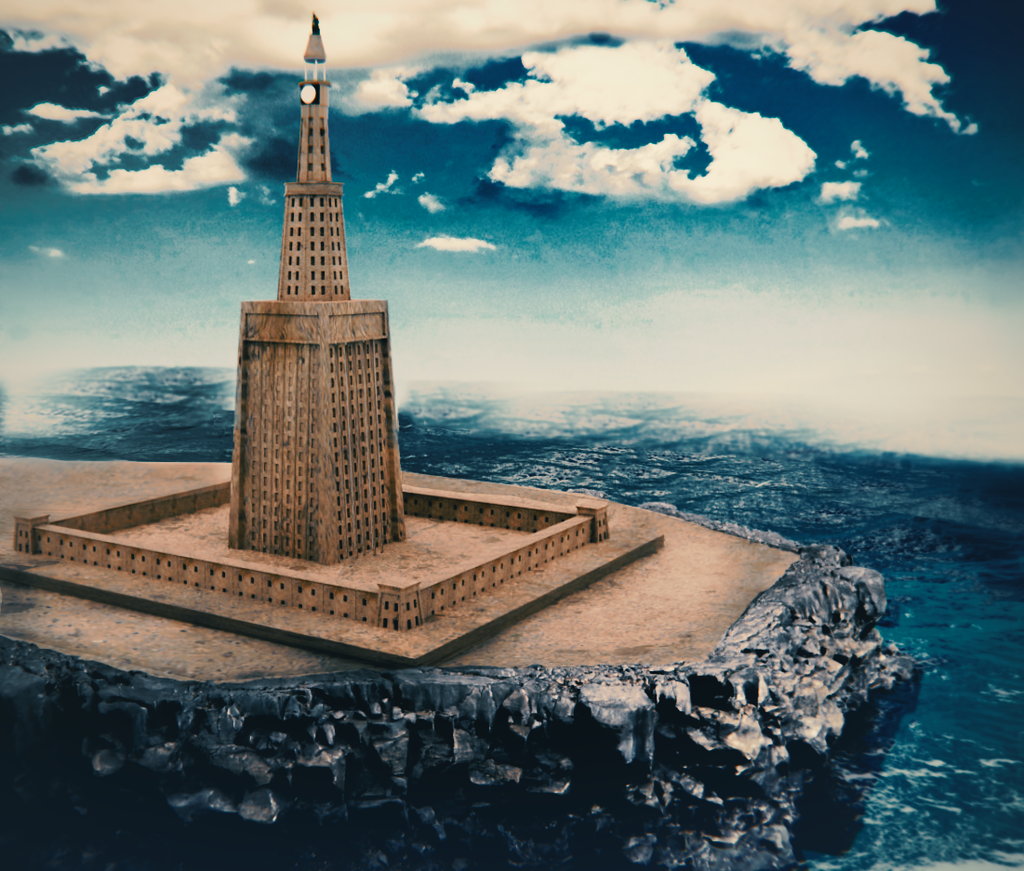
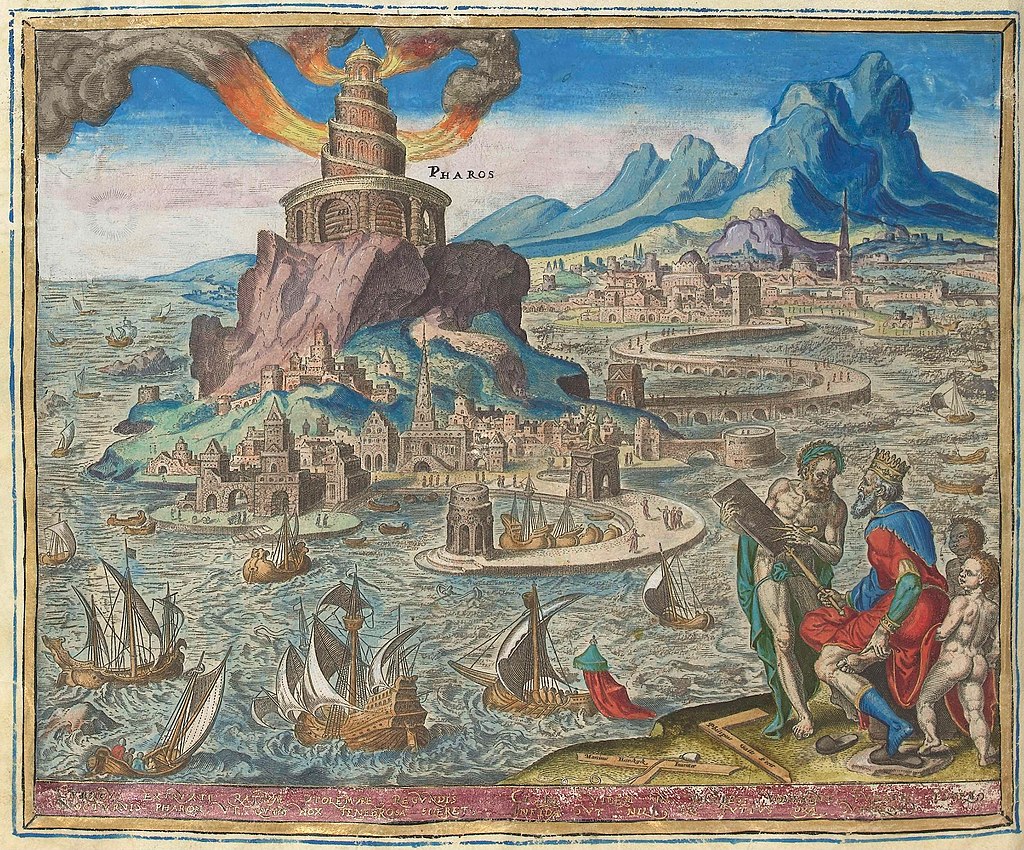
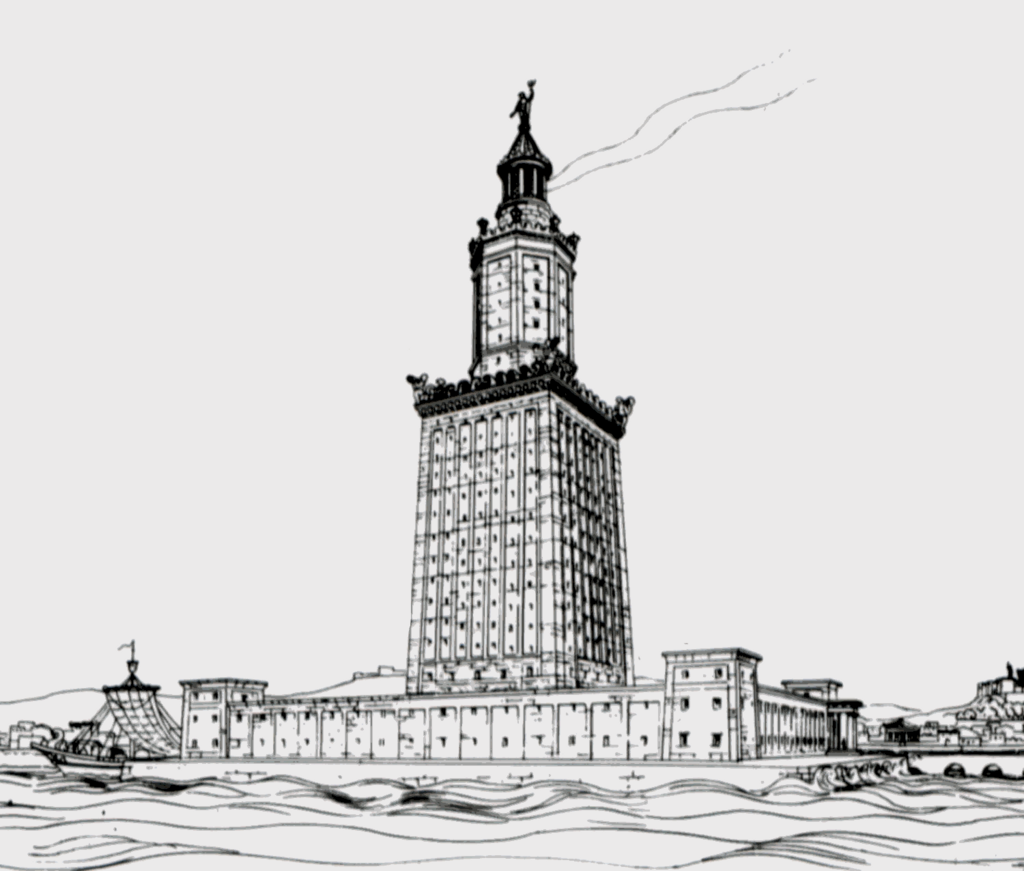
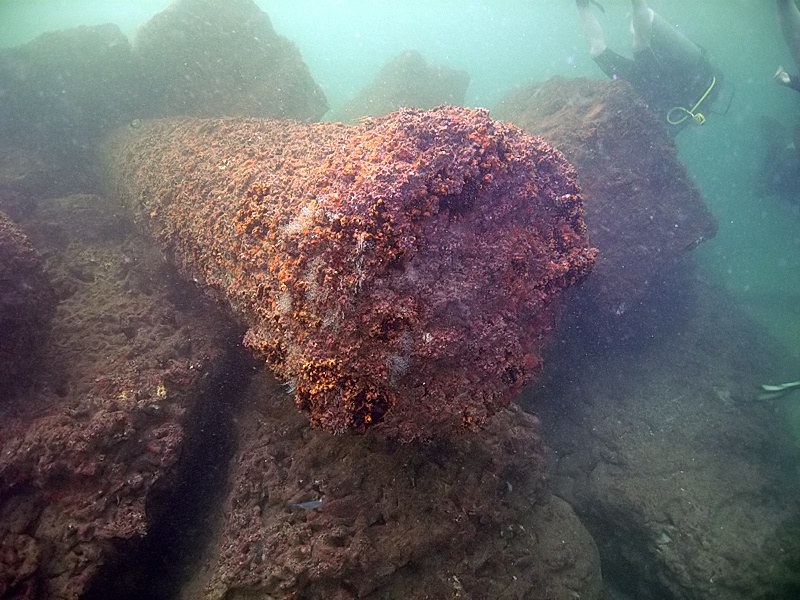
Constructed on the island of Pharos around 280 BC, the Lighthouse of Alexandria, sometimes called the Pharos of Alexandria was one of the tallest man-made structures of the ancient world, guiding sailors safely into the harbour of Alexandria until it was damaged by earthquakes. It was built by the Ptolemaic Kingdom of Ancient Egypt, during the reign of Ptolemy II Philadelphus (280-247 BC).
The lighthouse was severely damaged by three earthquakes between 956 and 1323 AD and became an abandoned ruin. It was the third-longest surviving ancient wonder, after the Mausoleum at Halicarnassus and the extant Great Pyramid of Giza, surviving in part until 1480, when the last of its remnant stones were used to build the Citadel of Qaitbay on the site.
The concept of the Seven Wonders from antiquity served as a guide for travellers, showcasing the engineering prowess and artistic creativity of ancient cultures. While the Great Pyramid remains, the others have succumbed to time and natural disasters. Gone, but not forgotten.