Euclid’s first images: the dazzling edge of darkness
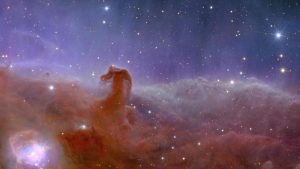
Euclid’s first images from the dazzling edge of darkness have been revealed. These five images illustrate Euclid’s full potential.

Euclid’s first images from the dazzling edge of darkness have been revealed. These five images illustrate Euclid’s full potential.
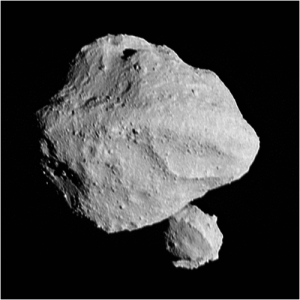
On Nov. 1, NASA’s Lucy spacecraft flew by not just its first asteroid, but its first two. The first images returned by Lucy reveal that
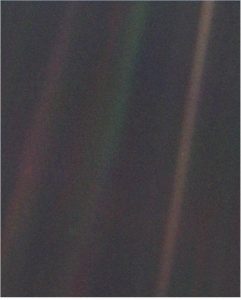
Carl Sagan contributed immensely to how we perceive science, and to Voyagers 1&2, which are now in deep space & took the picture of the
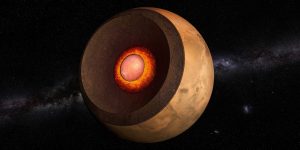
Mars’ liquid iron core is smaller and denser than previously thought, according to a new study analysing InSight lander’s data.
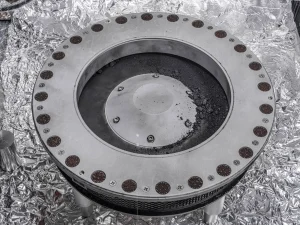
OSIRIS REx Samples from Asteroid Bennu have been Revealed by NASA and show evidence of high-carbon content and water, the building blocks of life.
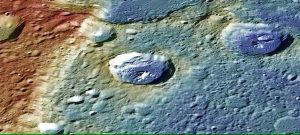
Mercury is shrinking and getting smaller according to latest research because its interior has been cooling down as internal heat leaks away.
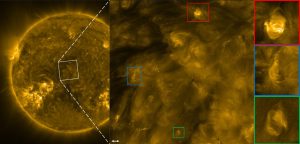
A joint team of scientists from the Royal Observatory of Belgium (ROB) and KU Leuven have found that high-frequency magnetic waves may play a key
![The bright white object at lower left is the asteroid Dimorphos. It has a blue dust tail extending diagonally to the upper right. A cluster of blue dots surrounds the asteroid. These are boulders that were knocked off the asteroid when, on 26 September 2022, NASA deliberately slammed the half-tonne DART impactor spacecraft into the asteroid as a test of what it would take to deflect some future asteroid from hitting Earth. Hubble photographed the slow-moving boulders in December 2022.] Credit: NASA, ESA, D. Jewitt (UCLA)](https://360onhistory.com/wp-content/uploads/2023/07/heic2307a-300x267.jpg)
Astronomers have discovered a swarm of boulders ejected from asteroid Dimorphos after it was impacted by the DART spacecraft. The 37 boulders, which range in
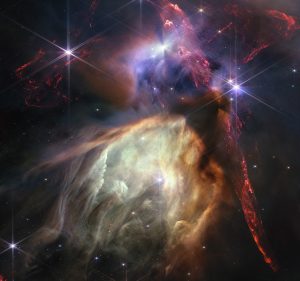
James Webb Telescope celebrates its first year with stunning image that has been released by NASA. It shows a star-forming region in Rho Ophiuchi cloud
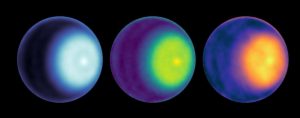
NASA scientists used microwave observations to spot the first polar cyclone on Uranus, seen in images as a light-colored dot to the right of center
Euclid’s first images from the dazzling edge of darkness have been revealed. These five images illustrate Euclid’s full potential.
On Nov. 1, NASA’s Lucy spacecraft flew by not just its first asteroid, but its first two. The first images returned by Lucy reveal that
Carl Sagan contributed immensely to how we perceive science, and to Voyagers 1&2, which are now in deep space & took the picture of the
Mars’ liquid iron core is smaller and denser than previously thought, according to a new study analysing InSight lander’s data.
OSIRIS REx Samples from Asteroid Bennu have been Revealed by NASA and show evidence of high-carbon content and water, the building blocks of life.
Mercury is shrinking and getting smaller according to latest research because its interior has been cooling down as internal heat leaks away.
A joint team of scientists from the Royal Observatory of Belgium (ROB) and KU Leuven have found that high-frequency magnetic waves may play a key
Astronomers have discovered a swarm of boulders ejected from asteroid Dimorphos after it was impacted by the DART spacecraft. The 37 boulders, which range in
James Webb Telescope celebrates its first year with stunning image that has been released by NASA. It shows a star-forming region in Rho Ophiuchi cloud
NASA scientists used microwave observations to spot the first polar cyclone on Uranus, seen in images as a light-colored dot to the right of center


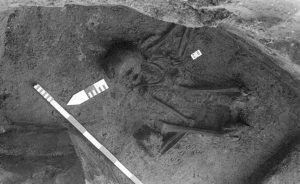
A skeleton was found in the 1970s with bones from
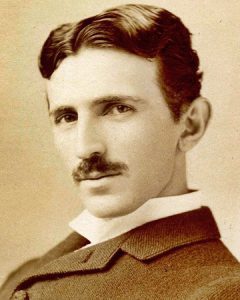
Nikola Tesla was born on July 10, 1856. He was
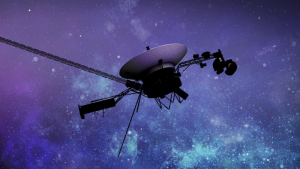
NASA tries to understand Voyager 1 signal that was sent
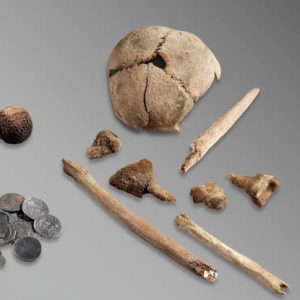
Hikers and mountaineers are stumbling on mysterious ancient objects in the Swiss