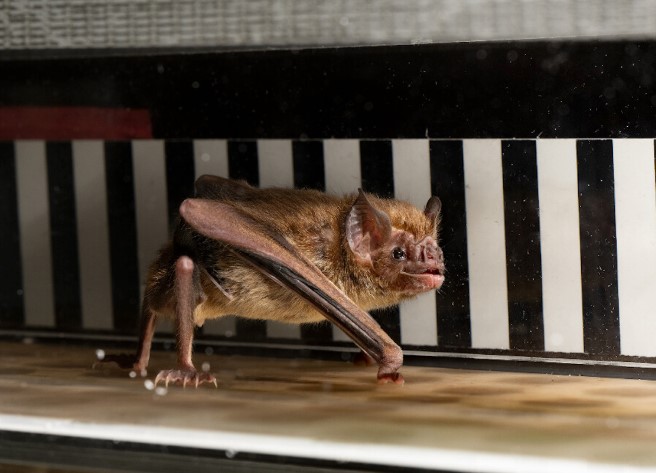
Scientists put two dozen vampire bats from Belize on tiny treadmills, after training them to do so, to investigate their unique metabolism. The common vampire bat (Desmodus rotundus), known for its ability to fly, also scurries on the ground to stealthily approach its prey—typically cattle, horses, and other mammals—before feasting on their blood.
The training took some time but eventually, the scientists were able to coax the bats to keep running. Their aim was to first feed the bats with cow blood rich in two amino acids and then measure their blood while they ran.
By analyzing the bats’ breath while they exercised, researchers uncovered a surprising finding: vampire bats don’t metabolize carbohydrates like most mammals. Instead, they rely on fresh amino acids derived from their latest blood meal. This metabolic strategy is more commonly seen in blood-sucking insects like tsetse flies and mosquitoes, not in mammals.
“In most animals, amino acids are a fuel of last resort,” University of Toronto Scarborough professor and study co-author Ken Welch said in a statement. “It’s what the body burns when there’s not much left, but these bats burn it right away.”
The discovery reveals how vampire bats have evolved to thrive on an all-blood diet, developing a metabolism uniquely suited to their vampiric lifestyle.
The study, offering fascinating insights into evolutionary adaptations, was published in Biology Letters. Read more: https://royalsocietypublishing.org/doi/10.1098/rsbl.2024.0453