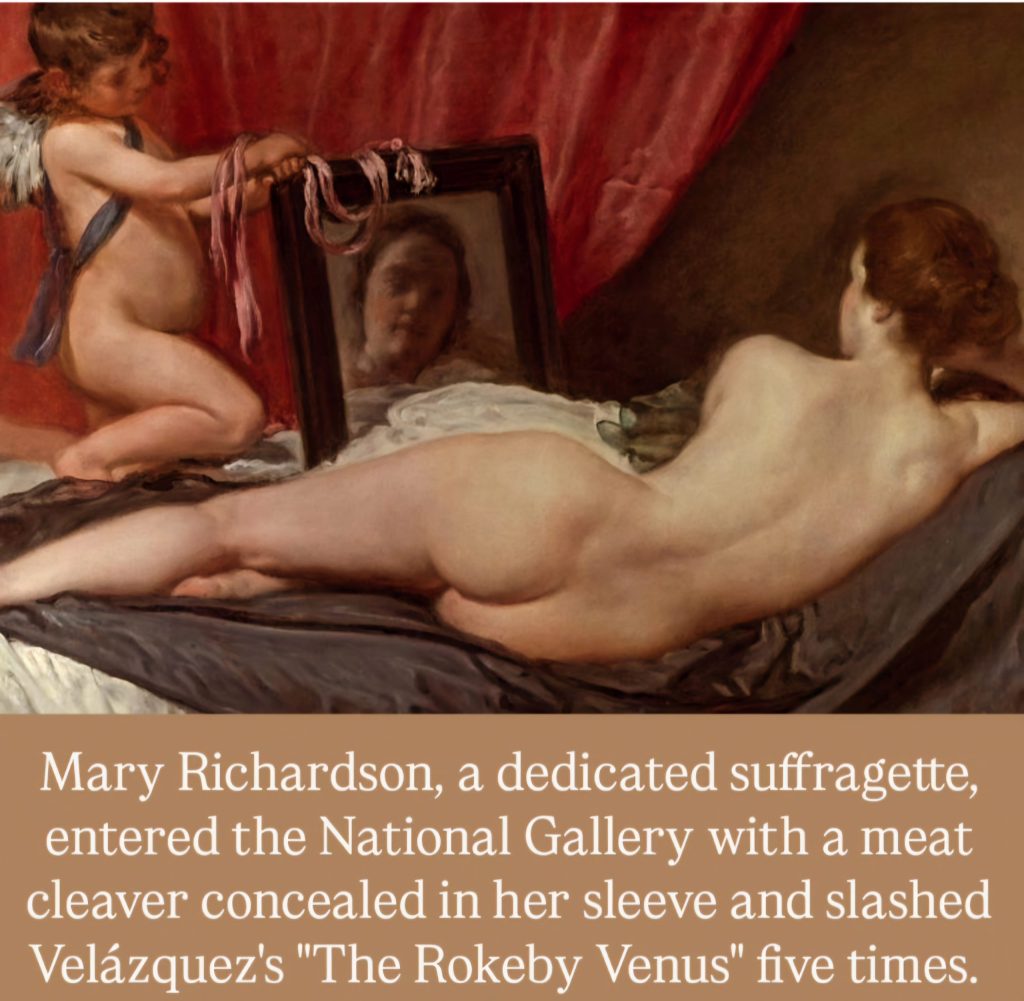
On 10 March 1914, suffragette Mary Richardson carried out one of the most dramatic acts of protest in the history of the British women’s suffrage movement. Armed with a small meat cleaver, Richardson attacked the celebrated painting The Rokeby Venus by Diego Velázquez while it was on display at the National Gallery in London.

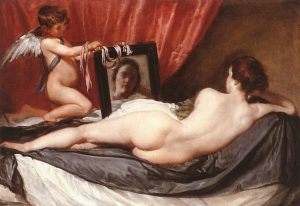
The painting—also known as The Toilet of Venus—is a 17th-century masterpiece depicting the Roman goddess Venus reclining and gazing into a mirror held by Cupid. As one of the most famous nude paintings in the gallery’s collection, it attracted significant public attention. Richardson took advantage of this visibility. Approaching the canvas, she slashed it several times, causing severe damage before being restrained by gallery staff and arrested.
Richardson later explained that her actions were intended as a political statement rather than simple vandalism. She said she was protesting the British government’s treatment of imprisoned suffragettes, particularly the prominent activist Emmeline Pankhurst. Pankhurst, a leading figure in the militant suffrage organisation Women’s Social and Political Union, had recently been arrested again and was undertaking a hunger strike while in prison. Suffragettes frequently used hunger strikes to protest their imprisonment and demand recognition as political prisoners.
Richardson argued that the government admired the beauty of the painting while showing little concern for the suffering of women fighting for the right to vote. She reportedly stated that she tried to destroy the picture of “the most beautiful woman in mythological history” to protest the government’s “destruction of Mrs Pankhurst, who is the most beautiful character in modern history.”
The attack caused outrage in the press and among art lovers, but it also drew widespread attention to the suffragette cause. The damaged painting was later carefully restored and returned to display. Today, the incident remains one of the most striking examples of how suffragettes used bold and controversial tactics to force the issue of women’s voting rights into the public spotlight.