Who hasn’t heard about it, the floating city of Venice, with its gondolas and beautiful architecture? This renowned UNESCO World Heritage site is built over 100 small islands in a lagoon in the Adriatic Sea.
Venice has no roads relying entirely on canals and water transport. This is where the Venice Film Festival is held, as well as the Biennale, and Venetian masks are seen primarily during the annual Venice Carnival (Carnevale di Venezia), which typically takes place in February, ending on Shrove Tuesday. Historically, they were worn from December 26th (Santo Stefano) through Lent, as well as on Ascension and for various, often clandestine, social, or political, reasons.
The history of Venice is a remarkable saga of human ingenuity and maritime dominance, beginning in the 5th century AD when refugees fled mainland Italy to escape Germanic and Hun invasions. By settling on the marshy islands of the Venetian Lagoon, they created a unique defensive stronghold that eventually evolved into the Serenissima (the Most Serene Republic). Over the centuries, Venice transformed from a Byzantine vassal into a Mediterranean superpower, fueled by its unrivaled navy and its strategic position as the “bridge” between Europe and the East. The city’s wealth peaked during the Middle Ages and the Renaissance, visible today in its opulent marble palaces and the spoils of the Fourth Crusade. However, the discovery of new Atlantic trade routes and the rise of the Ottoman Empire led to a slow decline, culminating in its surrender to Napoleon in 1797. Today, Venice stands as a living museum, grappling with its own watery foundations while remaining one of the world’s most enduring symbols of art and resilience
Let’s start with that first look you get of Venice, when you get out of the train station and you behold the San Simeone Piccolo church. This sits on the Grand Canal in the Santa Croce district, directly facing the Santa Lucia train station. San Simeone is known for its large, green copper dome and neoclassical style, built between 1718 and 1738. It is officially named Santi Simeone e Giuda and is one of the first major sights visitors see upon arriving by train.
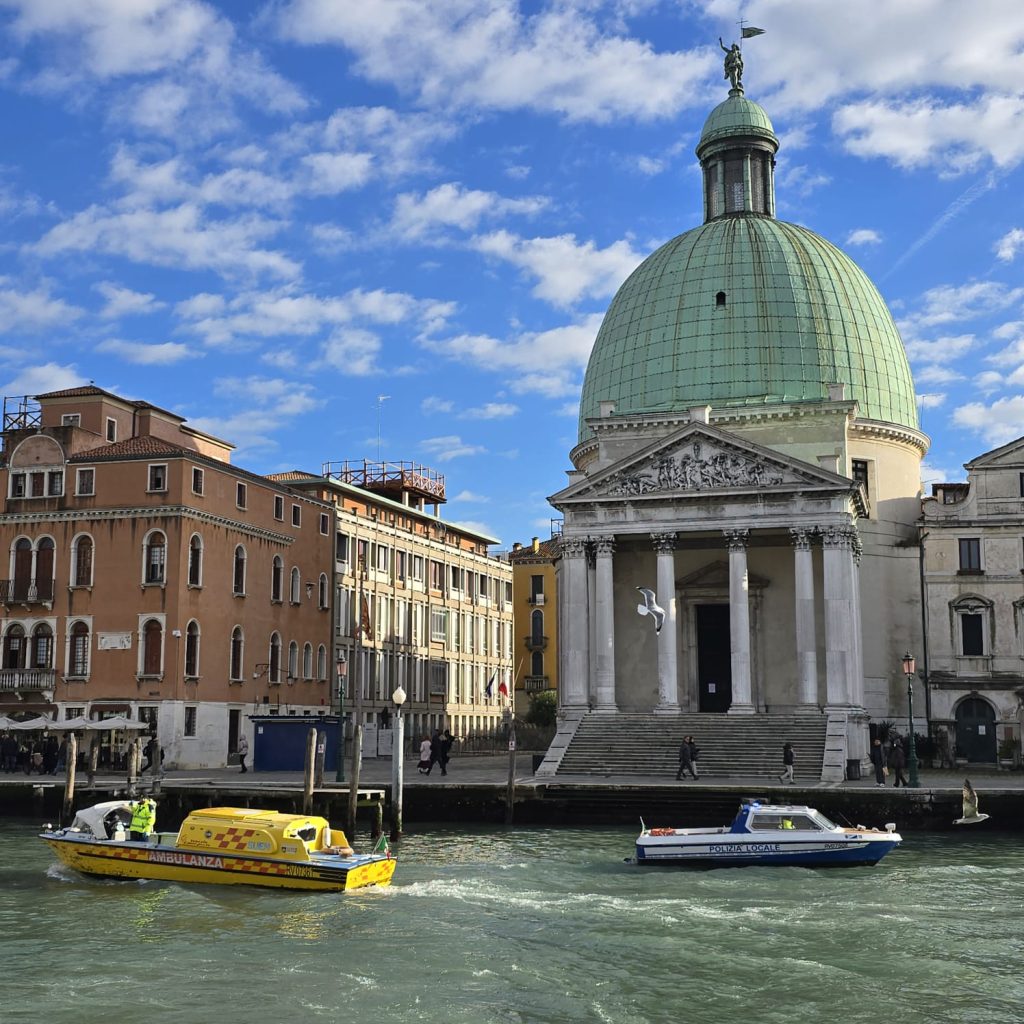
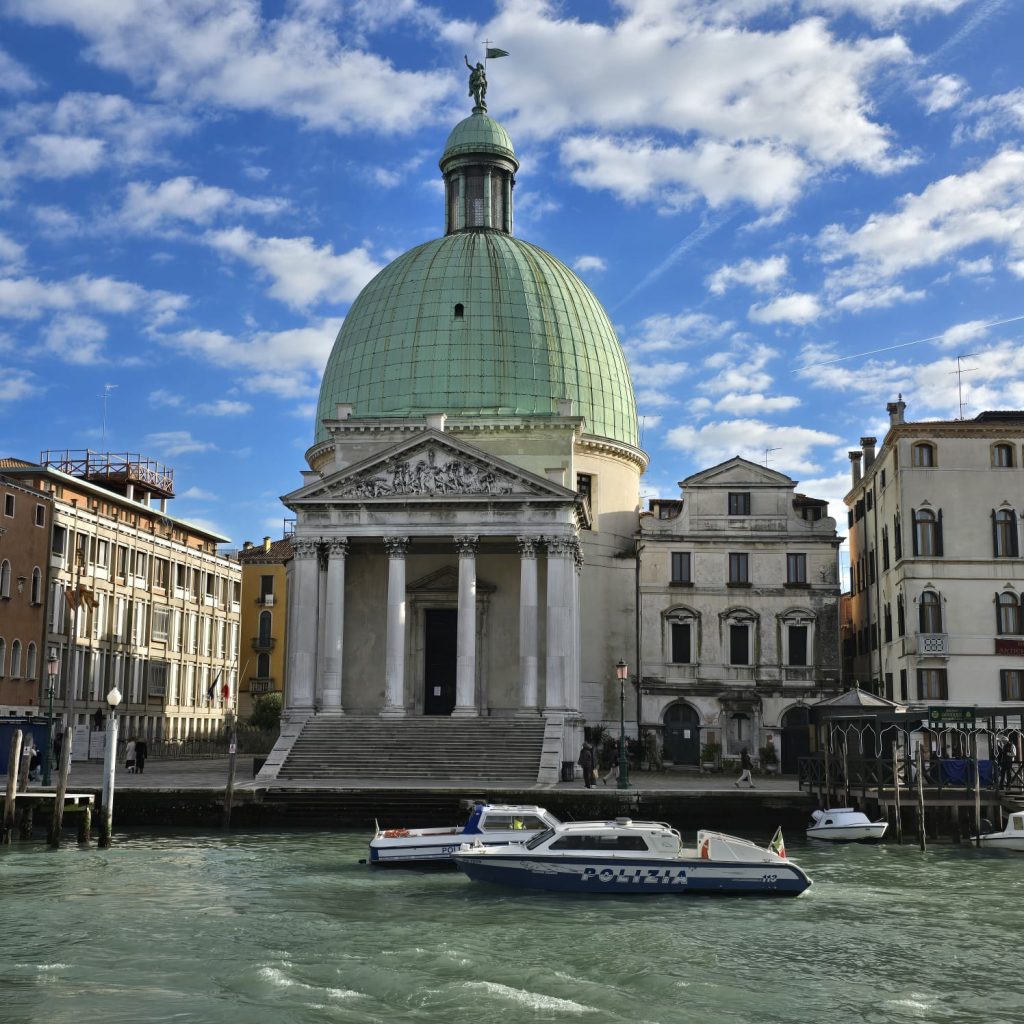
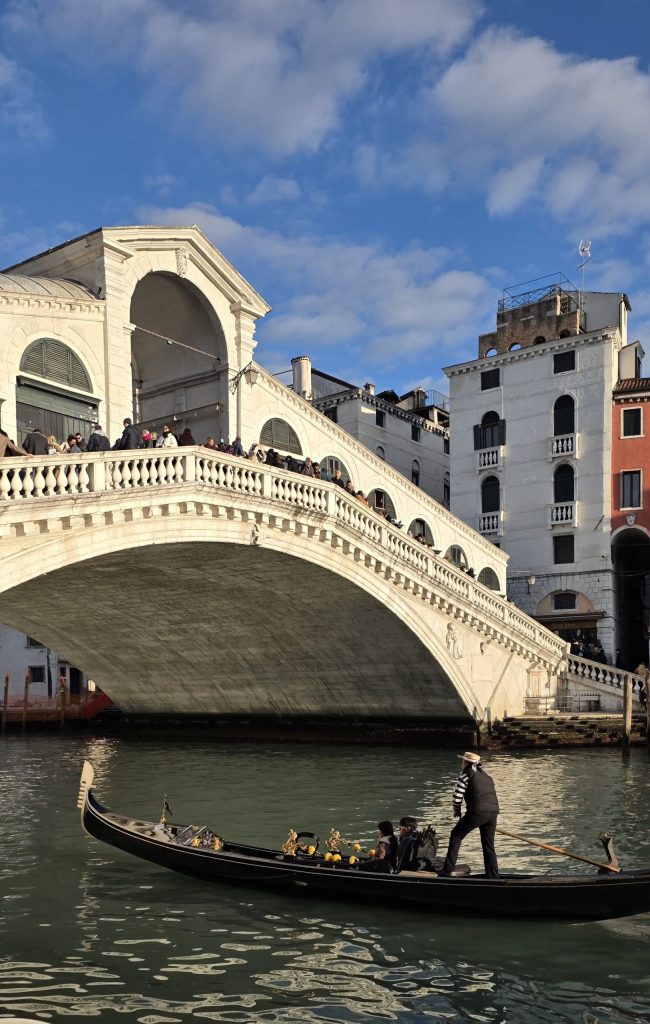
Then, if you walk towards the city centre by the Grand Canal, you get to see some very beautiful sites along the way, until you get to the Rialto Bridge.
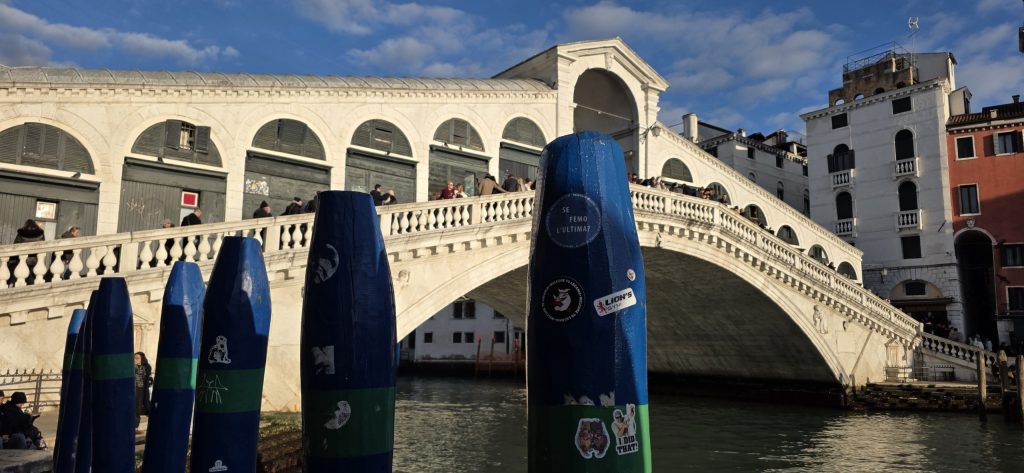
Standing over the Grand Canal, Rialto Bridge is one of Venice’s most enduring symbols and a witness to centuries of trade, power, and daily life. It was completed in 1591, replacing a series of wooden crossings that had repeatedly collapsed or burned down. Designed by Antonio da Ponte, its bold single-span stone arch was considered an engineering risk at the time – yet it has stood firm for over 400 years. The Rialto area was the commercial heart of Venice, home to markets, banks, and merchants who shaped the city’s wealth during the height of the Venetian Republic.
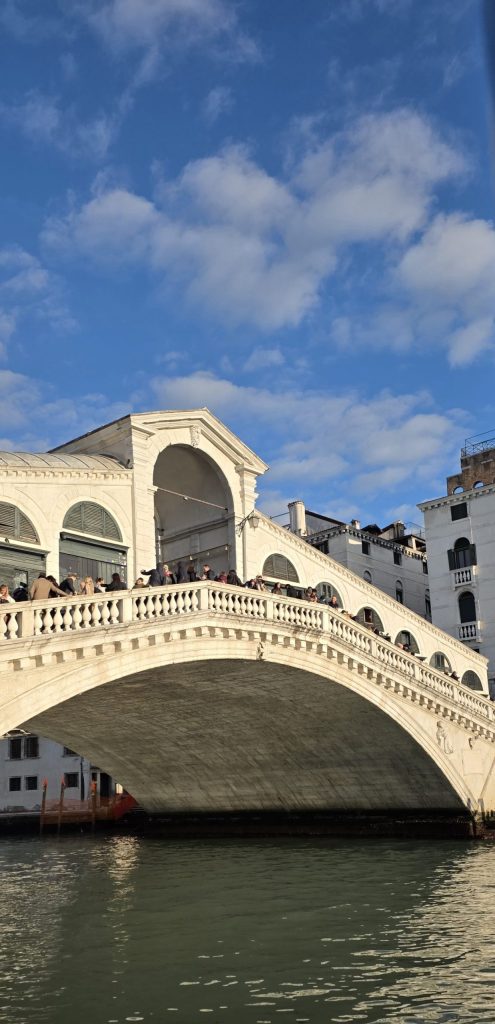
Today, the bridge remains a living part of Venice rather than just a monument. Locals still cross it daily, shops line its central passageway, and from its balustrades you get one of the most iconic views of the Grand Canal – a reminder that Venice’s history is inseparable from its waterways.
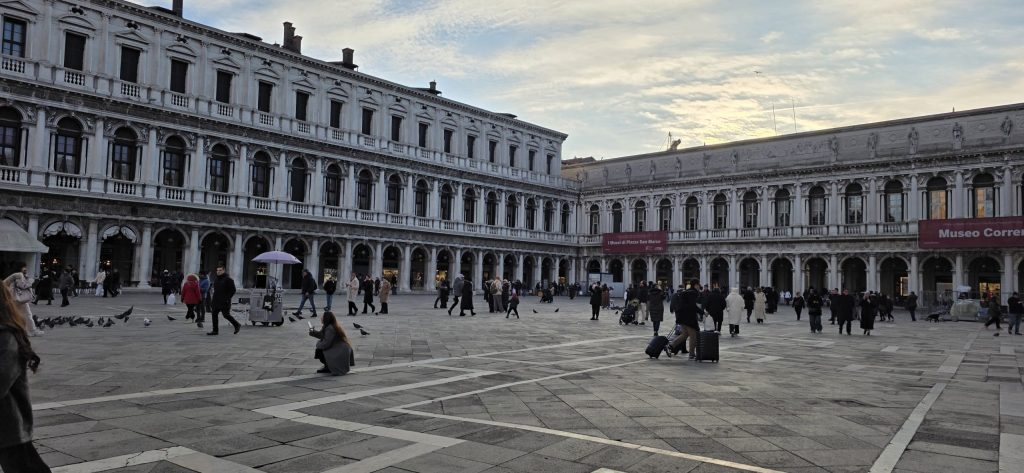
As you keep walking along the Grand Canal, you pass through tiny streets overflowing with tiny shops and restaurants, until you eventually get to St Mark’s Square, without doubt the most famous square in the world. Here you will find the St Mark’s Basilica, golden on the inside, jaw-dropping on the outside
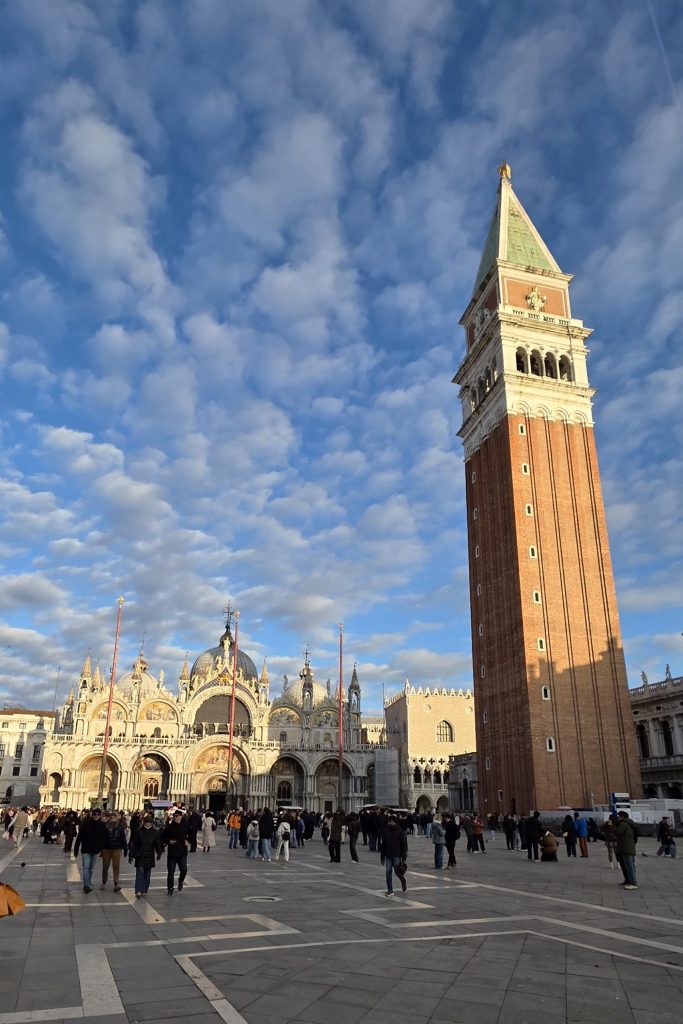
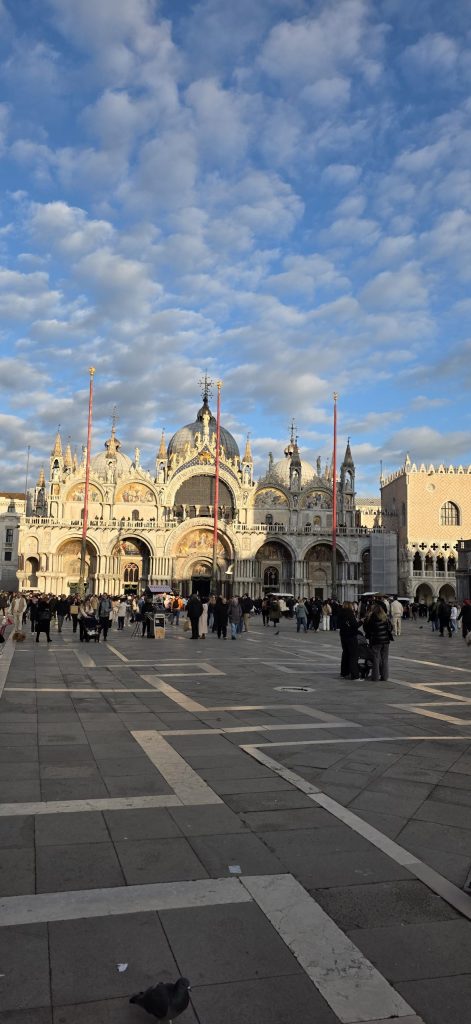
St Mark’s Basilica, on St Mark’s Square in Venice isn’t just a building — it’s Venice dressed in its absolute finest. Before you even step through the doors, the façade is already doing the most. Layered arches, swirling marble columns, and deGolden on the inside, jaw-dropping on the outside.
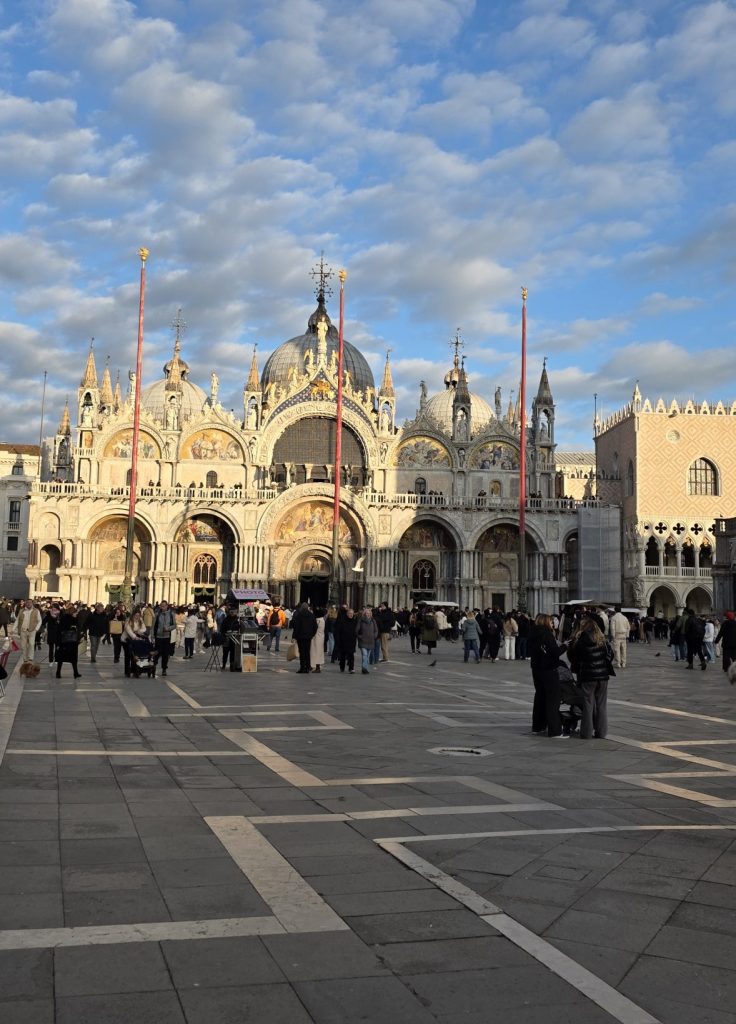
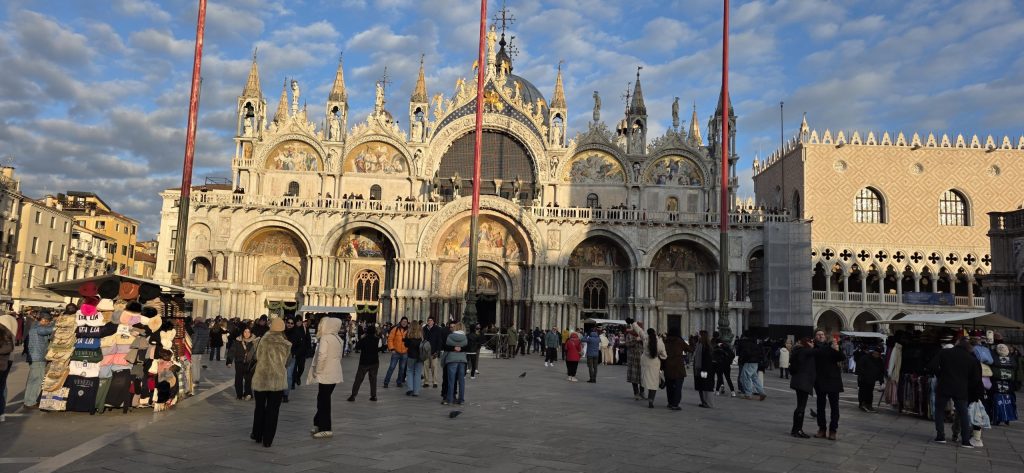
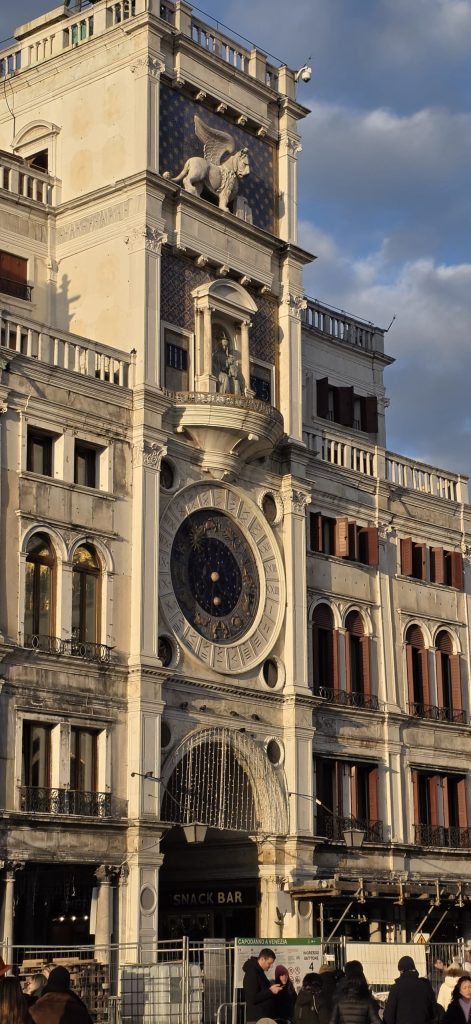
Look up and you’ll spot the famous Horses of St Mark above the main entrance (the originals are inside). They’re a quiet little reminder that Venice was a serious maritime power who brought home art, influence and, well… souvenirs. The domes rising behind the façade give it that distinctive skyline — part Italian, part Byzantine.
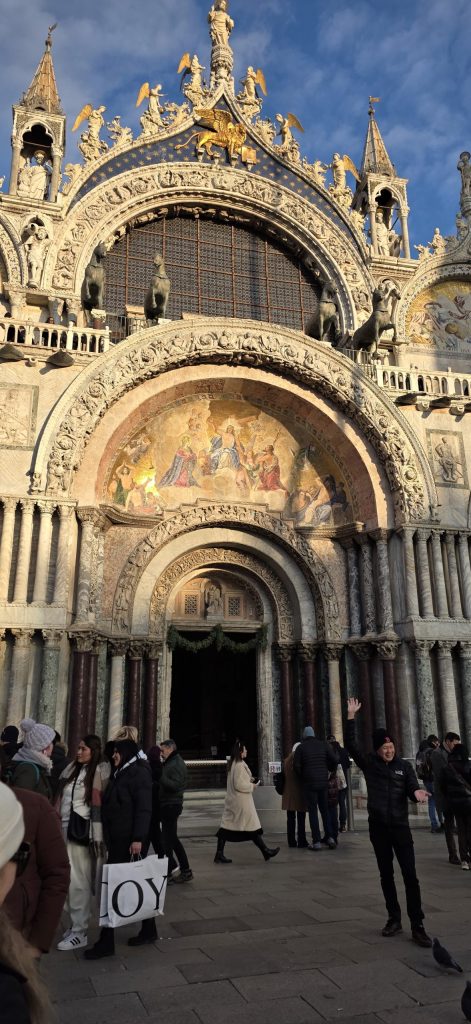
Even the outside mosaics shimmer in the daylight, telling biblical stories in gold and colour before you’ve seen a single one indoors. It’s dramatic, it’s ornate, it’s slightly over-the-top… and that’s exactly why it works.
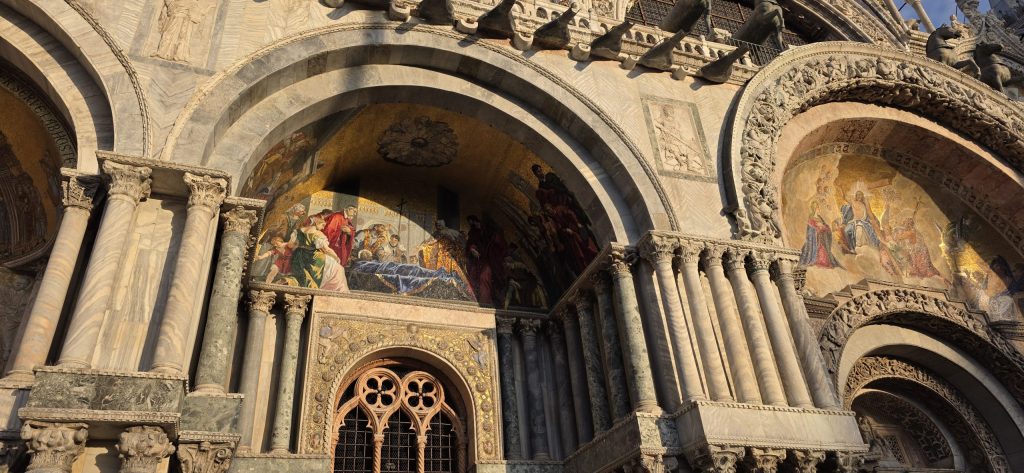
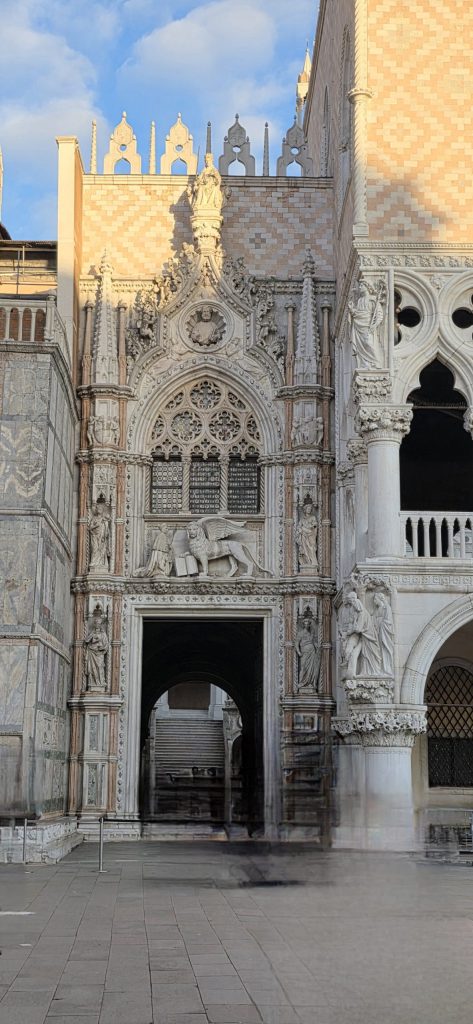
Then you walk inside and realise — somehow — it gets even better.
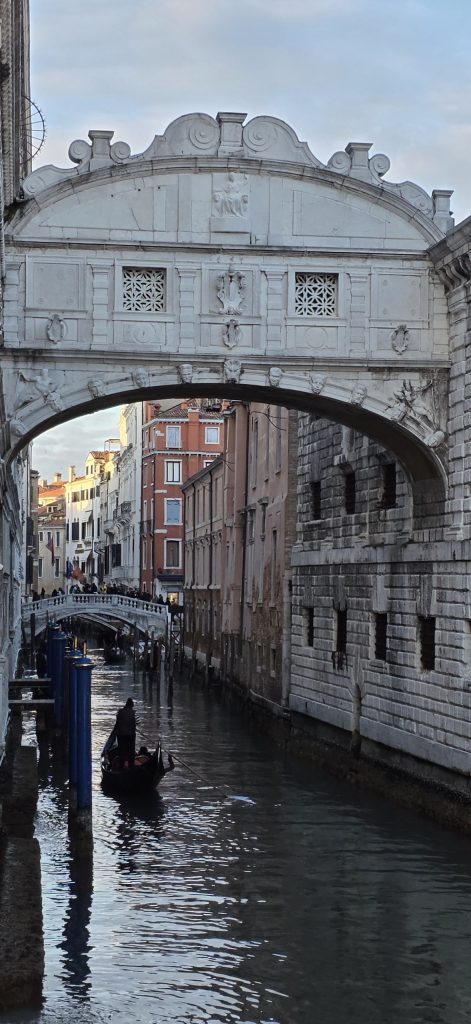
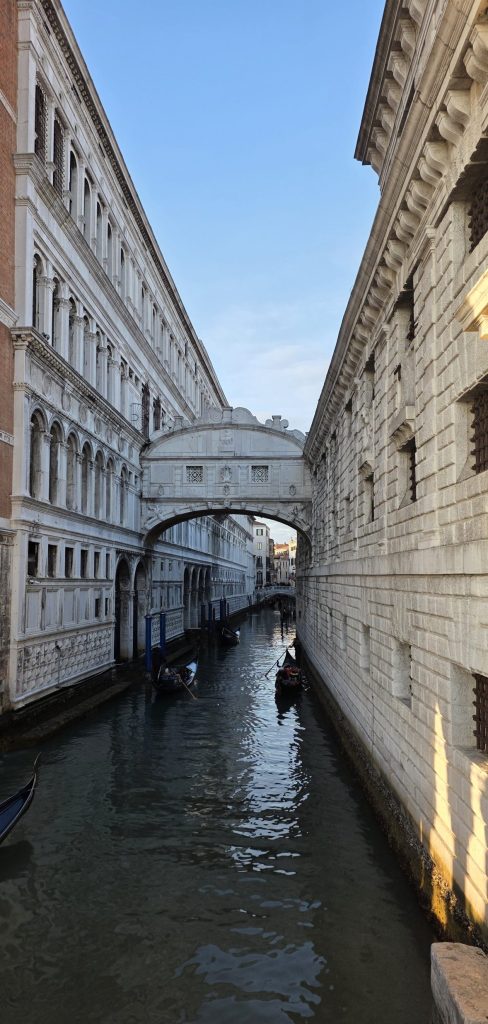
Venice is incomplete without the Bridge of Sighs of course.
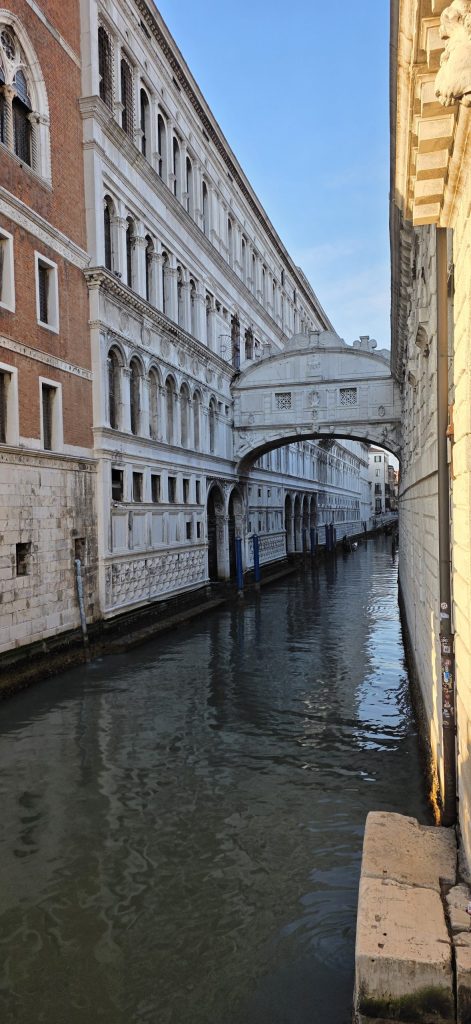
The Bridge of Sighs (Ponte dei Sospiri) is one of Venice’s most iconic and evocative landmarks, draped in both architectural beauty and somber history. Built in the early 17th century by Antonio Contino, this enclosed limestone bridge features intricate Baroque carvings and delicate lattice windows. It serves as a narrow passageway over the Rio di Palazzo, connecting the interrogation rooms of the Doge’s Palace to the New Prison.
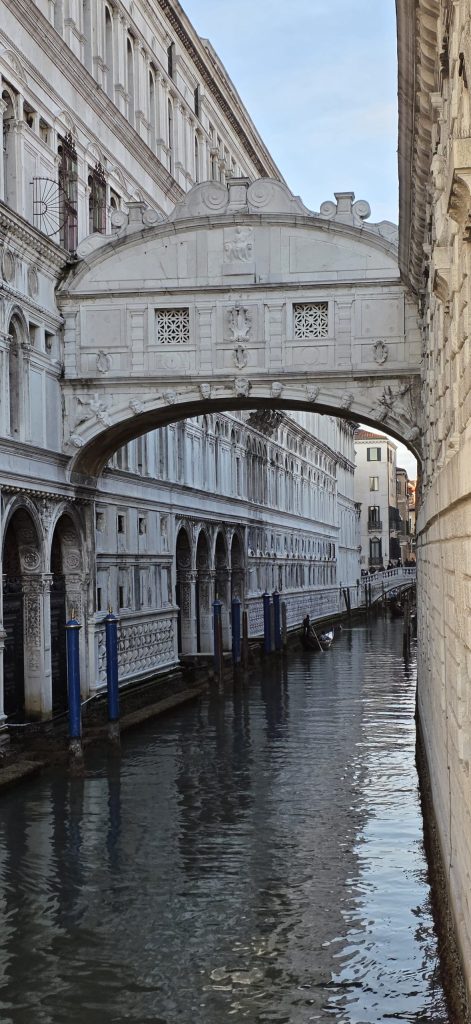
According to local legend, the bridge earned its name because prisoners would catch one final, breathtaking glimpse of the Venetian lagoon through the stone windows and “sigh” at the loss of their freedom before being led to their cells. Today, it remains a symbol of romance and mystery, best viewed from the Ponte della Paglia or experienced by gliding beneath it in a gondola.
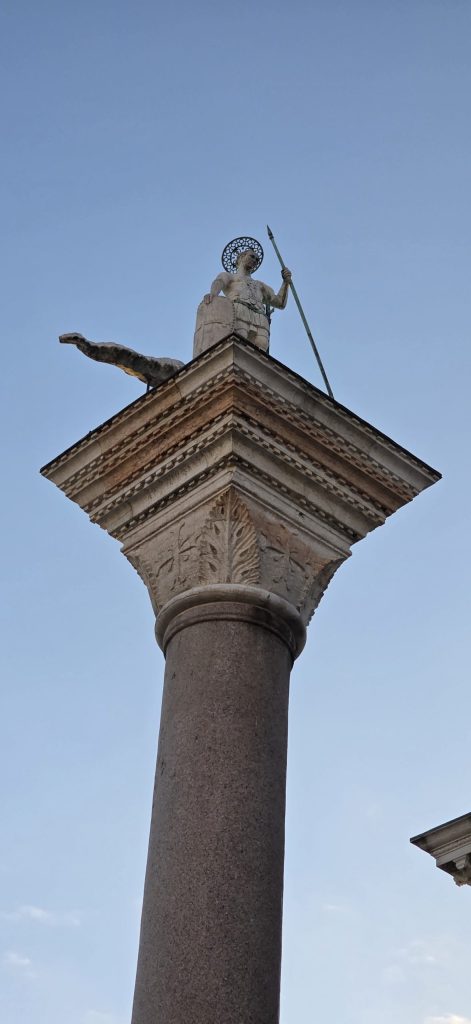
Dominating the gateway between the Molo and Piazza San Marco, the two massive monolithic columns of St. Mark’s Square serve as Venice’s majestic seaside entrance. Carried from the East during the 12th century, these granite pillars represent the city’s dual identity and its spiritual protectors.
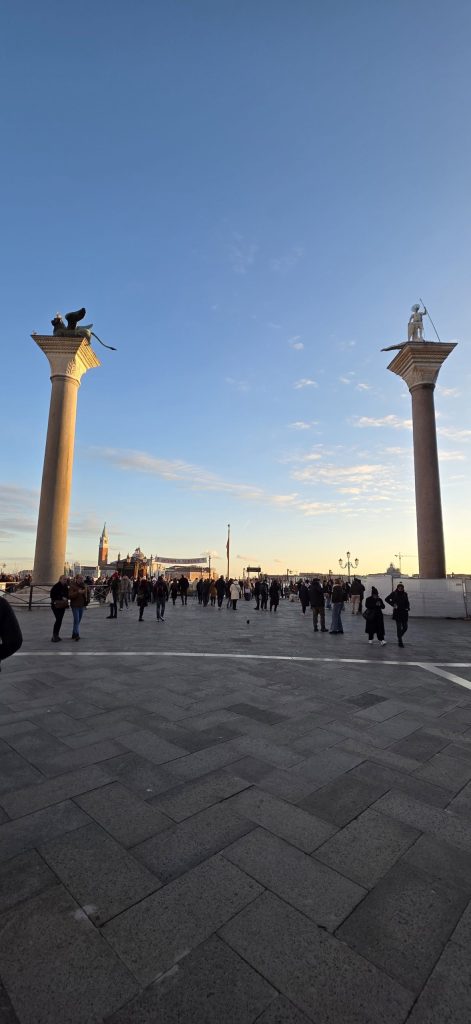
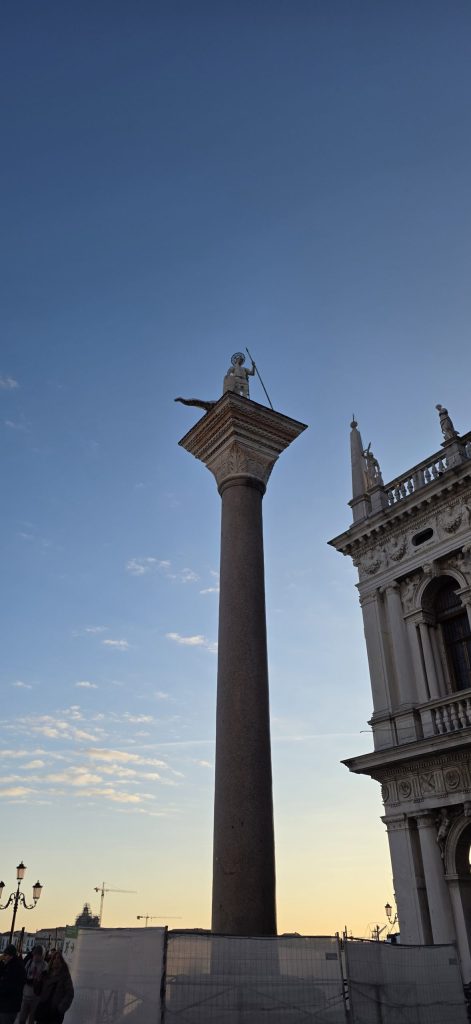
Atop the western column stands St. Theodore, the city’s original patron saint, triumphing over a dragon (which looks suspiciously like a crocodile). Check out its tail sticking out of the column base.
On the eastern column rests the Winged Lion of Venice, the enduring symbol of St. Mark the Evangelist.
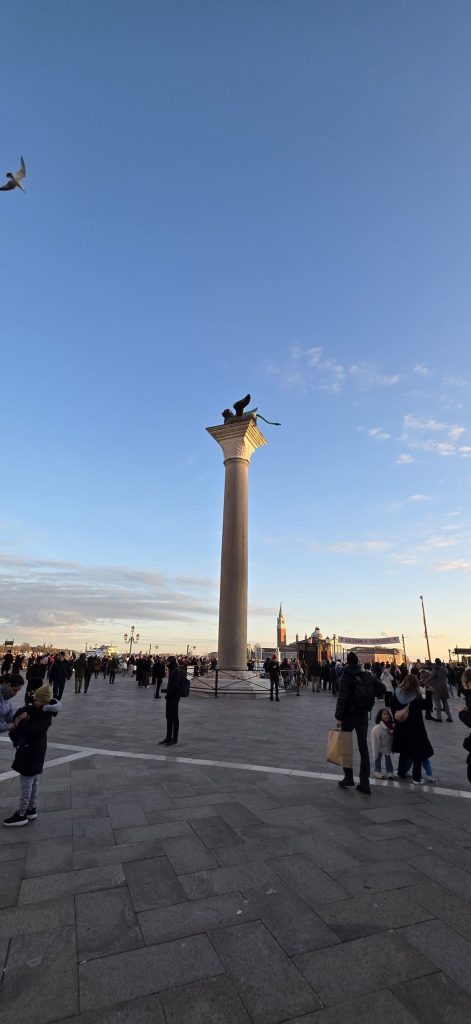
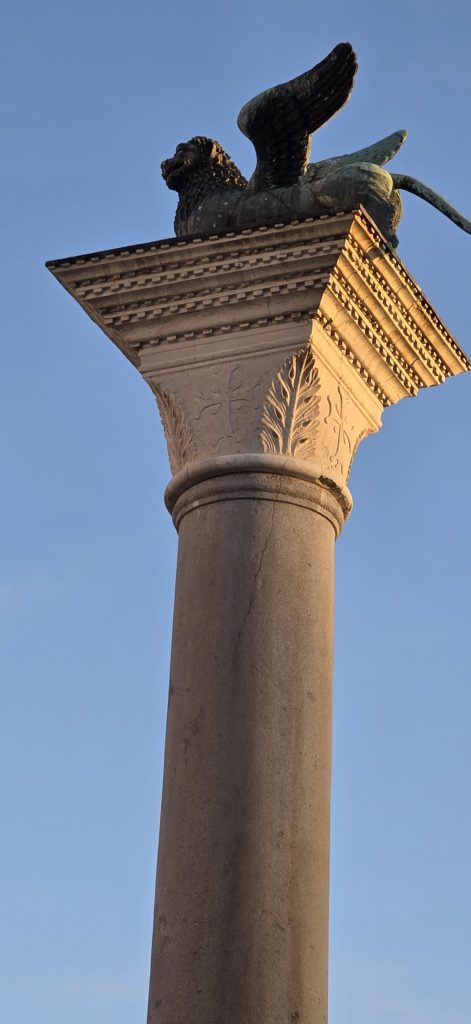
The columns, carved from Egyptian granite, were brought to Venice in the 12th century (likely around 1125 or 1127). They were part of the spoils of war or gifts from the East, often attributed to Doge Domenico Michiel after his successful military campaigns in the Holy Land and the Levant.
According to long-standing Venetian tradition, there were originally three columns that were transported on separate ships, but as they were being unloaded onto the Venetian shore, one of the vessels capsized. The third column sank into the thick mud of the lagoon and, due to its immense weight, was never recovered and remains buried beneath the waters of the basin to this day.