The Arabian desert has been known as just that – a desert – including in archaeology. It was thought that there had been no iron-age activity in the area (the iron-age was around 1200 to 500 BC). However, research conducted over the past 30 years or so has slowly changed the knowledge and understanding of the habitation and culture of this area. And not just from the iron-age but long before that!
Thousands of stone structures, first discovered in the 1970s, and which are from 6500 to 2800 BCE, have been identified across the region, as well as the whole of the Arabian Peninsula to Jordan, Israel, Syria and beyond. They range from burial markers, tower tombs, pendant tombs and open-air structures, also known as desert kites.
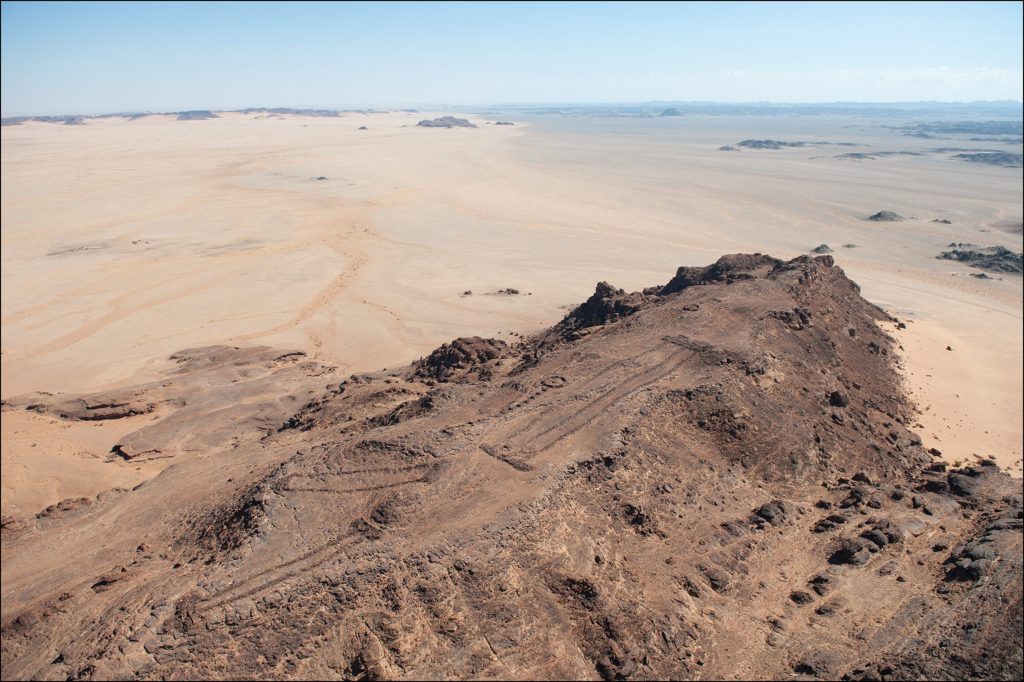
Some desert kites are known as mustatils (meaning rectangle in Arabic). Studies conducted using satellite imagery and aerial surveys, identified almost a 1,000 desert kites in Al Ula and Khaybar areas of Saudi Arabia alone. An additional 39 mustatils were found through ground-surveys of Al Ula, which revealed a number of previously unknown features. Recent excavations and radio carbon dating of the gazelle bones show that these desert kites were first erected in the 6th millennium BC, making them, one of the earliest and largest human-made structures in the world. This also makes them older than the Stonehenge and the Egyptian Pyramids.
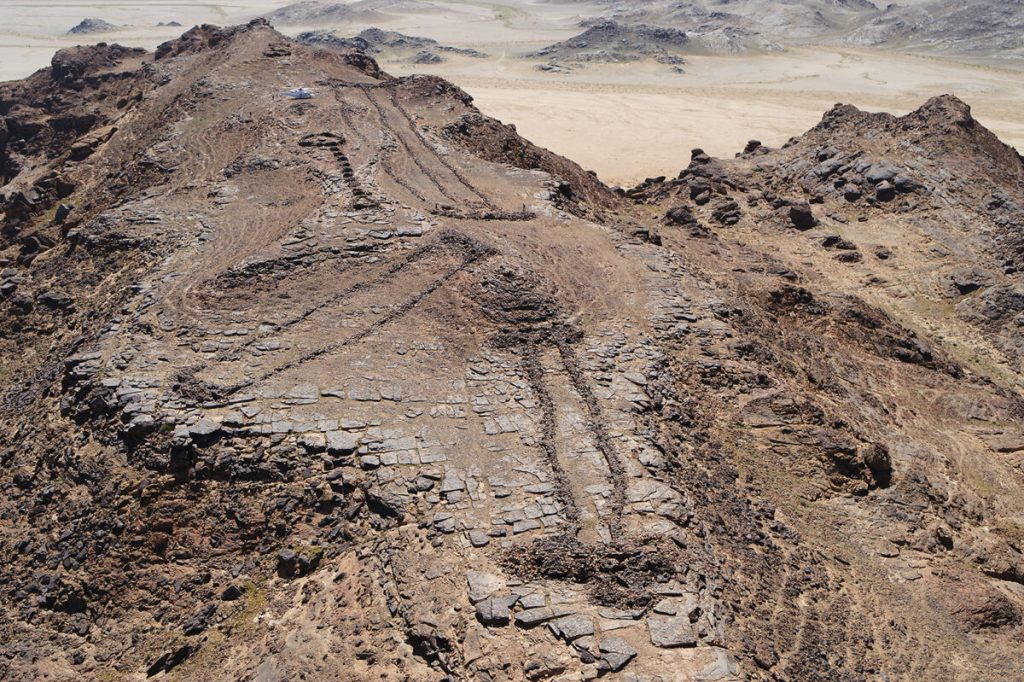
While some reserchers have suggested that the desert kites served some kind of ritual purpose, new studies indicate that they served as animal traps. Specifially, they were used to trap wild gazelles, which were herded into the long rectangular courtyard surrounded by walls and were eventually led to pits at the end. The animals would fall into the pits and were butchered by the people who created these mega structures.
The desert kites are made from sandstone available in the surrounding landscape and are between 65 to 2,000 feet in length (some are even longer, reaching to kilometres in length). They have been classified into three types: simple, complex and double. Most of them feature certain components such as a head, courtyard, long walls, a base and, in the case of the complex types, a series of associated features including circular cells and niches (the pits). The head is generally characterised by a rectangular platform made of either sandstone slabs or local stones and placed higher than other parts of the structure. The overall stone structures have an open, elongated and empty courtyard with the head at the top, as well as a base and boundary walls. Some complex types also have stone structures and standing stone pillars, and some had doorways blocked by the humans who used them, perhaps to indicate that they were no longer in use.
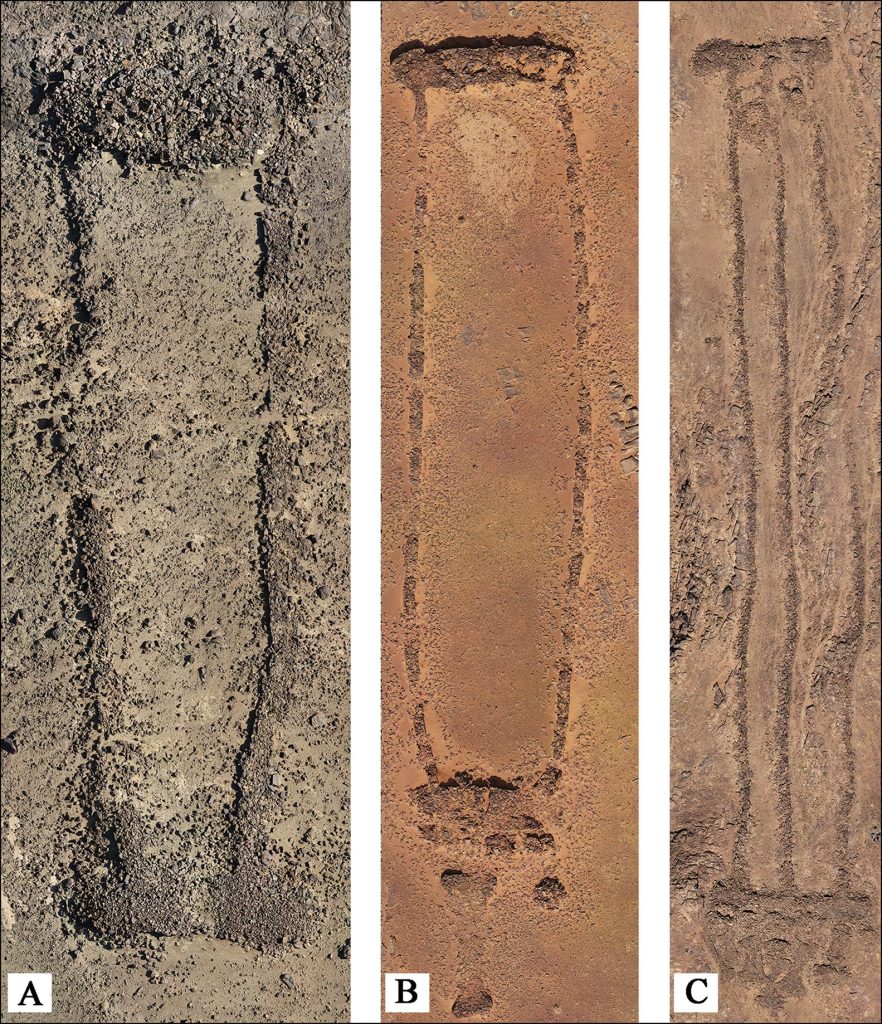
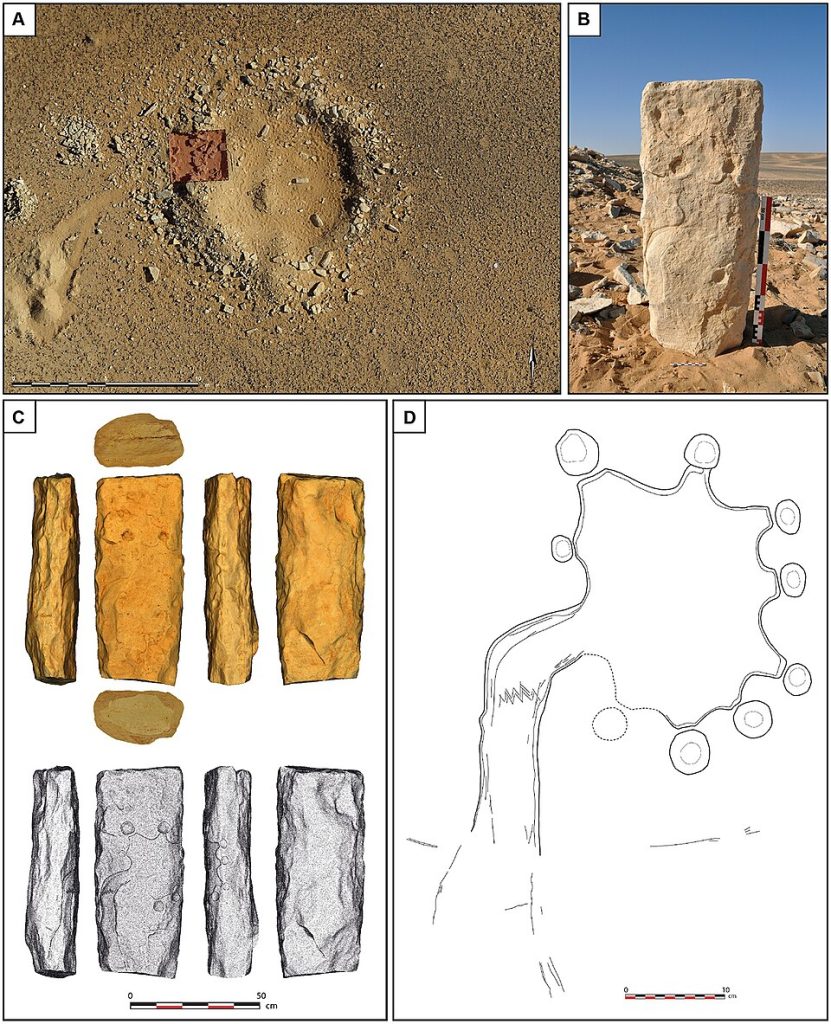
Other platforms related to the mustatils have also been found in the same range, many of which are oriented parallel to the mustatil, either next to its base or outside the long wall, and which may have had a related function the desert kites.
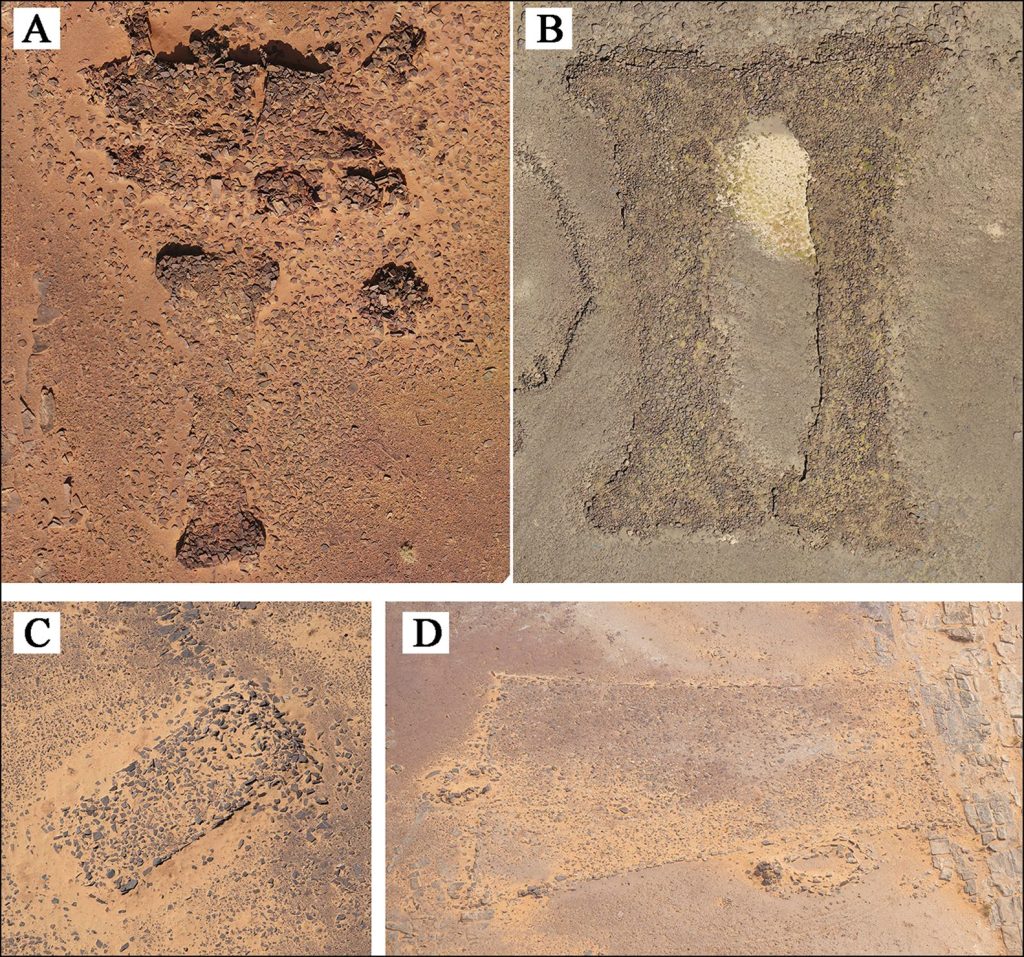
As mentioned above, some studies point to ritual activity, highlighting cow, goats, sheep in addition to the gazelle bones, all animals that could have been ritual offerings. However, there were no human remains and there also does not seem to be any domestic occupation of the sites.
Some researchers also think that climate variations during the late Pleistocene (which was from around 129,000 years ago), and the Early Holocene (around 11,650 years ago), resulted in migration of people and dispersal of technologies in the region – similar to what has happened everywhere else in the world. The animal bones and horns offer the first evidence of what might be a Neolithic cattle cult in north-western Arabia, considering that cattle was a valuable commodity of the early pastoral inhabitants of that area. This has been obvious from rock art found in the region depicting scenes of both cattle herding and hunting. The mustatils therefore, some researchers say, could have functioned as monuments for the cults or as “as territorial markers, potentially denoting ancestral pasturage or some other form of connection with the landscape”. These researchers also suggest that the mustatil tradition may represent the development of cult ideology in Neolithic north-western Arabia. Of course, more research needs to be undertaken to understand human settlements from that time to further clarify the situation. But the concentration of the mustatils suggests a dense occupation of north-western Arabia.
For the most part though, there is increasing concensus that these were definitely animal traps, some put in place almost 9,000 years ago. Most of them do not indicate any ritual actitivity and primarily have gazelle bones only. The formations consist of long, low stone walls that converge into narrow enclosures or pits, creating a kite-like shape when viewed from above. Archaeologists believe they were used as large-scale hunting traps, designed to funnel herds of wild animals—such as gazelles—into confined areas where they could be more easily captured or killed. The construction of desert kites reveals a high level of social coordination, environmental knowledge, and planning among early human communities, highlighting their sophisticated strategies for survival in harsh desert environment.
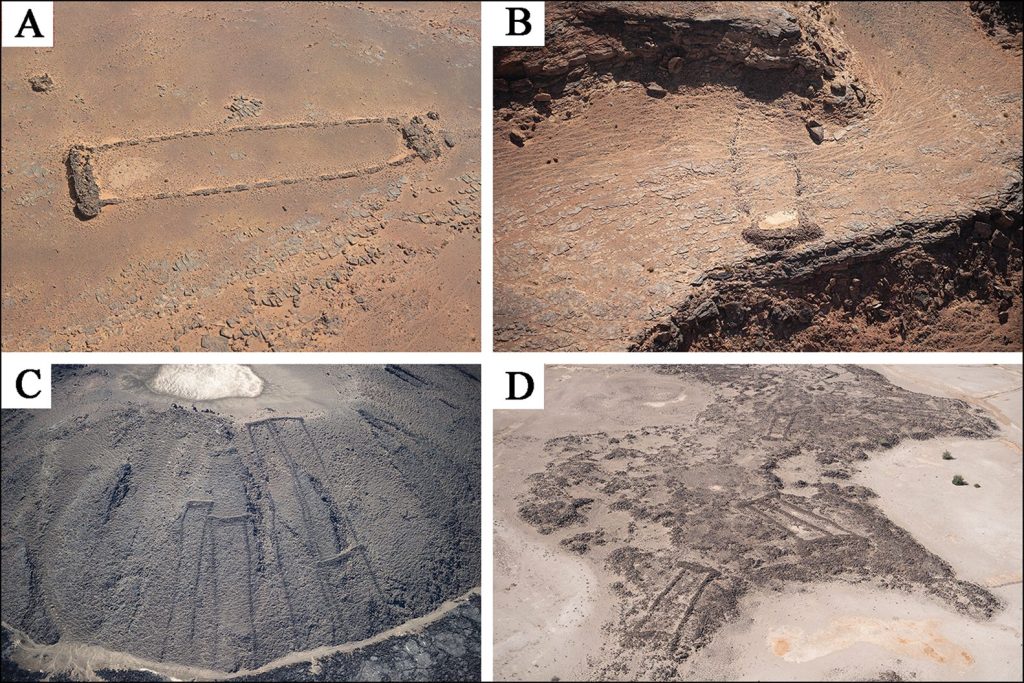
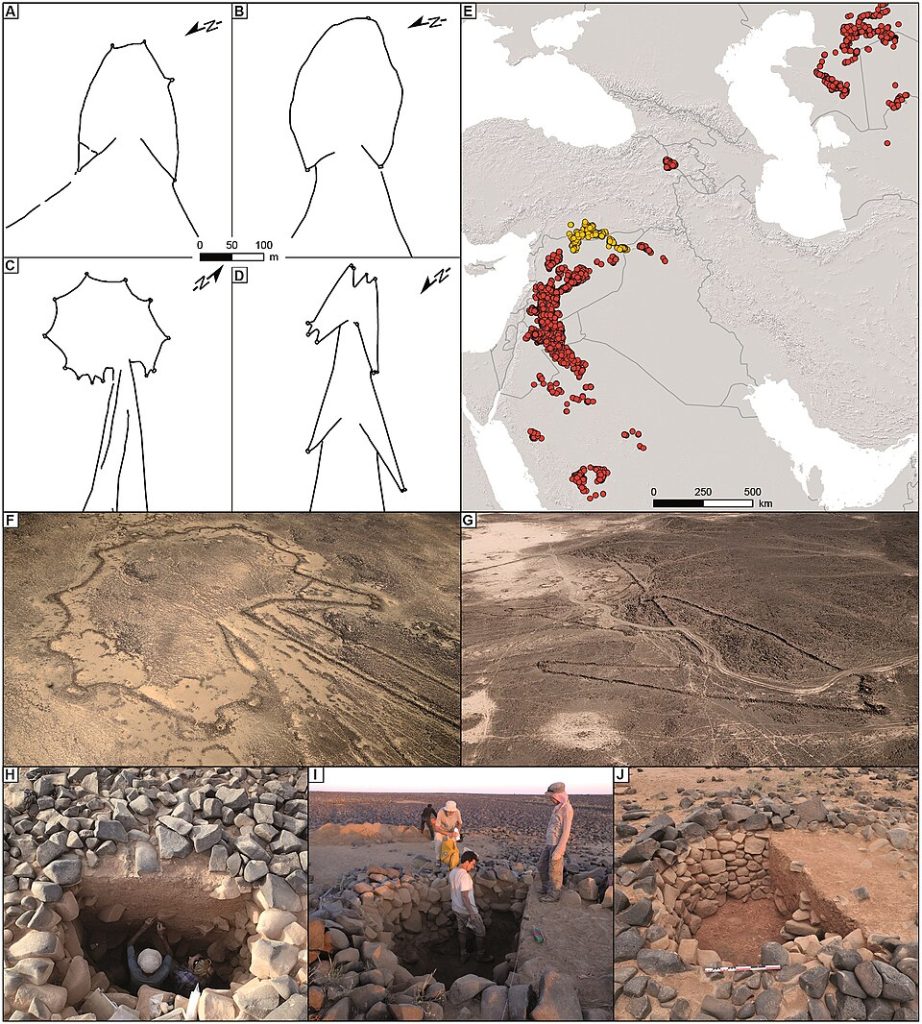
One of the most striking things about desert kites is their sheer scale. Some stretch for several kilometers, making them among the largest prehistoric structures in the world. Because their low stone walls are hard to recognize from the ground, many were only fully identified in the 20th century through aerial photography and satellite imagery. This discovery changed how archaeologists understood prehistoric desert societies, showing that these landscapes were not marginal or empty but actively engineered and managed.
Desert kites also offer clues about early human impact on the environment. Evidence suggests that repeated, large-scale hunts using kites may have contributed to the decline or local extinction of certain animal species, especially gazelles. This has led scholars to see them as an early example of humans significantly reshaping ecosystems. At the same time, their construction implies cooperation among large groups, shared planning, and possibly social rules governing hunting and resource distribution.
Finally, desert kites are important for what they reveal about knowledge transmission and technology without writing. Their consistent design across vast regions suggests that ideas and techniques spread widely among prehistoric communities. In that sense, desert kites are not just hunting tools—they’re monuments to early social organisation, communication, and humanity’s long relationship with challenging environments.
(Read about The Plain of Jars in Laos)
First published 26 May 2021
Images: Roal Commission of Al Ula, Cambridge University and Wikipedia (CC)