A new research conducted by researchers from the University of Calgary and the National Research Council of Canada has yielded some fascinating results. It seems that all living things – including humans – emit a glow when we are alive. This glow vanishes when we die.
The experiment was conducted on mice and leaves from two different plant species and it has seemingly uncovered direct physical evidence of an eerie phenomenon known as ‘biophoton’.
There is absolutely no credence to claims of auras and claims of discharges around living organism have been largely debunked. Furthermore, visible wavelengths of light emitted by biological processes is so faint as to be almost invisible, so it is a real challange to confirm any emissions from life-forms. Any kind of experiment that claims to reveal this glow has to be confirmed without a shadow of a doubt. The science behind biophotons is not without controversy but various biological processes naturally do produce bright light displays through chemiluminescence. For decades, spontaneous light emissions ranging from 200 to 1,000 nanometers have been observed in diverse living cells, including cow heart tissue and bacterial colonies.
One likely source of this radiation is the impact of reactive oxygen species (ROS) produced by living cells under stress, such as heat, toxins, pathogens, or nutrient deficiency. For instance, with sufficient hydrogen peroxide, molecules like fats and proteins can undergo reactions that excite their electrons, releasing one or more energetic photons as they return to their normal state.
Developing a method to remotely monitor stress in individual tissues of humans, animals, crops, or bacterial samples could offer technicians and medical specialists a powerful, non-invasive tool for research and diagnostics.
And this is what University of Calgary physicist Vahid Salari and his team have claimed to observe. They suggest that an ultraweak photon emission (UPE) produced by several living animals in strong contrast with their non-living bodies, as well as in a handful of plant leaves was observed in their study.
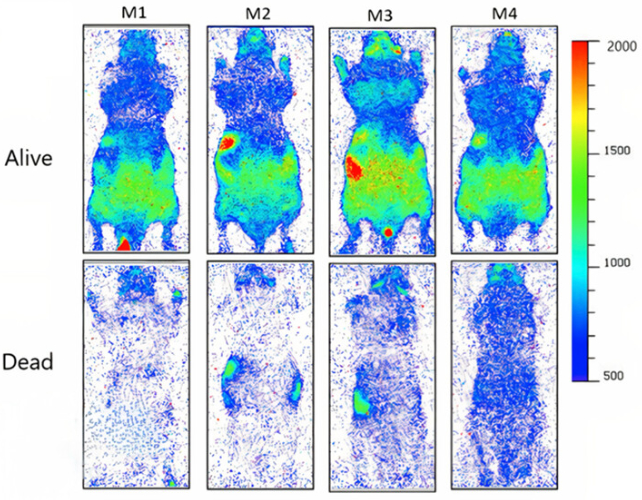
The scientists used something called electron-multiplying charge-coupled device and charged couple device camera to help them compare even the faintest of emissions from mice – both alive, and dead. They used four immobilised mice, placing them in a dark box and then photographed them for an hour. These mice were then unfortunately euthanised and photographed again for another hour, after being warmed to body temperature even after death, in order to keep heat from being a variable.
The results revealed capture of individual photons in the visible spectrum of light emanating from the mice cells both before and after death. There was clear difference in the number of photons, with a significant drop in UPE in the meauremenat period and after euthanasia.
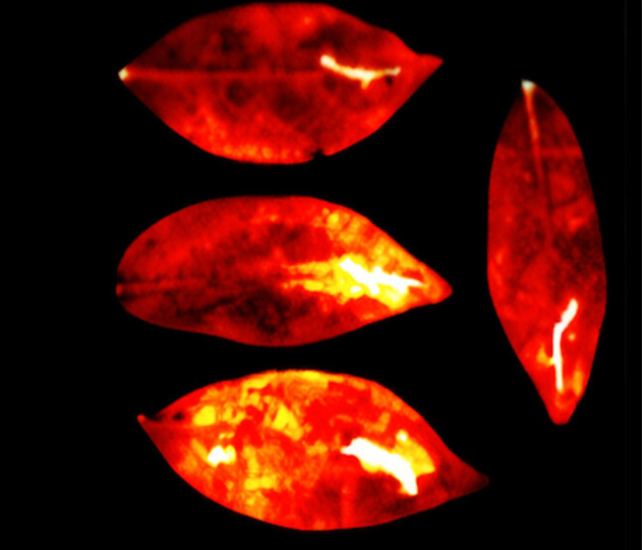
Furthermore, an experiment on thale cress (Arabidopsis thaliana) and dwarf umbrella tree (Heptapleurum arboricola) leaves produced similar results. Subjecting the plants to physical injuries and chemical agents offered compelling evidence that reactive oxygen species might be responsible for the faint glow observed.
“The injured areas of all leaves were significantly brighter than the uninjured areas throughout the entire 16-hour imaging period,” the researchers reported.
The experiment raises the possibility that the faint, subtle glow emitted by stressed cells could one day reveal whether we are in optimal health.
This research was published in The Journal of Physical Chemistry Letters.