
This ‘Newborn’ World is the Youngest Known Transiting Exoplanet
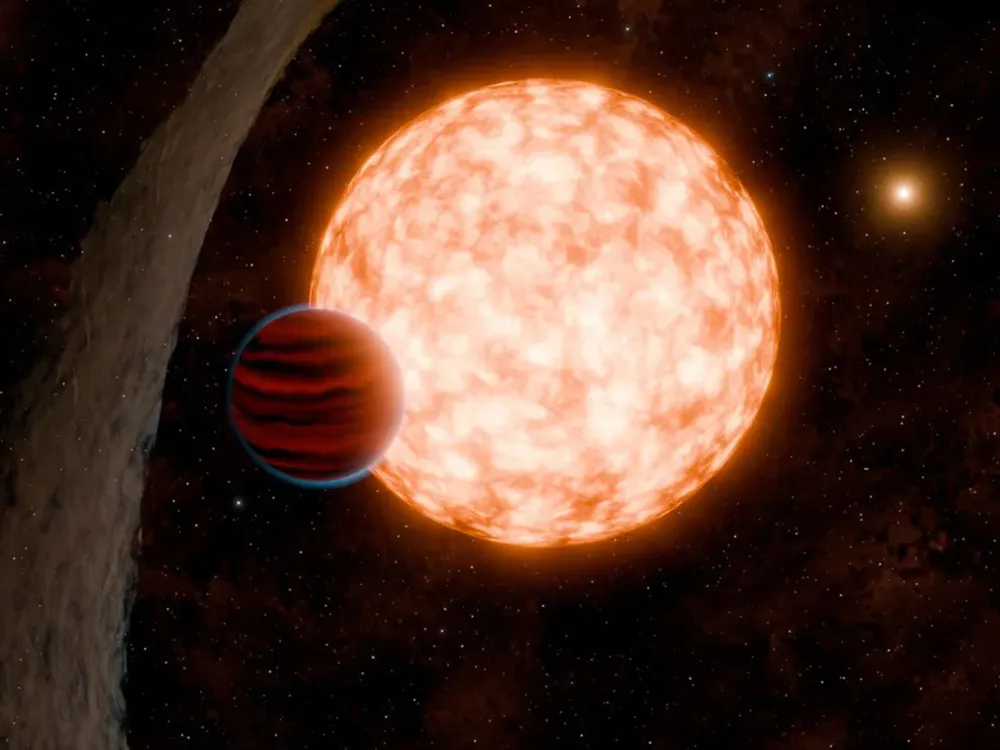
Astronomers describe the youngest transiting planet ever found. It’s about three million years old—a baby, in cosmic terms. If you imagine Earth as a 50-year-old adult, this world would be a two-week-old infant, in comparison.
A disk, a star, its planet and a moon
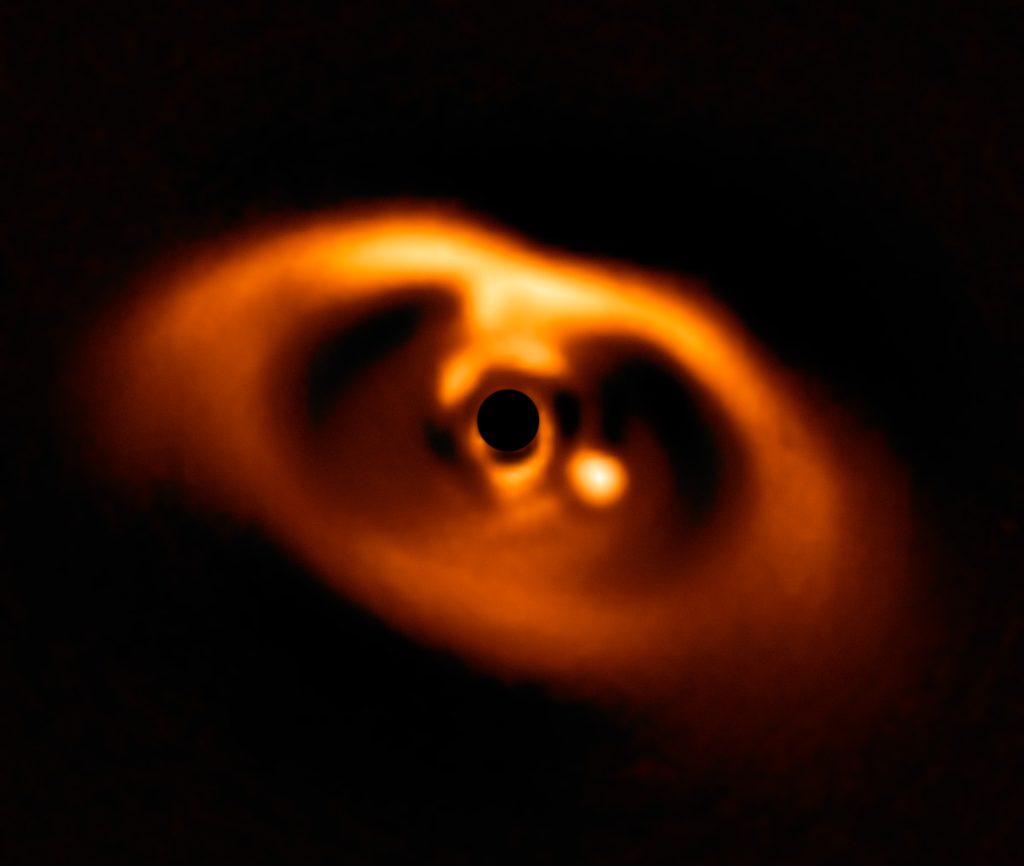
Meet protoplanetary disk, star PDS 70, planet, PDS 70c and moons being formed below the planet. Imaged in 2021 by ALMA telescope
Meet a planet as light as cotton candy

Meet WASP-193b, an exoplanet discovered 1,232 light-years away, orbiting a Sun-like star named WASP-193. It is 50 percent bigger than Jupiter but is light and fluffy as cotton candy.
Webb Looks at a Mini Neptune
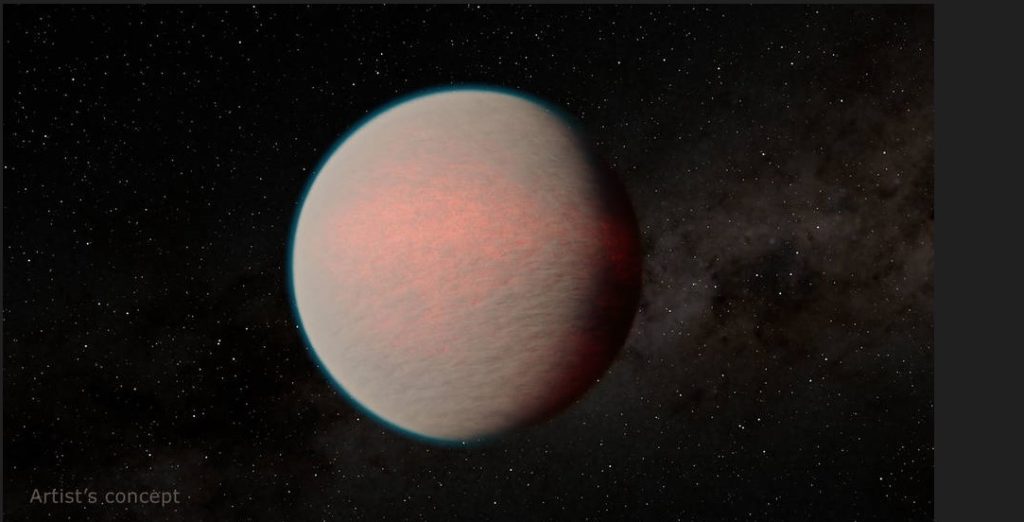
The James Webb Telescope Looks at a Mini Neptune, a class of planet common in the galaxy but about which little is known.
James Webb Telescope Spots Swirling, Gritty Clouds on Exoplanet
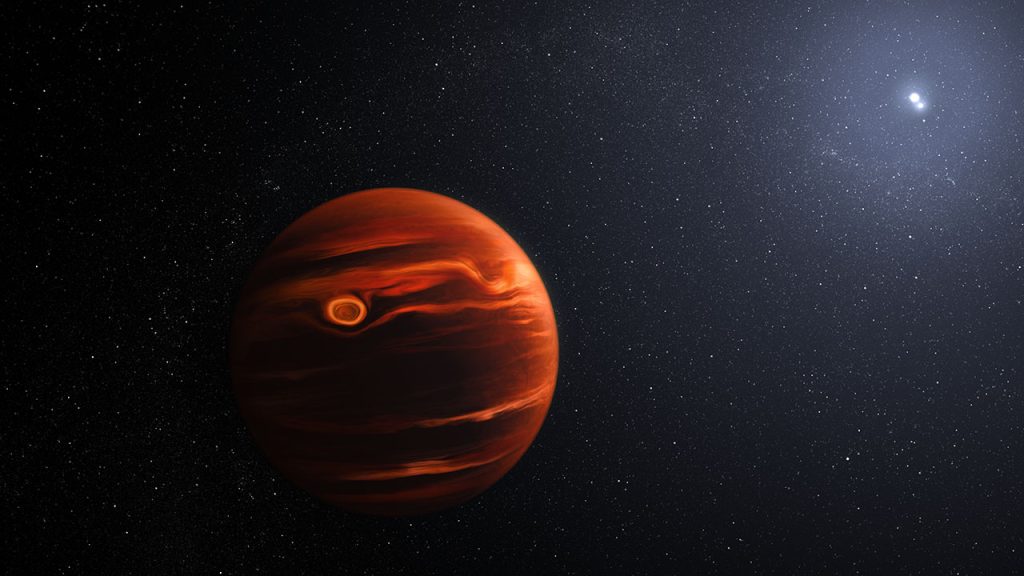
Researchers observing with NASA’s James Webb Space Telescope have pinpointed silicate cloud features in a distant planet’s atmosphere. The team also made extraordinarily clear detections of water, methane, and carbon monoxide with Webb’s data, and found evidence of carbon dioxide. This is the largest number of molecules ever identified all at once on a planet outside our solar system.
12 years of far away exoplanets orbiting their star – Time Lapse Video

12 years of far away exoplanets orbiting their star – Time Lapse Video of 4 jupiter sized planets circling their star. The system is HR8799.
ESO’s Very Large Telescope images planet around most massive star pair to date

ESO’s Very Large Telescope images a planet around most massive star pair to date. The b Centauri star system is 6 times the mass of the Sun.
A Planet in another Galaxy
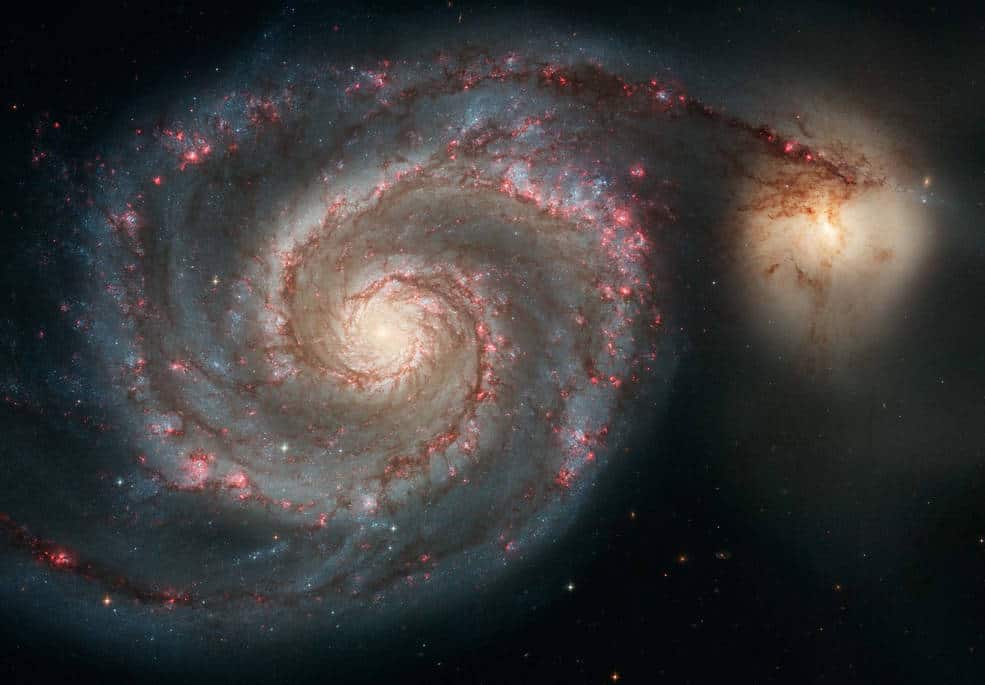
A Planet has been found in Galaxy M51 also known as the Whirlpool Galaxy. This is the first time such a planet has been found outside the Milky Way.