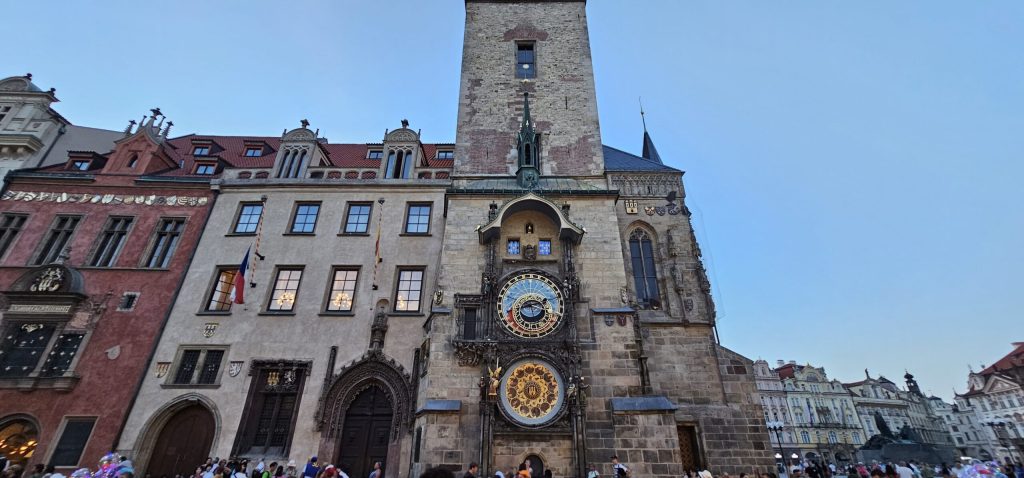
The Astronomical Clock in Prague, known locally as the “PraŠ¾skÁ½ orloj,” is one of the most famous and visually stunning astronomical clocks in the world. It is also the oldest functioning astronomical clock in the world. Located in the Old Town Square (StaromÄ›stskÁ© nÁ¡mÄ›stÁ) in Prague, Czech Republic, it is a remarkable piece of medieval engineering and artistry.
The rich history of this gorgeous clock dates back to the 15th century, when it was installed in the Old Town Hall in 1410 by clockmaker MikulÁ¡Š¡ of KadaŠˆ and astronomer Jan Š indel. Since then, the clock has undergone several renovations and restorations to maintain its functionality and appearance.
The giant clock comprises of several components that include an astronomical dial, a calendar dial, and a procession of apostles.
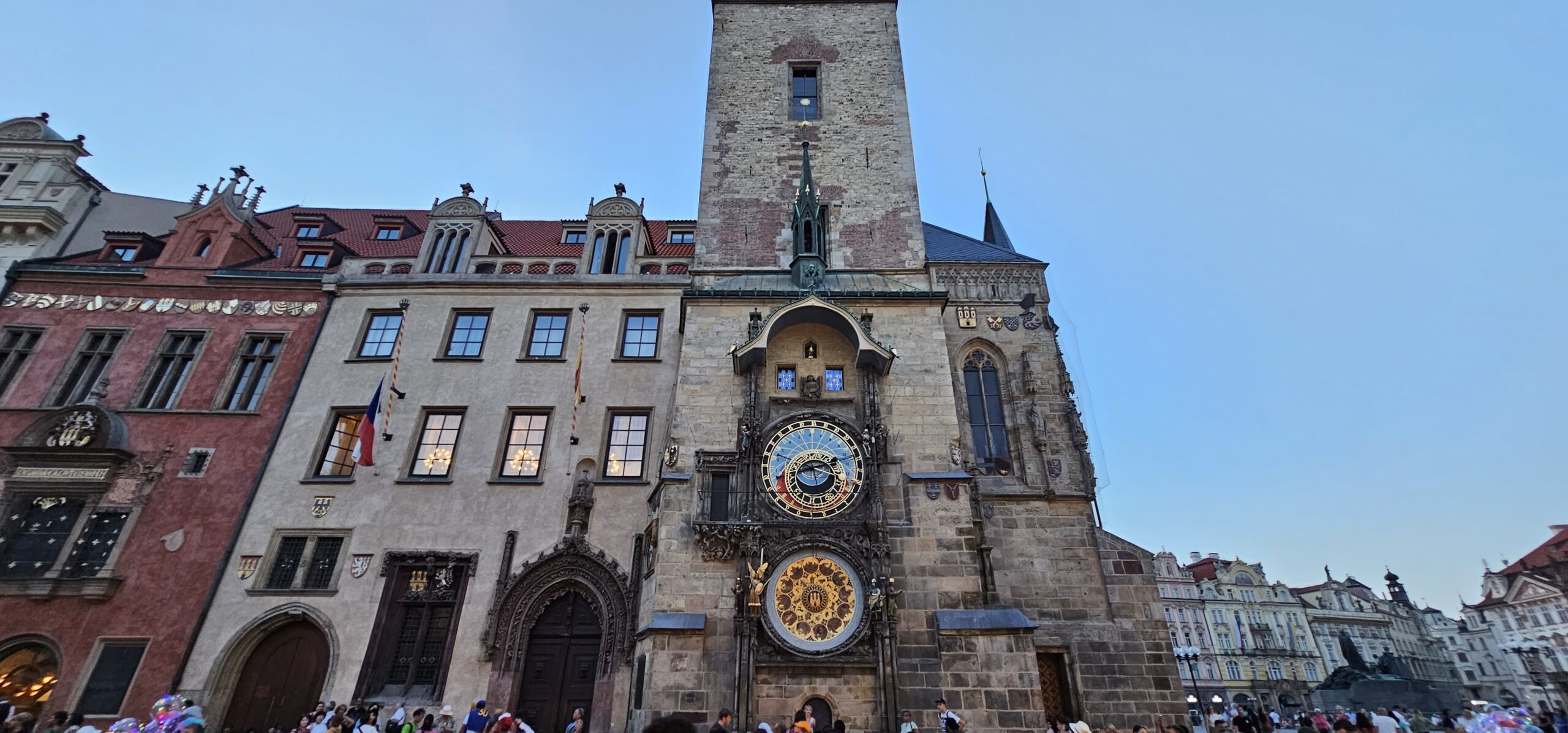

Astronomical Dial: This is the central feature of the clock, displaying a variety of astronomical information, including the positions of the sun, moon, and stars. It also shows the zodiac signs and the phases of the moon.

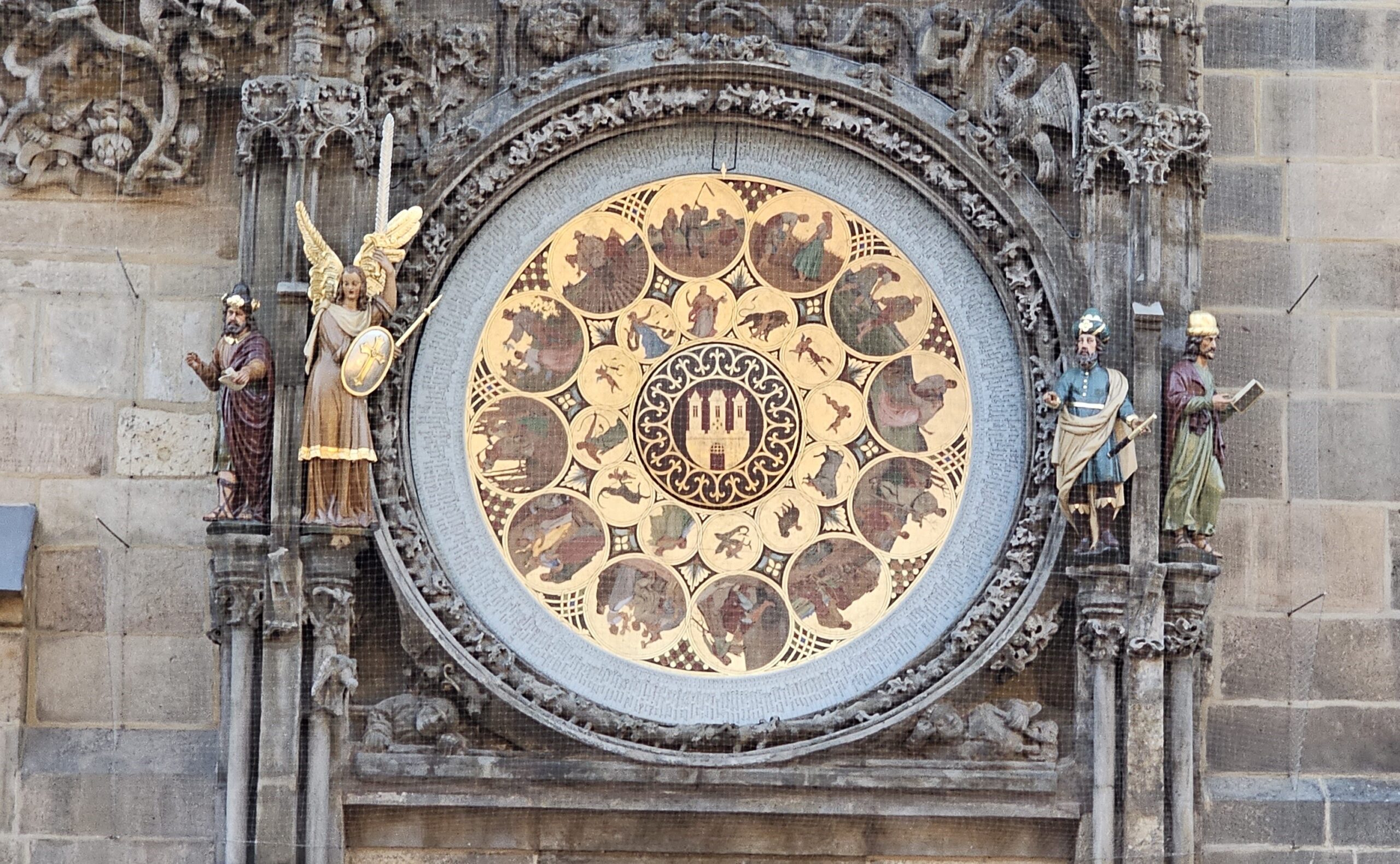
Calendar Dial: Located below the astronomical dial, it displays the day of the month, the month, and the signs of the zodiac.
Procession of Apostles: Every hour, a small trap door opens, and a procession of 12 apostles appears. Each apostle represents one of the twelve hours, and they rotate in and out of view while a skeleton representing Death pulls the strings of
a bell.
-
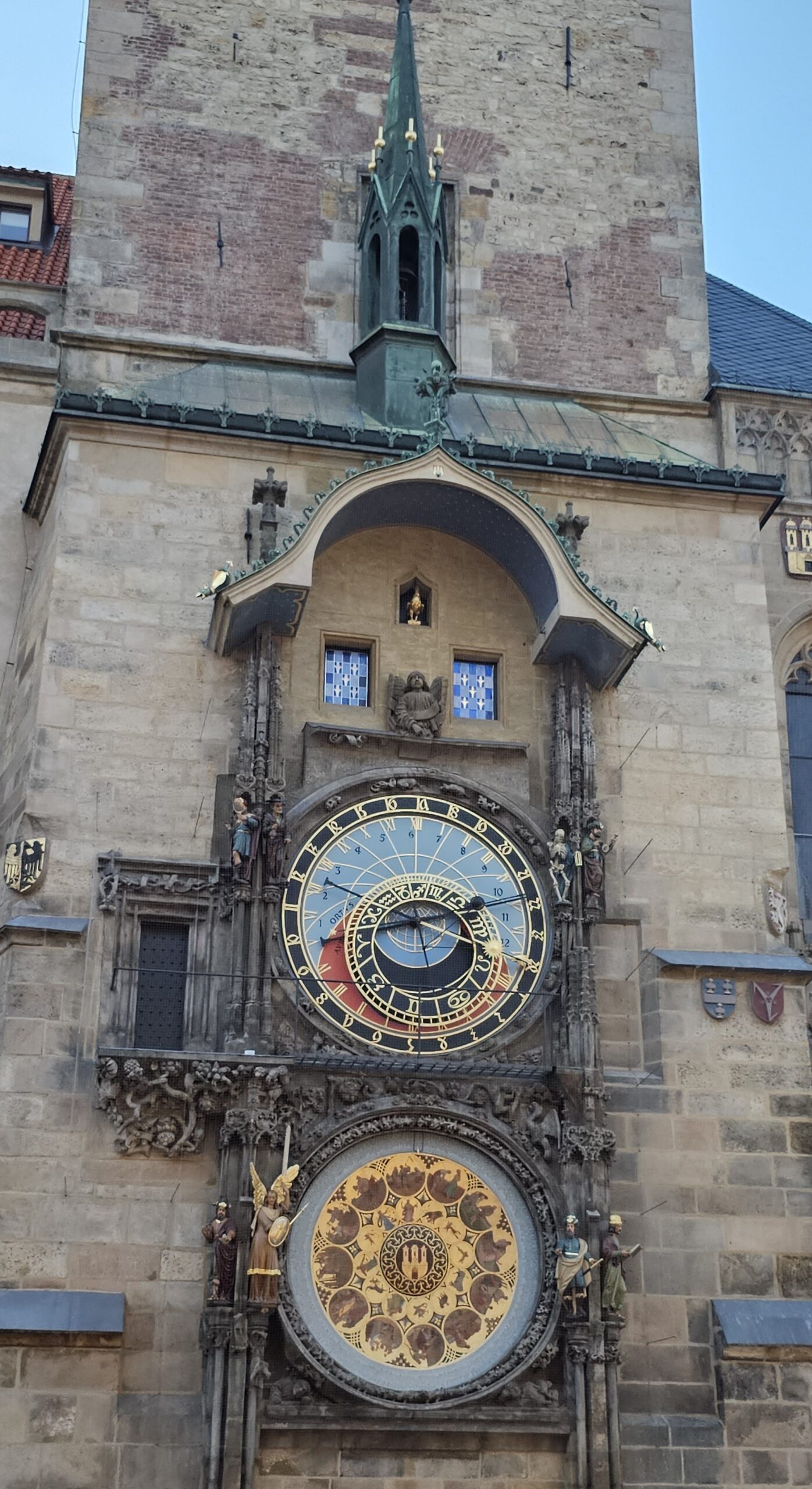
Astronomical clock, Prague. Image by 360onhistory.com
Statuettes and Decorations: The clock is adorned with various sculptures and decorative elements, including allegorical figures representing Vanity, Greed, and Death.




The Astronomical Clock is not just a beautiful timepiece but also a functional astronomical instrument. It was designed to provide astronomical information to the citizens of Prague during the medieval period and can display several types of time, including:
- Old Czech Time: This is a timekeeping system that divides the day and night into 12 hours each. The clock’s hands show Old Czech Time during the day.
- Babylonian Time: This is a system of timekeeping used in ancient Babylon. The clock’s hands show Babylonian Time during the night.
- Sidereal Time: The clock can also display sidereal time, which is based on the position of the stars and is used by astronomers.
This amazing clock is not only a technical marvel but it is also an important cultural symbol of Prague. It is often featured in cultural events, and its hourly show draws crowds of spectators.
The clock has undergone several restorations over the centuries to ensure its continued operation. The most recent major restoration took place in 2018-2019, during which the clock was disassembled, cleaned, and repaired.
The Prague Astronomical Clock is a fascinating blend of art, science, and history. It continues to captivate visitors from around the world with its beauty and the mesmerizing hourly show, making it a must-see attraction in the heart of Prague’s Old Town Square.
You can hear it ring in the video below: