When we think of Saturn’s moons, those of us who think of such things, immediately picture the iconic icy rings and the larger, more familiar satellites like Titan or Enceladus. However, Saturn has other unsual moons and one of them is Phoebe. This is Saturn’s most massive irregular satellite. Scientists have been studying it for over a century because its role in the Saturnian system make it well worth exploring.

A Historic Discovery
Phoebe was first discovered on March 18, 1899, by William Henry Pickering using photographic plates taken by DeLisle Stewart at the Boyden Station in Peru. It was no ordinary event in astronomy, because with its discovery, Phoebe became the first natural satellite to be discovered photographically. It is named after a Titan in Greek mythology, associated with the Moon. Phoebe orbits Saturn in the opposite direction of the planet’s rotation—this is known as a retrograde orbit.

For over 100 years, Phoebe was the outermost known moon of Saturn. Its orbit is particularly distant, being nearly four times farther from Saturn than its neighbor, Iapetus. In fact, it wasn’t until 2000 that smaller moons were discovered beyond Phoebe.
Phoebe’s Irregular Orbit and Unique Characteristics
Unlike Saturn’s regular moons, which mostly orbit in the planet’s equatorial plane, Phoebe is part of a group known as the “Norse group,” which consists of irregular moons that follow highly eccentric orbits. These moons, including Phoebe, are thought to have been captured from other regions of the Solar System. Phoebe’s orbit is tilted at a significant angle, and it is likely that it once came from the Kuiper Belt, the icy region beyond Neptune.
(Rare Images of Mars’ Moon Deimos)
Phoebe’s orbital eccentricity, along with the fact that it does not rotate synchronously like Saturn’s other moons, makes it an interesting body to study. Its orbit takes about 18 months to complete, and it rotates roughly every 9 hours and 16 minutes.

A Moon That Was Once Hot
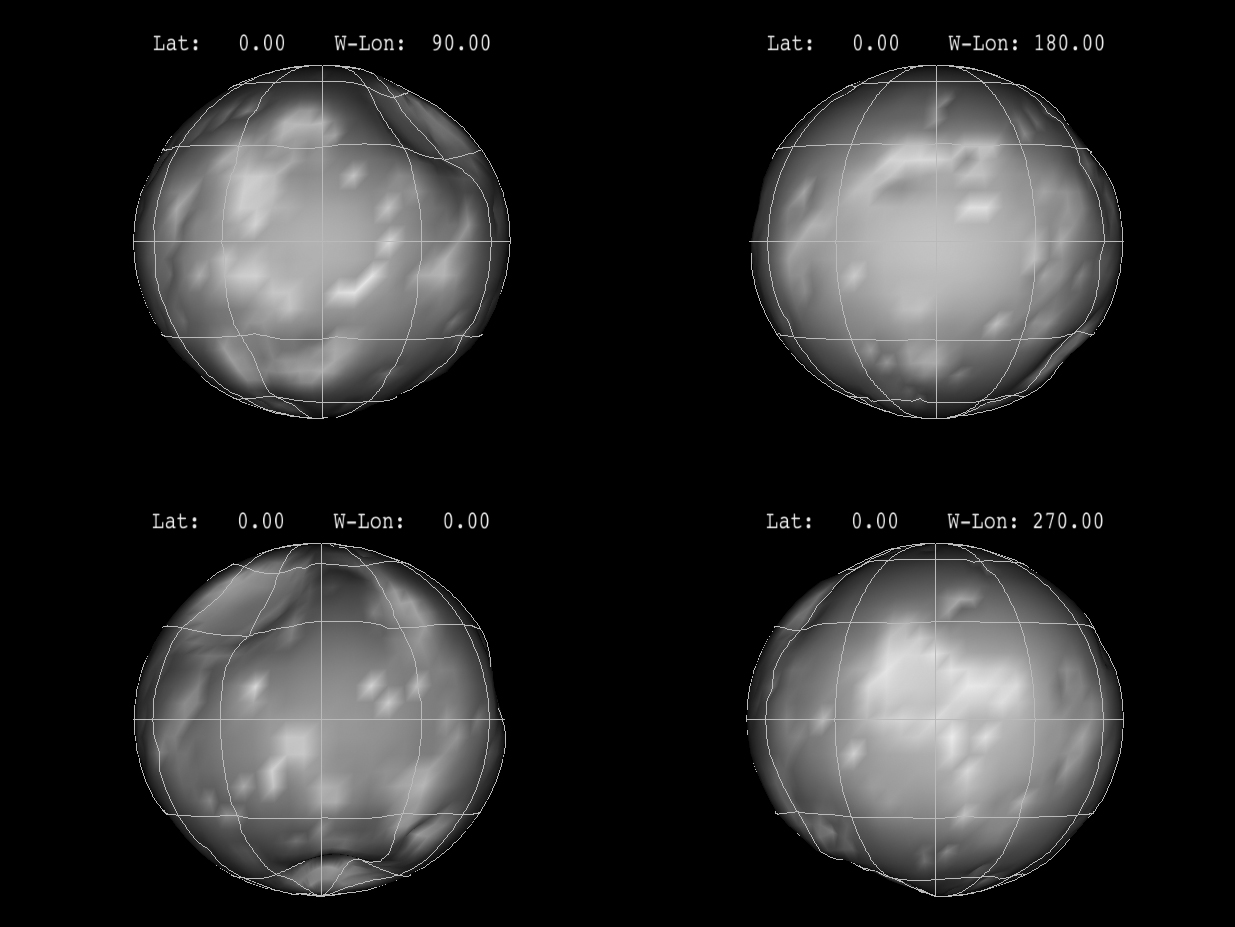
Its surface is quite different from the icy moons like Titan. It is likely that early in its history, Phoebe was a molten body, which then cooled and solidified. At this time, it was spherical in shape but then impacts over billions of years caused it to become slightly irregular. This battered shape is a result of the numerous collisions it has experienced over time. Scientists believe Phoebe was once a warm, differentiated body with an interior of ice and rock, much like other moons in the outer Solar System.
This internal structure suggests that Phoebe may have once hosted liquid water beneath its surface, making it a good objecto to study the potential for life in extreme environments.
The Case for a Captured Centaur
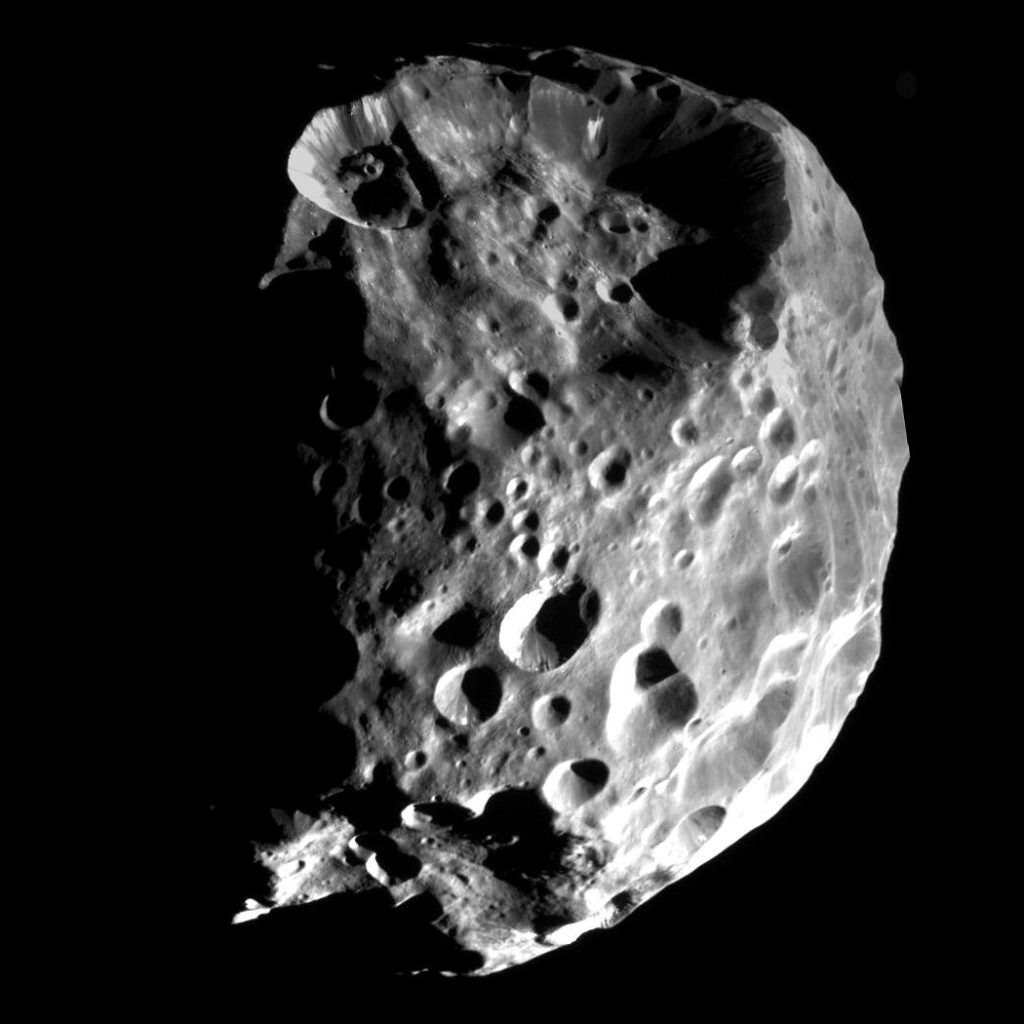
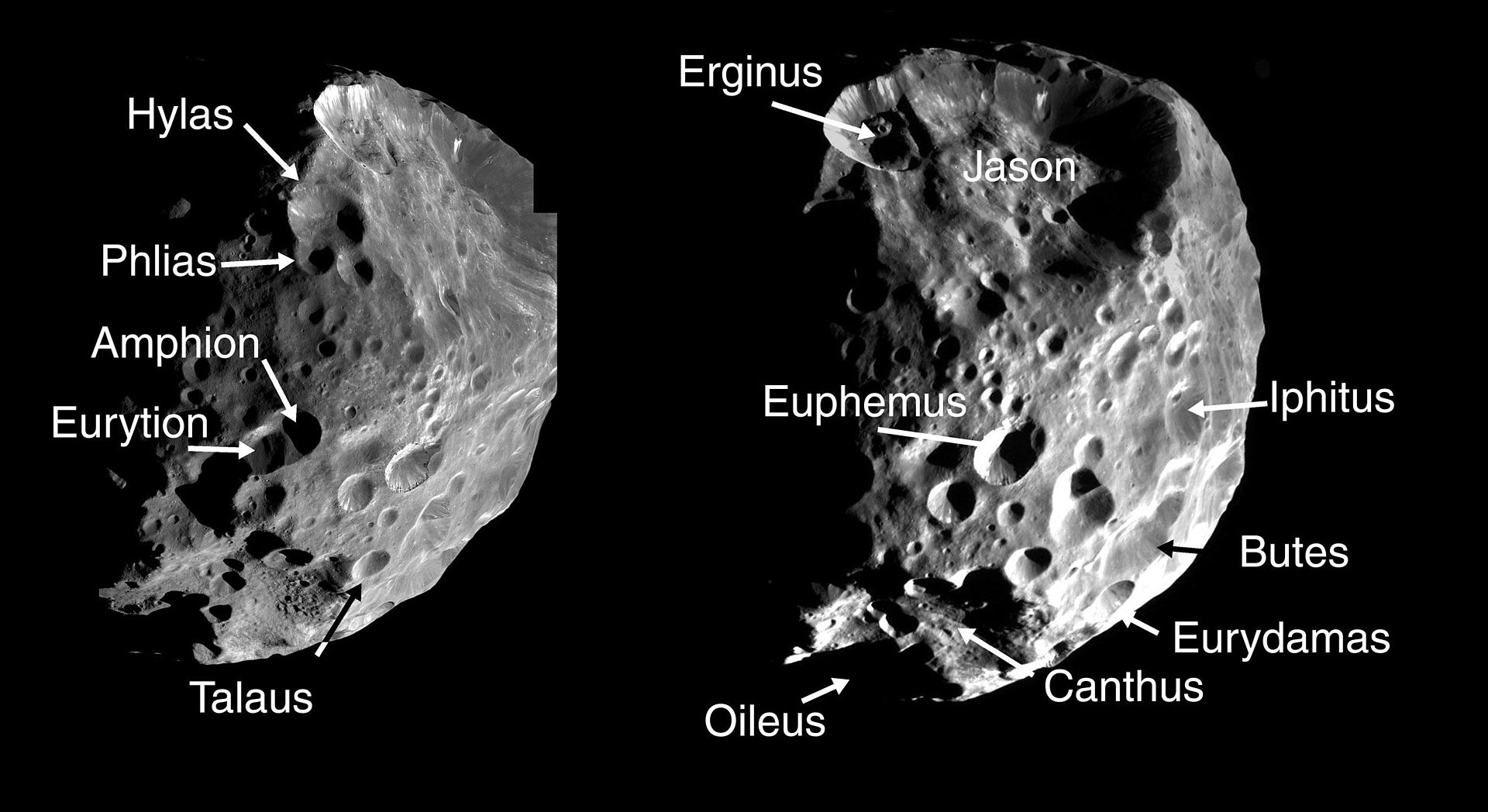
Phoebe has a dark surface and low albedo (reflectivity), which makes it closely resemble a class of asteroids known as carbonaceous asteroids. These are considered primitive and are thought to be remnants of the early Solar System. More information was revealed when Cassini spacecraft passed 2,068 kilometres (1,285 mi) from Phoebe on 11 June 2004, and returned many high-resolution images, which revealed a scarred surface. As Cassini’s images revealed more about Phoebe’s surface, scientists noticed something unexpected—crater brightness variations, which suggested the presence of large quantities of ice beneath a dark, surface layer.
Furthermore, Phoebe has a mix of rock and ice, with an estimated 50% rock composition, which is distinct from the 35% rock that characterises Saturn’s inner moons. This combination of ice, rock, and unusual surface features has led scientists to reconsider Phoebe’s origins. They now suspect that Phoebe might be a captured centaur—a type of icy planetoid from the Kuiper Belt that was once part of the distant outer Solar System. Phoebe is the first such object to be captured and imaged in detail.
Phoebe’s Impact on Iapetus
Phoebe’s role in the Saturnian system is also important due to its impact on other bodies. It is responsible for a feature seen on another one of Saturn’s moon Iapetus, and its distinctive two-tone coloring. Phoebe’s debris, which includes small icy particles, is thought to collect on Iapetus. Over time, this material has contributed to Iapetus’ stark contrast between its bright, icy leading hemisphere and its dark, heavily cratered side. The debris from Phoebe, along with Iapetus’ own dynamic processes, plays a significant part in the creation of this curious feature.

Cassini’s Encounter with Phoebe
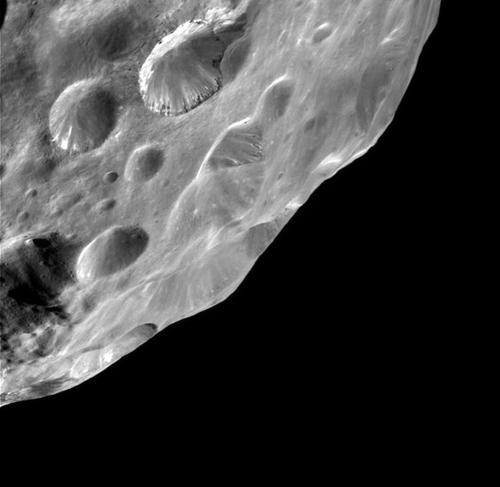
The Cassini spacecraft, which arrived in the Saturn system in 2004, made Phoebe its first port of call. The spacecraft’s flyby provided scientists with an extraordinary opportunity to study Phoebe in great detail. The encounter helped confirm that Phoebe’s surface is covered with dark, icy material, and it provided valuable data about the moon’s structure, temperature, and composition. Despite its relatively small size, Phoebe is one of the best-studied irregular moons in the Solar System.
Phoebe’s Role in Saturn’s Rings
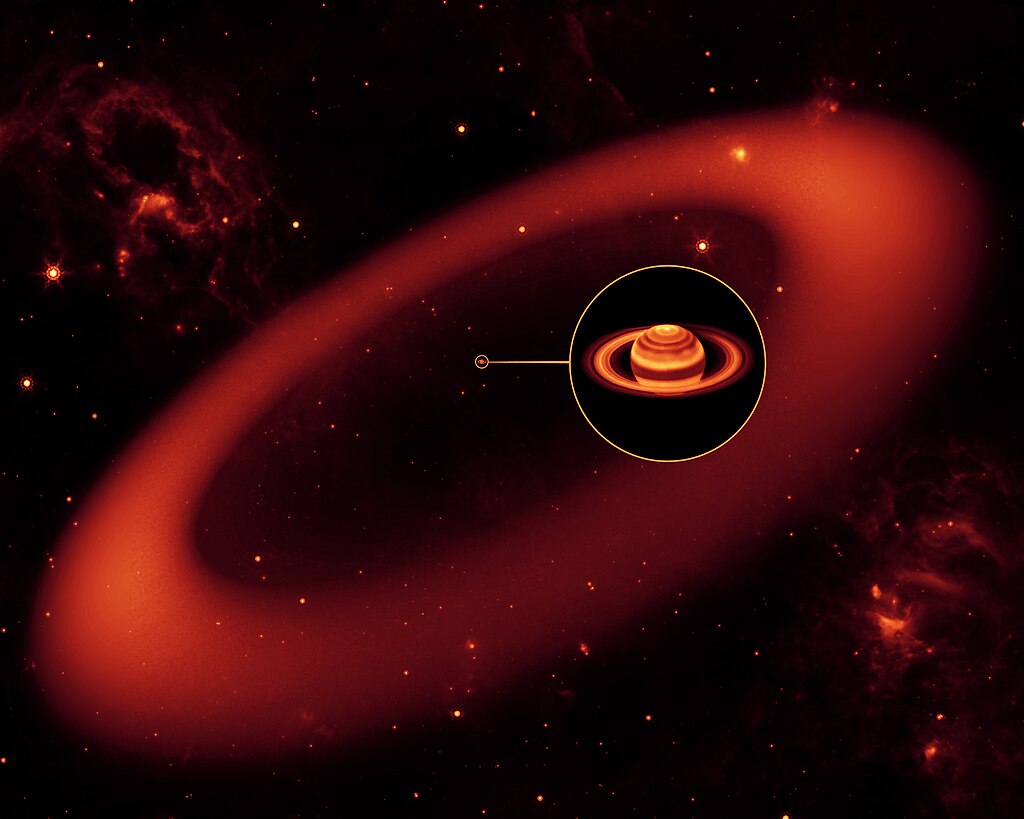
One of Phoebe’s more fascinating features is its connection to Saturn’s rings. Phoebe is thought to contribute material to a faint and distant ring around Saturn known as the Phoebe ring. This ring is tilted at 27 degrees from Saturn’s equatorial plane, and it extends from 128 to 207 times the radius of Saturn. The ring, which is about 40 times as thick as Saturn’s diameter, likely consists of debris from Phoebe and other moons that were once part of Saturn’s irregular moon system.