Almost everyone has heard of the northern lights. People now book their vacations to Iceland and Norway in the winter to be able to see them. There are also the lesser-known southern lights and both phenomena are known as the Aurora Borealis and Aurora Australis, respectively. But have you ever wondered how they are created?
Video on magnetic field reversal and what will happen if the poles flip
How is the magnetic field formed?
The earth, you see, has a magnetic field, created because our internally active planet has a dynamo spinning away deep below its surface. To understand the magnetic field we have to start with what the Earth is made of. Its innermost layer (inner core) is the solid iron core, the outer edge of which is about 5,150 km below the surface. Then comes the outer core – this is a fluid layer made of iron and nickel lying between the solid inner core and the mantle at about 2,890 km below the planet’s surface. On top of the outer cores is the mantle, which is composed of silicate rocks rich in iron and magnesium. It is primarily solid but behaves as a viscous fluid over geological time. So, we have the solid inner core, the fluid outer core, the mantle and then the crust. Convection of the mantle, generated by the Earth’s rotation, allows the tectonic plates of the final layer – the crust – to move and crash into each other and that’s how we get earthquakes and volcanoes.
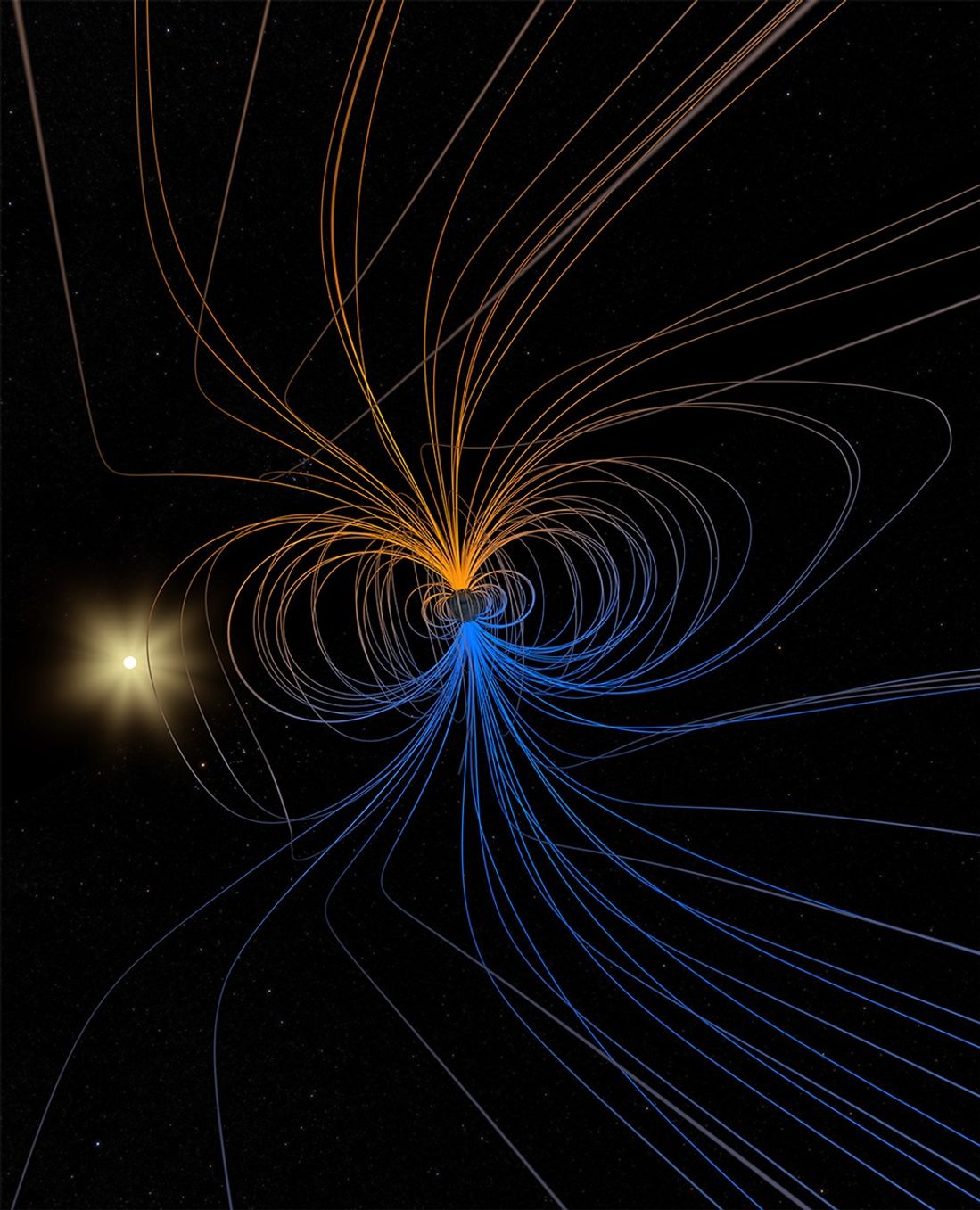
The magnetic field on the other hand is created by the motion of convection currents of the fluid outer-core and this magnetic field extends outward like spaghetti – its extent is known as the magnetosphere reaching tens of thousands of kilometres into space. And just like we have the geographic north and south poles, the magnetic field gives rise to magnetic poles, which are usually located near the geographic poles. The magnetic poles are not the same as the geographic poles but are at an angle of around 11 degrees from them.
The earth’s poles
Let’s go over the different poles that the Earth has. We have the geographic poles (True North or True South), defined by the spot where all the human made longitudinal lines meet and which are also the points where the axis on which the earth rotates meets its surface. There are also what’s known as the geomagnetic pole but that’s not important unless you are a space physicist, so we’ll just leave that for now. Then we come to the magnetic poles generated by the magnetic field of the Earth. The Magnetic North Pole is the location where the planet’s magnetic field points vertically downwards. So, if a compass were used in the Magnetic North Pole it will point downwards toward the centre of the earth. And this will be the opposite at the Magnetic South Pole.
Our magnetic field is extremely useful to us; it protects us from harmful solar winds, which blast us with the Sun’s radiation and particles. The field also helps in navigation of course and it may have even played a crucial role in the evolution of life.
The Auroras (Northern and Southern Lights)
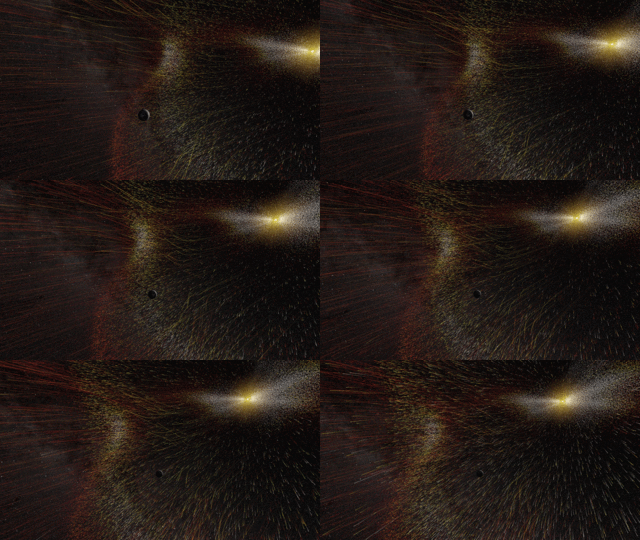
Now, let’s talk about the auroras or northern and southern lights. How do they come about? What happens is when solar winds reach the earth they hit the magnetic field and the charged particles in both the solar winds and the magnetosphere are disturbed. The particles become ionized and emit light of varying colours.
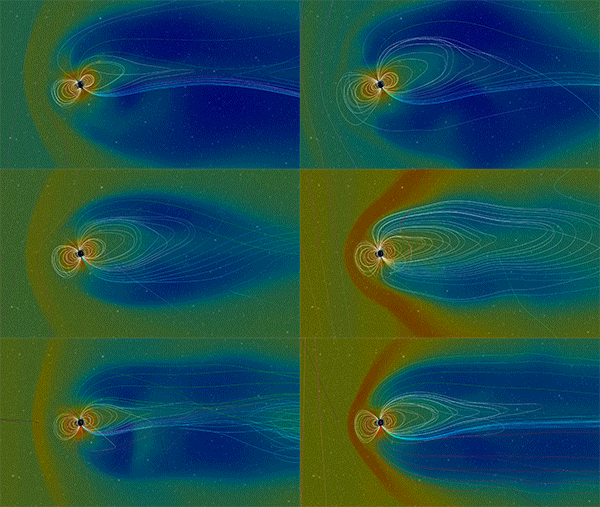
NASA’s Scientific Visualization Studio
Red and green are oxygen and blue is nitrogen – yellow and pink are a mix of these. There is also of course infrared and UV auroras but we cannot see them with the naked eye. This is how we get the auroras.
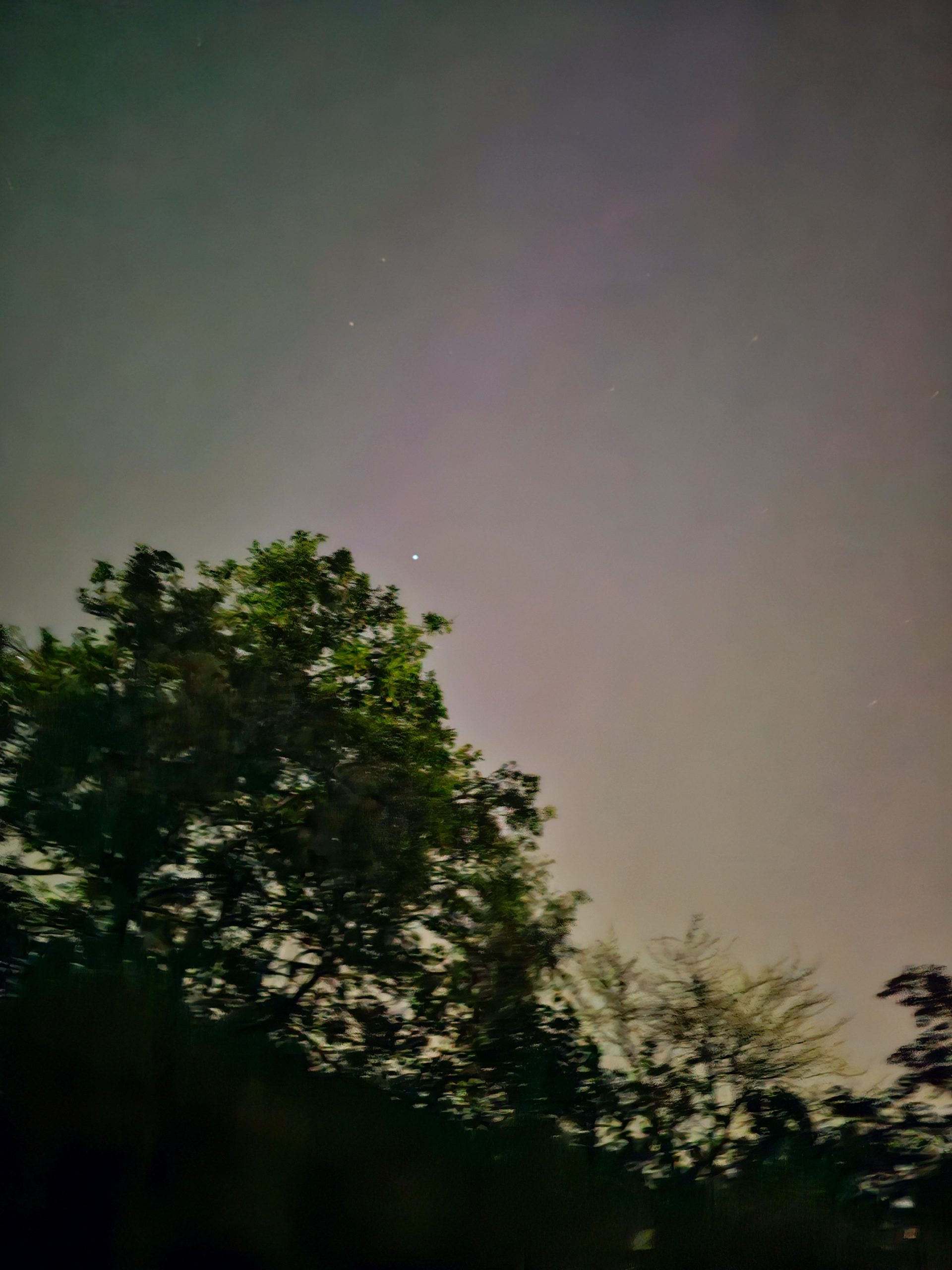
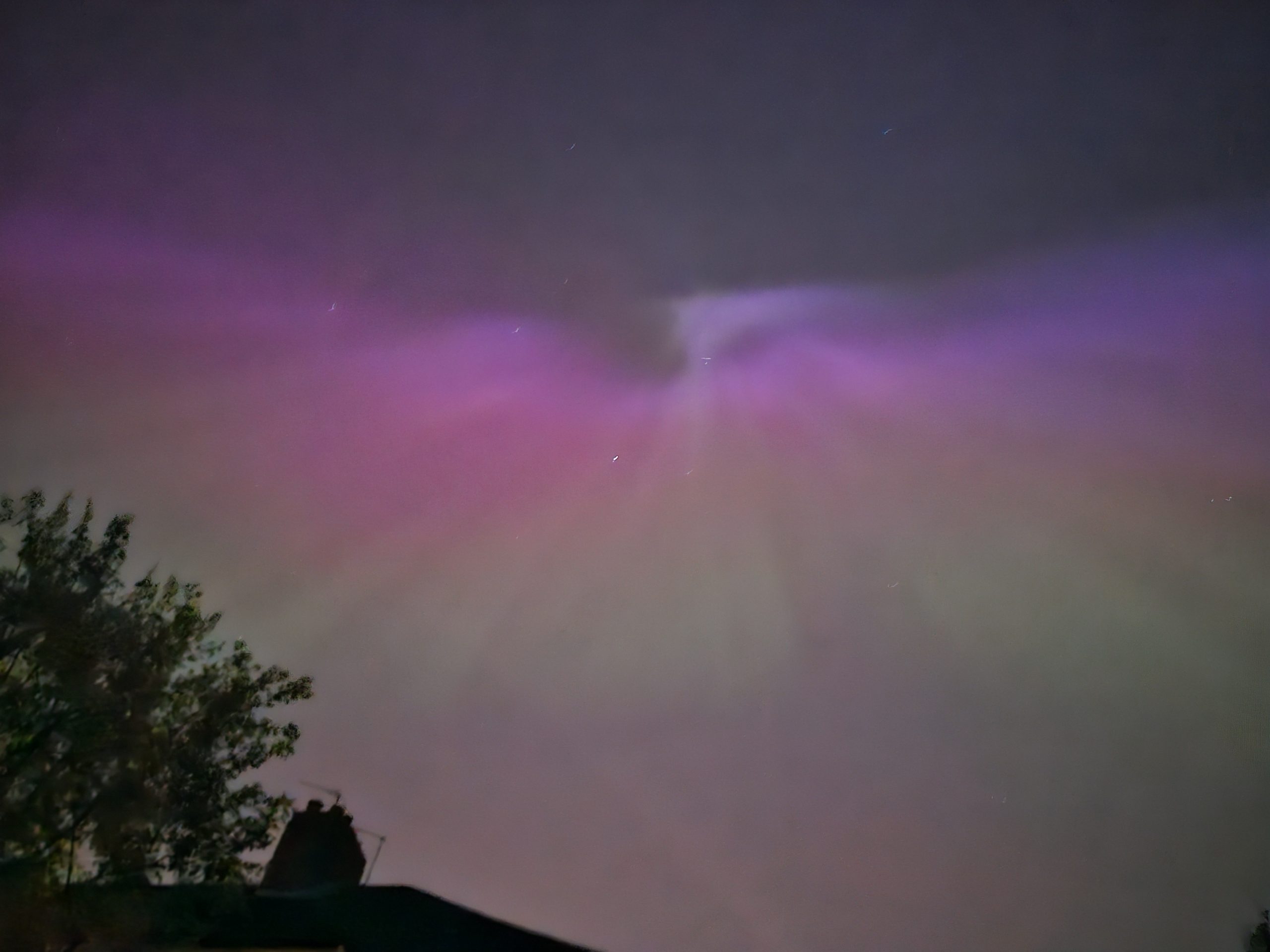
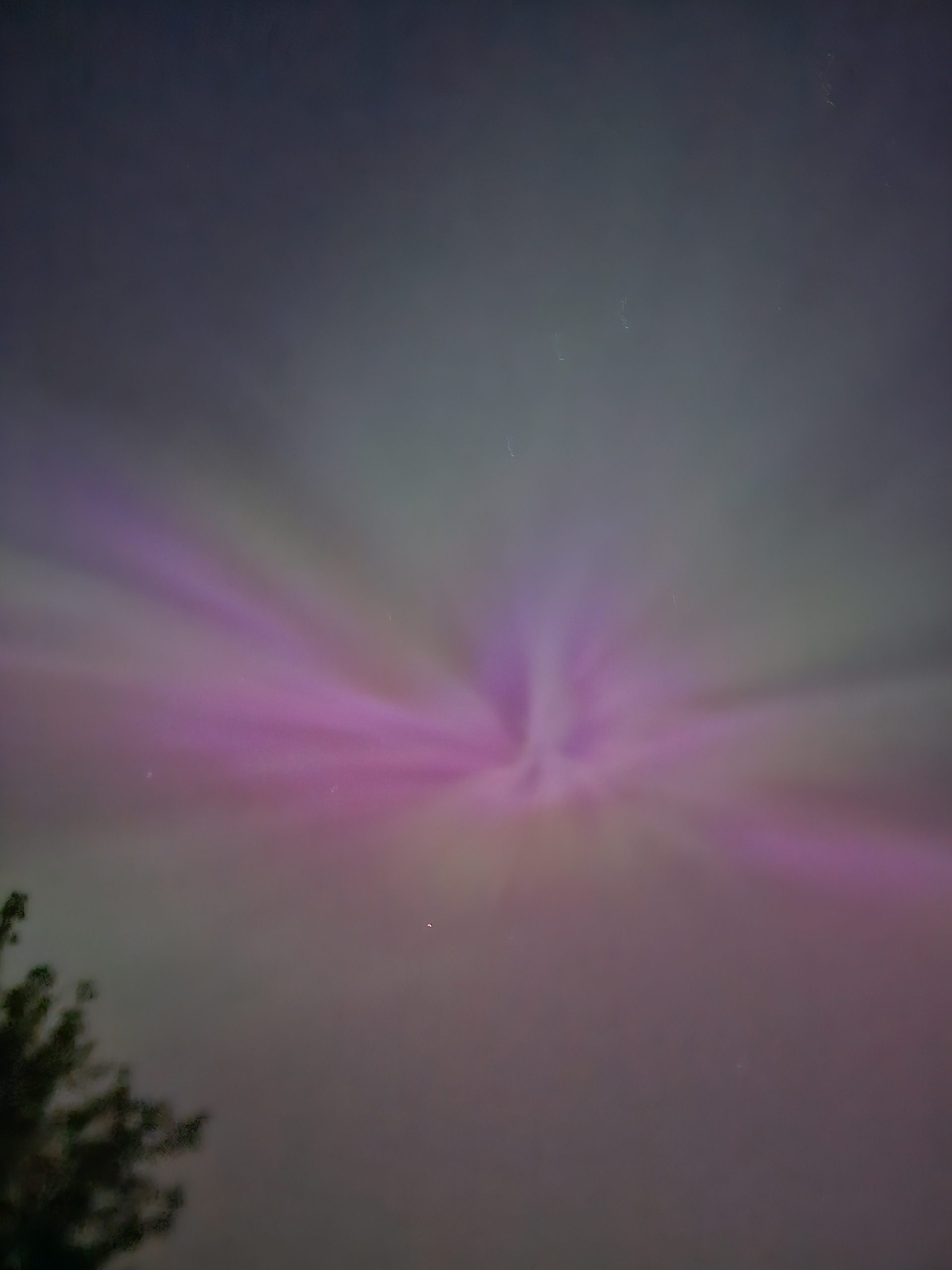
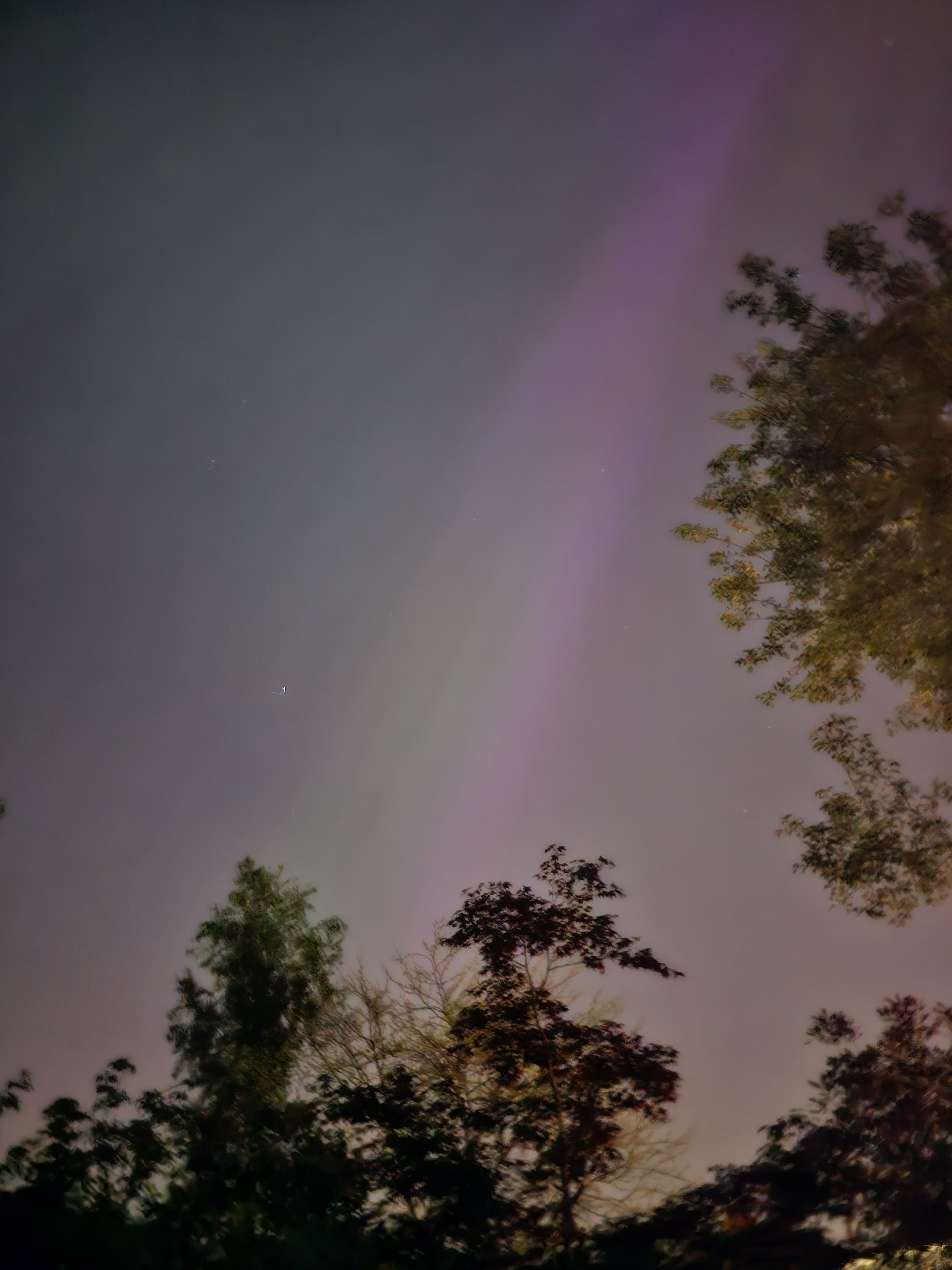
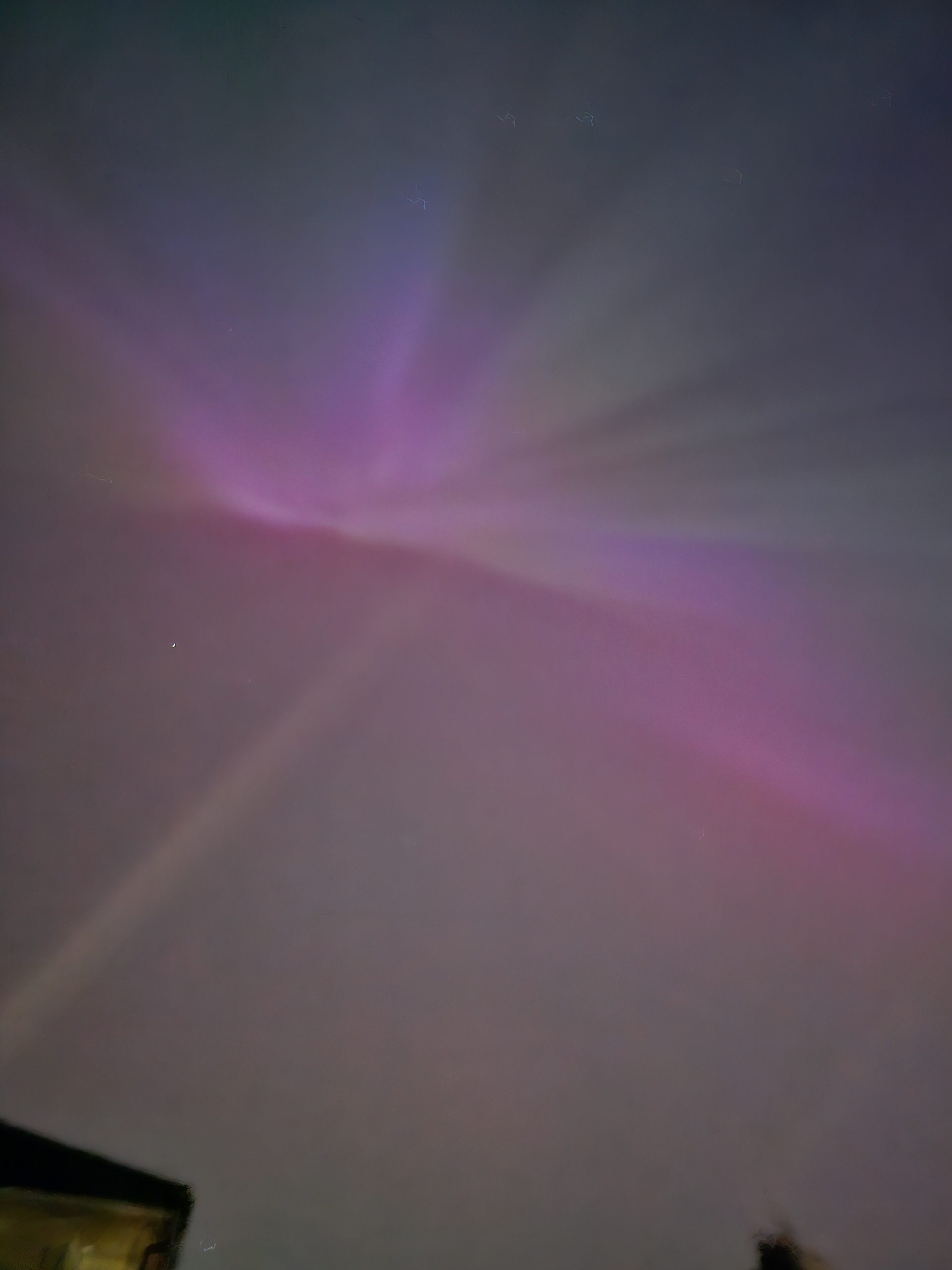
Now while these are magnificent sights, the main thing that the magnetic field does is protect us from harmful solar radiation by deflecting the solar wind particles. Life would not exist on this planet if we did not have the magnetosphere. The planet Mars has no magnetosphere because its outer core stopped moving. As a result it lost all of its atmosphere and became uninhabitable.
(Read A Brief History of the Rocket)
The earth’s magnetic poles move around
The exact position of the Magnetic North Pole was calculated for the first time in 1831 and by 1904, it had moved 50 km (31 mi). In 2001, the Geological Survey of Canada calculated its average position to be 81.3 degrees North by 110.8 degrees West.
It has now been determined that the magnetic north pole is moving East at an unusually fast pace, heading from the Canadian Arctic toward Siberia at a speed of 55 km (34 miles) per year, although it has slowed recently to 40 km (25 miles) per year. This unusually fast pace led to an earlier than expected update to the World Magnetic Model (which is our mathematical foundation system for navigation). Usually, the model is updated every 5 years (with the last one in 2015) but due to the new position, it had to be updated in February 2019 instead of 2020. So, in additions to ships and commercial airlines systems your cell phones were also updated to depict the new magnetic north because remember ALL of our navigation depends on our knowing where the magnetic poles are.
So, why is it moving? The answer is that it has always moved around due to the pull and push of the magnetic field. It’s just that this time it moved a little faster than expected. The reason for this is not really known. It could be because the outer core jet is becoming stronger. Or as Phil Livermore from the University of Leeds said at the American Geophysical Union meeting in 2018, it’s a result of a “tug of war” between the two patches of magnetic field; one under Canada and one under Siberia. Historically, the Canadian arm was stronger but now it seems the Siberian arm is taking over.
Like I said before, the poles have always moved. In fact, there have been times in the Earth’s geological history that they have flipped completely. This historical reversal of polarity indicates that the magnetic north and south poles swap places. This process of a reversal isn’t a sudden flip, but a gradual weakening of the field, followed by a period where multiple poles may emerge before the field stabilizes in the opposite direction.
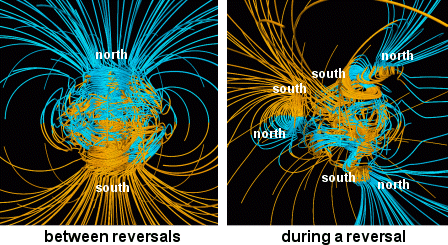
We know this through rock analysis, which tells us that in the last 20 million years or so, the poles have flipped completely many times. In 2019, a tree was discovered in New Zealand, which also contains the record of the magnetic field reversal. This tree – called Agathis australis – or kauri in the Maori language was found in New Zealand’s North Island. It was discovered through carbon dating that it lived around 41,000 to 42,500 years ago. And it shows that the magnetic field ALMOST reversed at this point though it did not do a complete flip.
While there’s a tendency for reversals to occur over hundreds of thousands of years, they are not perfectly periodic. There have been periods of frequent reversals and periods with very few reversals. The trend for complete reversal is every 200,000 to 300,000 years, with the last full reversal taking place around 780,000 years ago. So, we are due for one. But this process is unpredictable, so no one can tell for sure – the range can be 100,000 years to 50 million years. However, the magnetic north pole has become weak recently, so you never know.

Right, what will happen if the field does a full reversal? Past polar flips have been slow, taking place over thousands of years so nothing dramatic is expected. What will happen is that slowly but surely, the compass needle will move to align with wherever the North Pole is. A greater impact is likely to happen on animals and birds that use the magnetic field to navigate. They will get confused but there has been life on this planet for almost 3 billion years and they should get used to it eventually.
Our main issue will arise if the field continues to get weaker. This is likely to bring in harmful radiation from the Sun, which obviously is a cause for concern. And it has been becoming weaker for about a century or so. In the Southern Hemisphere, we have a weak spot known as the South Atlantic Anomaly that causes problems for low-orbiting satellites. However, we don’t need to panic, because even if it continues to become weaker, it won’t entirely disappear for billions of years. Historically the field has weakened and then become stronger again – a phenomenon known as excursions.
Another thing that will happen is that the auroras will be visible at lower latitudes (such as the ones in the images from Liverpool, traditionally not a place where auroras were seen), because a weaker field would mean solar particles would penetrate Earth’s atmosphere. Of course, with more weakness, there would be more technical problems for our satellites.
But overall, a weak field would not be catastrophic for life on Earth. And a complete north-south pole reversal would not matter at all. But if does happen, I think it will be epic!
Featured Images: Wikemedia Commons (Public Domain) and NASA. Image of Kauri Tree in video from Reddit.
An earlier version of this article was first published on 7th February 2020.
You can subscribe to the You Tube Channel for more on science, history and nature and please do check out the website and follow on social media: Twitter // Instagram // Facebook // Reddit // Tiktok. Check out the audio podcast on: Apple Podcasts // Stitcher // TuneIn // Spotify