Summary
-
The Sahara Desert was once a green, livable savannah during the African Humid Period (14,500 to 5,000 years ago), supporting human settlements and the spread of animal herding.
-
DNA from two 7,000-year-old women found in southwestern Libya reveals a previously unknown North African genetic group, distinct from sub-Saharan lineages and related to ancient foragers from Morocco.
-
The Takarkori people had less Neanderthal DNA than Levantine farmers but more than sub-Saharan Africans, suggesting limited gene flow between sub-Saharan Africa and North Africa during this time.
The Sahara Desert, now one of the driest places on Earth, was once a lush, green savannah during the African Humid Period (AHP) between 14,500 and 5,000 years ago. This wetter climate allowed for the development of human settlements and the spread of animal herding. However, DNA doesn’t last well in this dry region, making it difficult to uncover the genetic history of the Sahara.
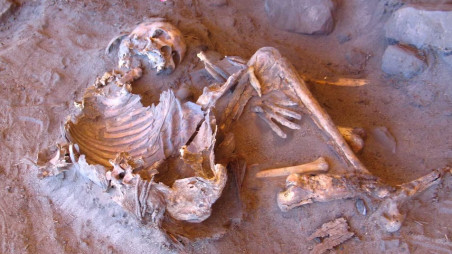
In a new study, scientists share ancient DNA from two women who lived about 7,000 years ago in the Takarkori rock shelter in southwestern Libya. Their ancestors belong to a previously unknown genetic group in North Africa that split from sub-Saharan African groups around the same time humans left Africa. This group remained mostly separate for much of its history.
These two individuals are closely related to the people from Taforalt Cave in Morocco, who lived 15,000 years ago, well before the AHP. Both the Takarkori and Taforalt people share a genetic link to each other and are equally distant from sub-Saharan African groups, suggesting that there was little mixing between sub-Saharan and North African populations during this time. Interestingly, the Takarkori people have much less Neanderthal DNA than people from the Levant but more than modern sub-Saharan Africans.
This research shows that animal herding likely spread into North Africa through cultural exchanges with a unique, isolated genetic group that may have been widespread across the region during the late Pleistocene.
The study was published in Nature