On March 12, the European Space Agency’s (ESA) Hera spacecraft made a remarkable achievement by capturing rare images of Deimos, one of Mars’ two moons. These images were taken from a distance of approximately 621 miles as Hera journeyed towards its primary mission target, the asteroid moonlet Dimorphos.
The images are particularly significant because they provide a rare view of Deimos’ dark side—a region of the moon that is almost never seen. Like Earth’s moon, Deimos is tidally locked to its parent planet, Mars, meaning that one side of the moon always faces the planet, while the opposite side remains hidden from view. This constant orientation means that rovers and orbiters near Mars can only observe the familiar, sunlit hemisphere of Deimos, leaving the far side shrouded in mystery.
(Phoebe: Saturn’s Unusual Moon)

Hera’s unique vantage point allowed it to fly behind Deimos, giving it an unobstructed view of the moon’s elusive dark side. Such images are exceptionally rare because only spacecraft capable of leaving Mars’ orbit can position themselves for such a view. As a result, these new images offer a valuable opportunity for scientists to study Deimos in greater detail, providing fresh insights into the moon’s composition, surface features, and its interactions with the Martian environment.
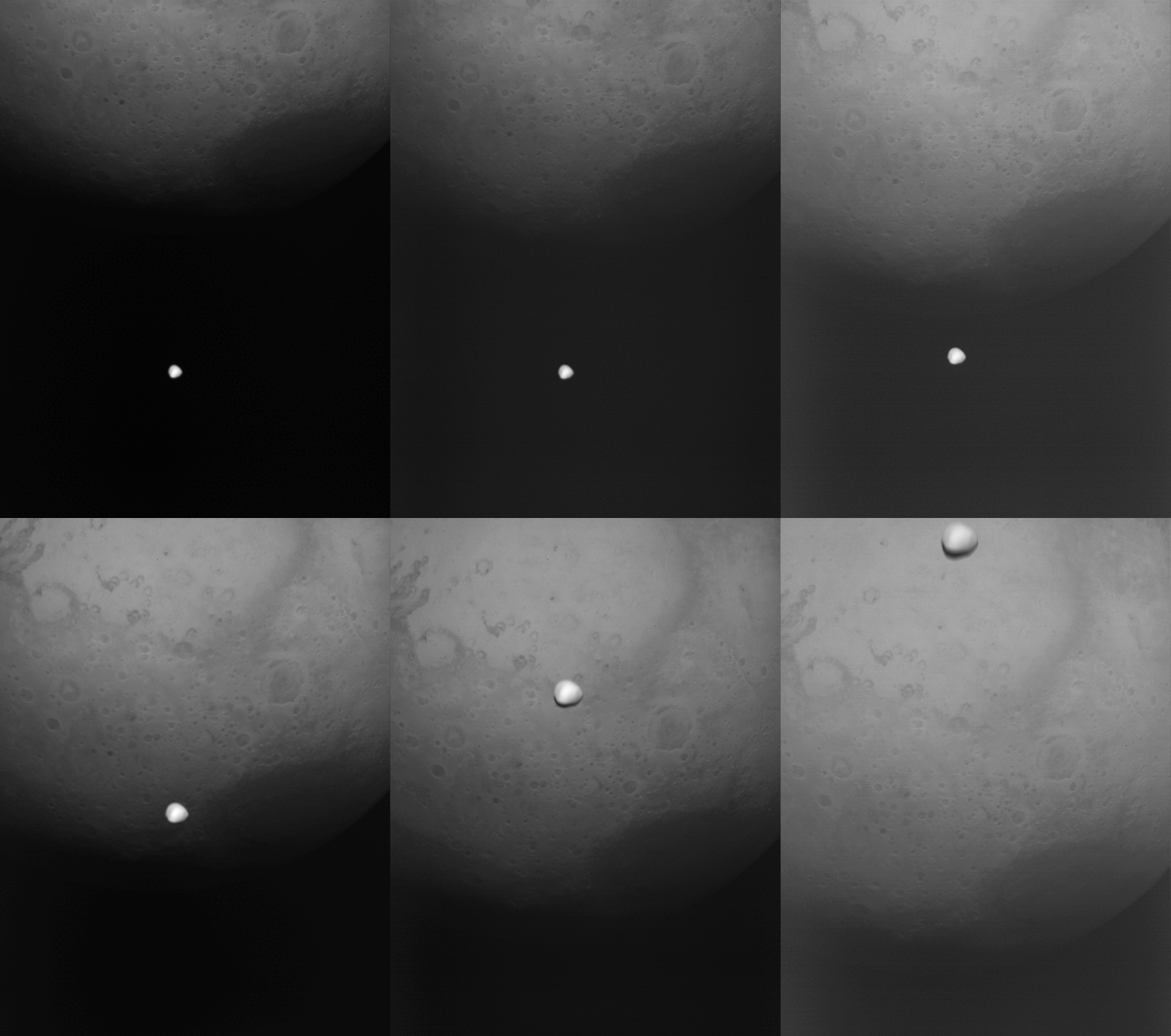
Source: ESA / ESA Standard Licence