Derived from medieval Latin mumia, borrowed from medieval Arabic mŠ«miya (meaning both the embalmed corpse and bituminous substance), which itself came from Persian mÁ¼m (wax) and referred to asphalt.
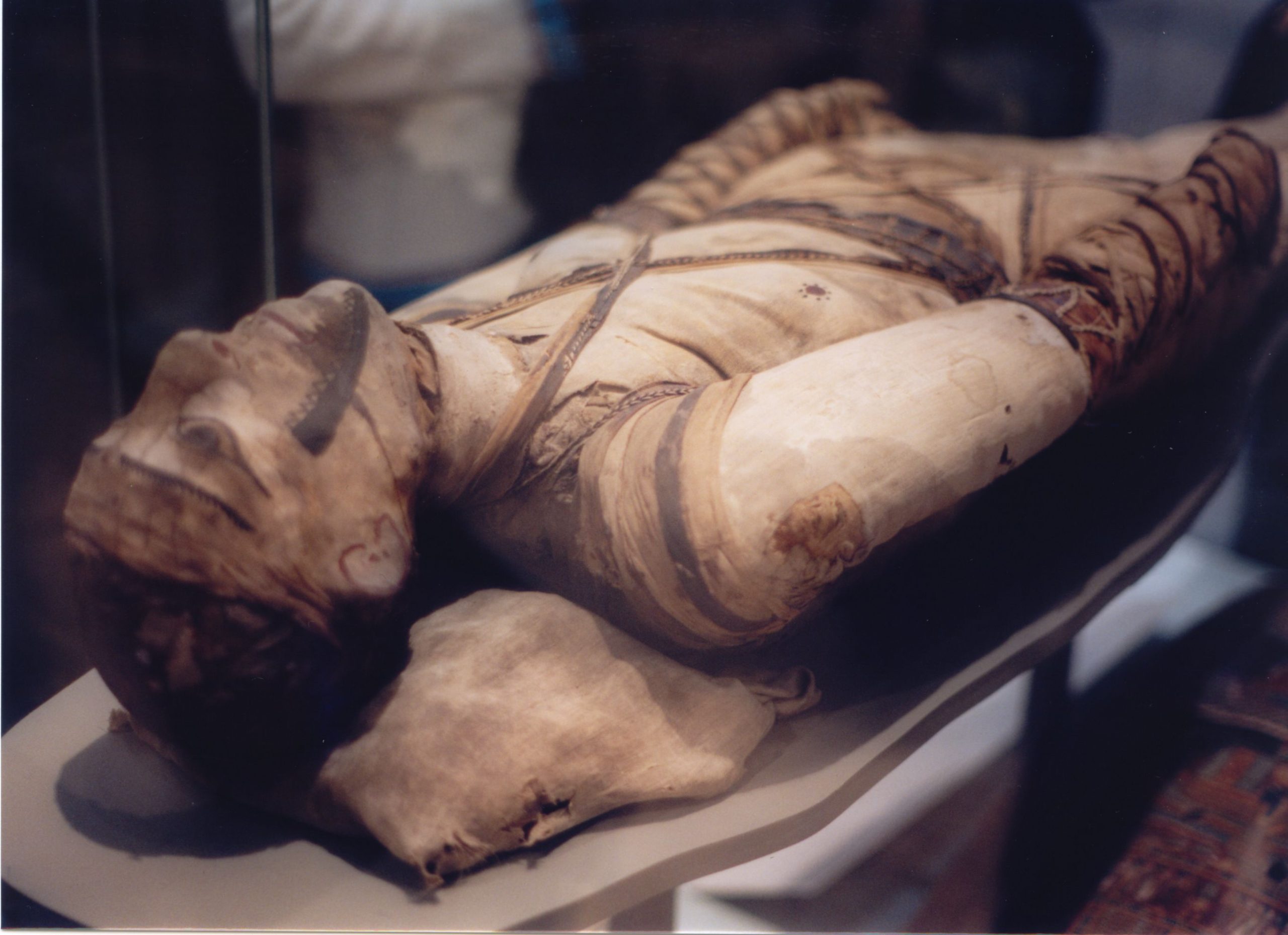
Bitumen was used by ancient Egyptians to embalm mummies. The Persian word for asphalt is moom, which became the English word mummy.
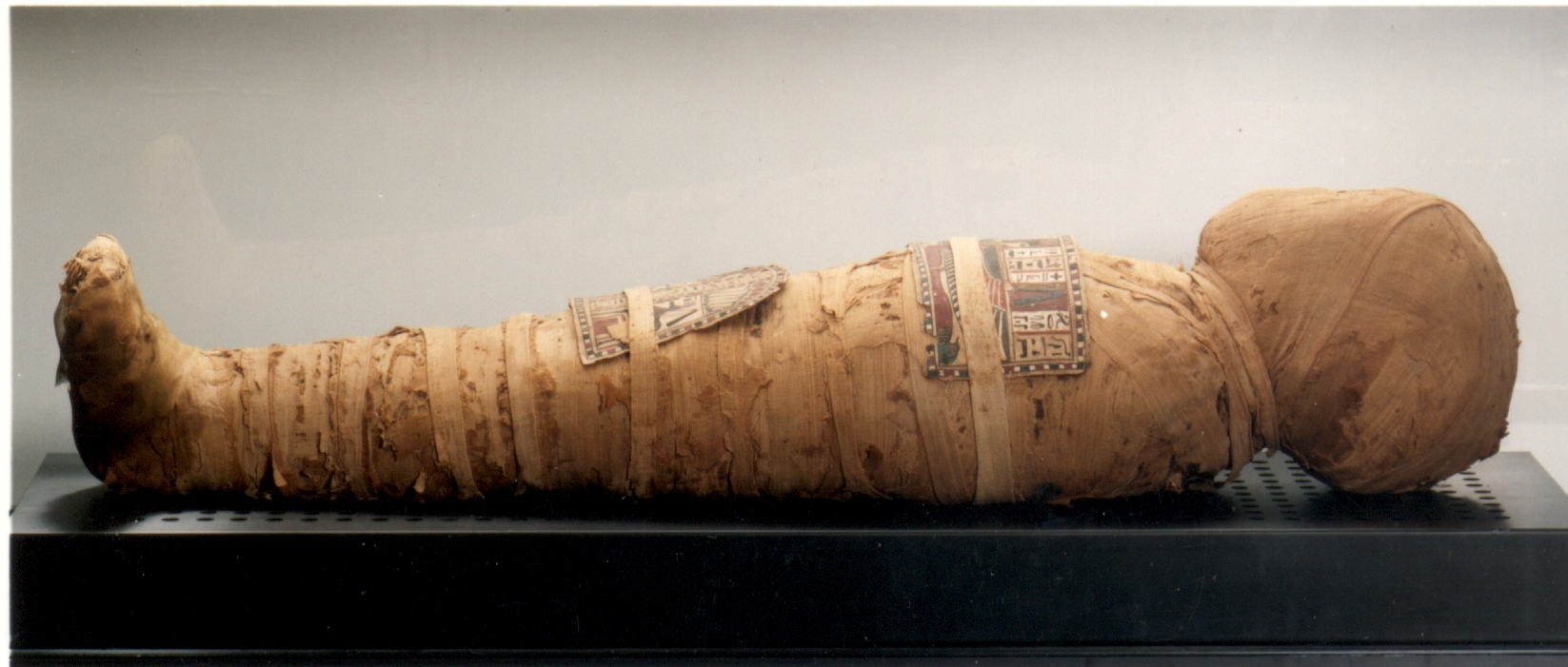
The Egyptians’ primary source of bitumen was the Dead Sea, which the Romans knew as Palus Asphaltites (Asphalt Lake).

The Medieval English term “mummy” was defined as “medical preparation of the substance of mummies” rather than the entire corpse.

Ancient Egyptians themselves referred to mummies as “sḥ” (sah), meaning dignified or noble, or as “wt” (wet) in some contexts, meaning “body.”
And now you know.
Some other mummies

The Chinchorro (northern Chile) mummies are the oldest intentionally created mummified remains ever discovered. Originating in the 5th millennium BC and continuing for approximately 3,500 years, the Chinchorro culture practised mummification for all human burials. The process involved carefully removing internal organs and skin before exposing the bodies to the hot, arid climate of the Atacama Desert, which naturally facilitated desiccation. Additionally, many mummies were intricately preserved by skilled artisans in a more artistic manner, though the reasons behind this practice remain a subject of debate.
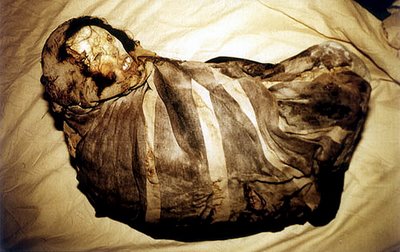
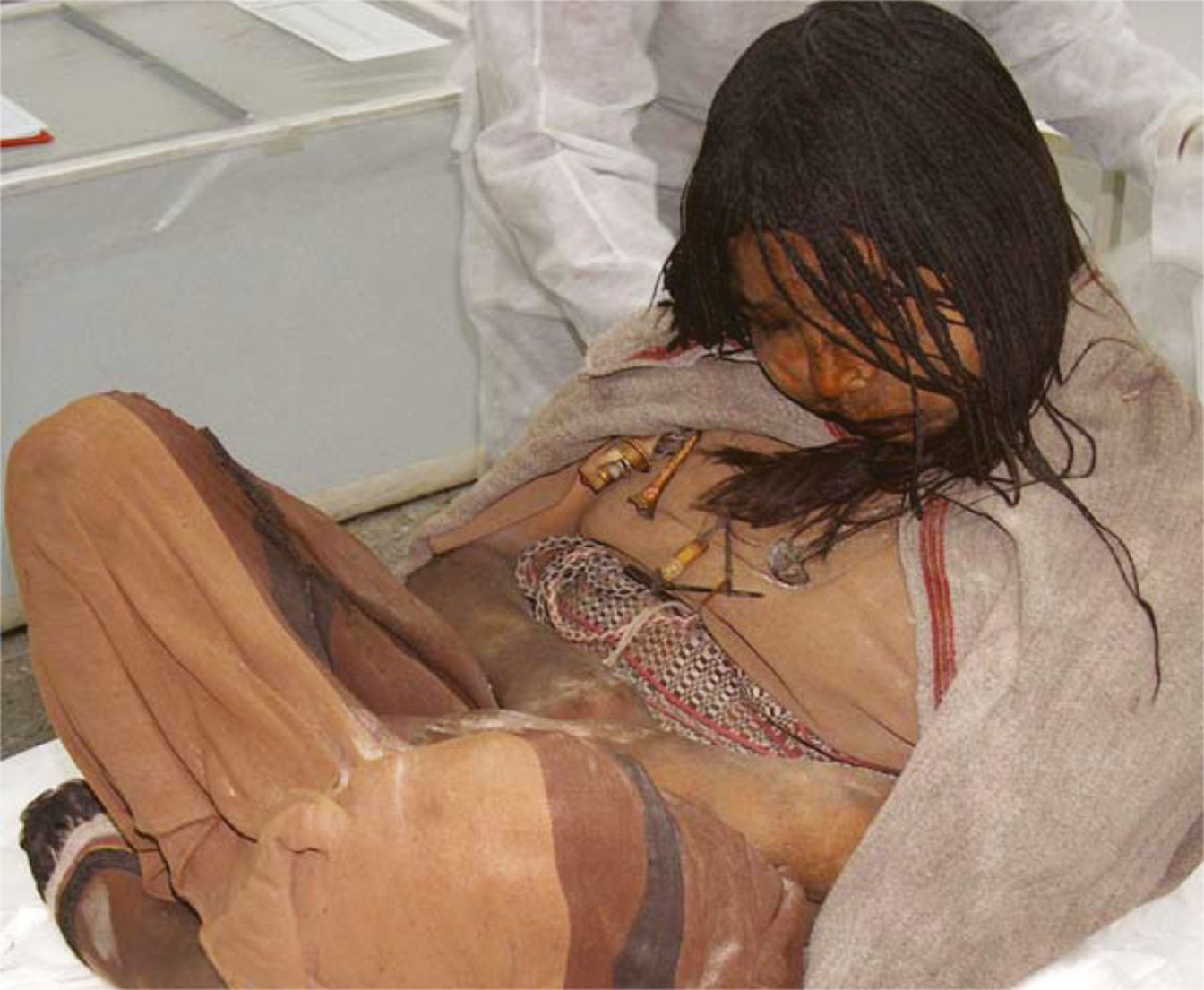
Mummy Juanita, found near Ampato’s summit in the Peruvian Andes by archaeologist Johan Reinhard, was remarkably preserved in ice, retaining skin, muscle, and organs. Believed to be a ritual sacrifice, her elaborate clothing and proximity to Cusco suggest high social status. Incan artifacts and ceremonial sites nearby support this theory.
The Children of Llullaillaco, or Mummies of Llullaillaco, are three Inca child mummies discovered on 16 March 1999 near the summit of Llullaillaco, a 6,739 m (22,110 ft) stratovolcano on the Argentina-Chile border. Sacrificed in a religious ritual around 1500, the children were drugged with coca and alcohol before being placed in a small underground chamber to die. They are among the world’s best-preserved mummies.
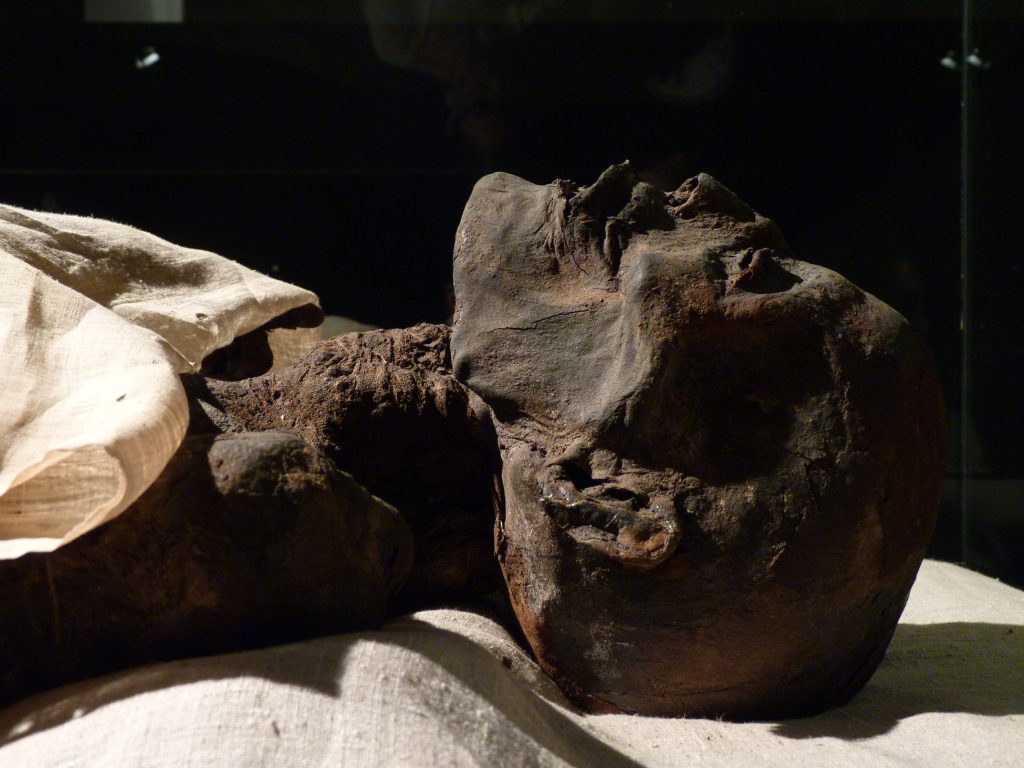
Featured image: A mummified man likely to be Ramesses I CCBY