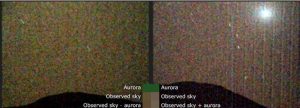
NASA Perseverance Rover Captures Aurora on Mars
On 15 March 2024, a powerful solar flare and CME sparked auroras across the solar system. NASA’s Perseverance rover made history by detecting them on

On 15 March 2024, a powerful solar flare and CME sparked auroras across the solar system. NASA’s Perseverance rover made history by detecting them on
Are the Earth’s Magnetic Poles Flipping? We talk about the Magnetic Field Reversals, Northern & Southern Lights, Magnetosphere & the north and south poles.

NASA’s James Webb Space Telescope has taken the most detailed image of planetary nebula NGC 1514 to date thanks to its unique mid-infrared observations. Webb

We are on a mission to talk about all the lesser known celestial objects in our skies. So, today we bring you Haumea, a dwarf
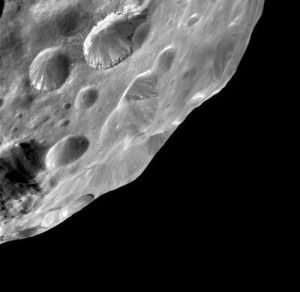
Phoebe, Saturn’s largest irregular moon, was discovered in 1899. Orbiting in the opposite direction of Saturn’s rotation, Phoebe is believed to be a captured icy
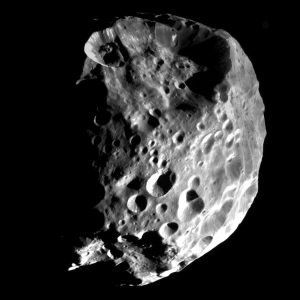
Phoebe, Saturn’s most massive irregular moon, was discovered in 1899. Likely a captured centaur from the Kuiper Belt, it has a dark surface with ice
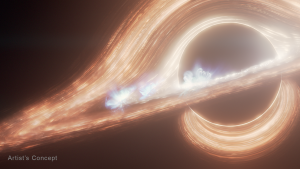
The supermassive black hole at the heart of the Milky Way seems to be putting on a cosmic celebration, featuring a dazzling light show reminiscent
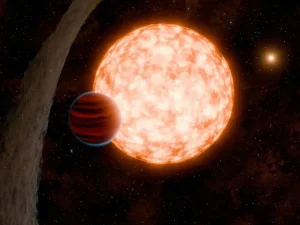
Astronomers describe the youngest transiting planet ever found. It’s about three million years old—a baby, in cosmic terms. If you imagine Earth as a 50-year-old
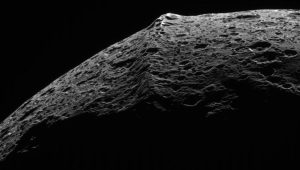
Iapetus is one of Saturn’s most intriguing moons, known for its striking two-tone appearance, with one hemisphere dark and the other bright. It has a
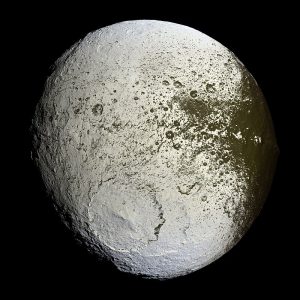
Iapetus is one of Saturn’s most intriguing moons, known for its striking two-tone appearance, with one hemisphere dark and the other bright. It has a
On 15 March 2024, a powerful solar flare and CME sparked auroras across the solar system. NASA’s Perseverance rover made history by detecting them on
Are the Earth’s Magnetic Poles Flipping? We talk about the Magnetic Field Reversals, Northern & Southern Lights, Magnetosphere & the north and south poles.
NASA’s James Webb Space Telescope has taken the most detailed image of planetary nebula NGC 1514 to date thanks to its unique mid-infrared observations. Webb
We are on a mission to talk about all the lesser known celestial objects in our skies. So, today we bring you Haumea, a dwarf
Phoebe, Saturn’s largest irregular moon, was discovered in 1899. Orbiting in the opposite direction of Saturn’s rotation, Phoebe is believed to be a captured icy
Phoebe, Saturn’s most massive irregular moon, was discovered in 1899. Likely a captured centaur from the Kuiper Belt, it has a dark surface with ice
The supermassive black hole at the heart of the Milky Way seems to be putting on a cosmic celebration, featuring a dazzling light show reminiscent
Astronomers describe the youngest transiting planet ever found. It’s about three million years old—a baby, in cosmic terms. If you imagine Earth as a 50-year-old
Iapetus is one of Saturn’s most intriguing moons, known for its striking two-tone appearance, with one hemisphere dark and the other bright. It has a
Iapetus is one of Saturn’s most intriguing moons, known for its striking two-tone appearance, with one hemisphere dark and the other bright. It has a


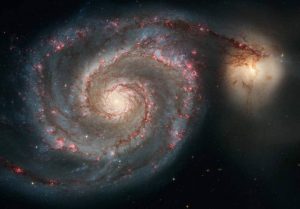
A Planet has been found in Galaxy M51 also known

Observed for the first time, an Orangutan Healed His Own

We all know of the pioneers of computer science like
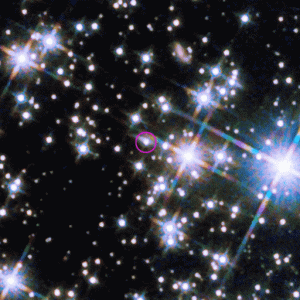
Meet a 1-In-10,000-Year Gamma-ray Burst known as BOAT, lkely the