Podcast Episode 119 l Dwarf Planet Haumea
We are on a mission to talk about all the lesser known celestial objects in our skies. So, today we bring you Haumea, a dwarf

We are on a mission to talk about all the lesser known celestial objects in our skies. So, today we bring you Haumea, a dwarf

Comet C/2025 F2 (SWAN) is visiting our night sky, growing green as it orbits our Sun. It is visible in the early morning hours in
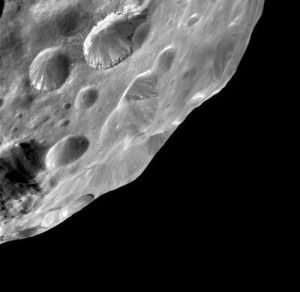
Phoebe, Saturn’s largest irregular moon, was discovered in 1899. Orbiting in the opposite direction of Saturn’s rotation, Phoebe is believed to be a captured icy
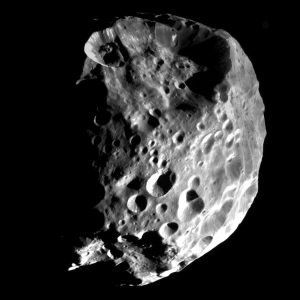
Phoebe, Saturn’s most massive irregular moon, was discovered in 1899. Likely a captured centaur from the Kuiper Belt, it has a dark surface with ice
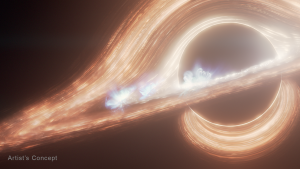
The supermassive black hole at the heart of the Milky Way seems to be putting on a cosmic celebration, featuring a dazzling light show reminiscent
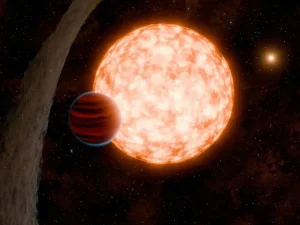
Astronomers describe the youngest transiting planet ever found. It’s about three million years old—a baby, in cosmic terms. If you imagine Earth as a 50-year-old

Iapetus is one of Saturn’s most intriguing moons, known for its striking two-tone appearance, with one hemisphere dark and the other bright. It has a
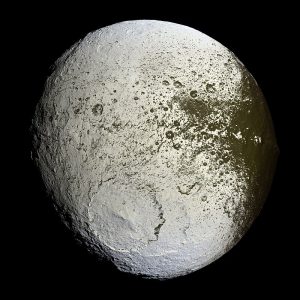
Iapetus is one of Saturn’s most intriguing moons, known for its striking two-tone appearance, with one hemisphere dark and the other bright. It has a
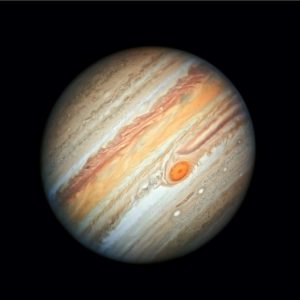
Astronomy and solar system video and blogpost on Jupiter. We explore its history, composition and impact on the early and current history of the solar

We’ve got two fascinating stories—one from deep space and the other from deep within history. firts about building blocks of life found in soil samples
We are on a mission to talk about all the lesser known celestial objects in our skies. So, today we bring you Haumea, a dwarf
Comet C/2025 F2 (SWAN) is visiting our night sky, growing green as it orbits our Sun. It is visible in the early morning hours in
Phoebe, Saturn’s largest irregular moon, was discovered in 1899. Orbiting in the opposite direction of Saturn’s rotation, Phoebe is believed to be a captured icy
Phoebe, Saturn’s most massive irregular moon, was discovered in 1899. Likely a captured centaur from the Kuiper Belt, it has a dark surface with ice
The supermassive black hole at the heart of the Milky Way seems to be putting on a cosmic celebration, featuring a dazzling light show reminiscent
Astronomers describe the youngest transiting planet ever found. It’s about three million years old—a baby, in cosmic terms. If you imagine Earth as a 50-year-old
Iapetus is one of Saturn’s most intriguing moons, known for its striking two-tone appearance, with one hemisphere dark and the other bright. It has a
Iapetus is one of Saturn’s most intriguing moons, known for its striking two-tone appearance, with one hemisphere dark and the other bright. It has a
Astronomy and solar system video and blogpost on Jupiter. We explore its history, composition and impact on the early and current history of the solar
We’ve got two fascinating stories—one from deep space and the other from deep within history. firts about building blocks of life found in soil samples



A 2000 year old luxury boat has been found off
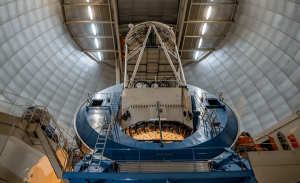
A super telescope, called the Dark Energy Spectroscopic Instrument (DESI)

Men are slowly losing their Y chromosome, but a new

The Eating Green Fad is on the rise due to